Star trails long exposure
1344×768 · AVIF · CC BY 4.0
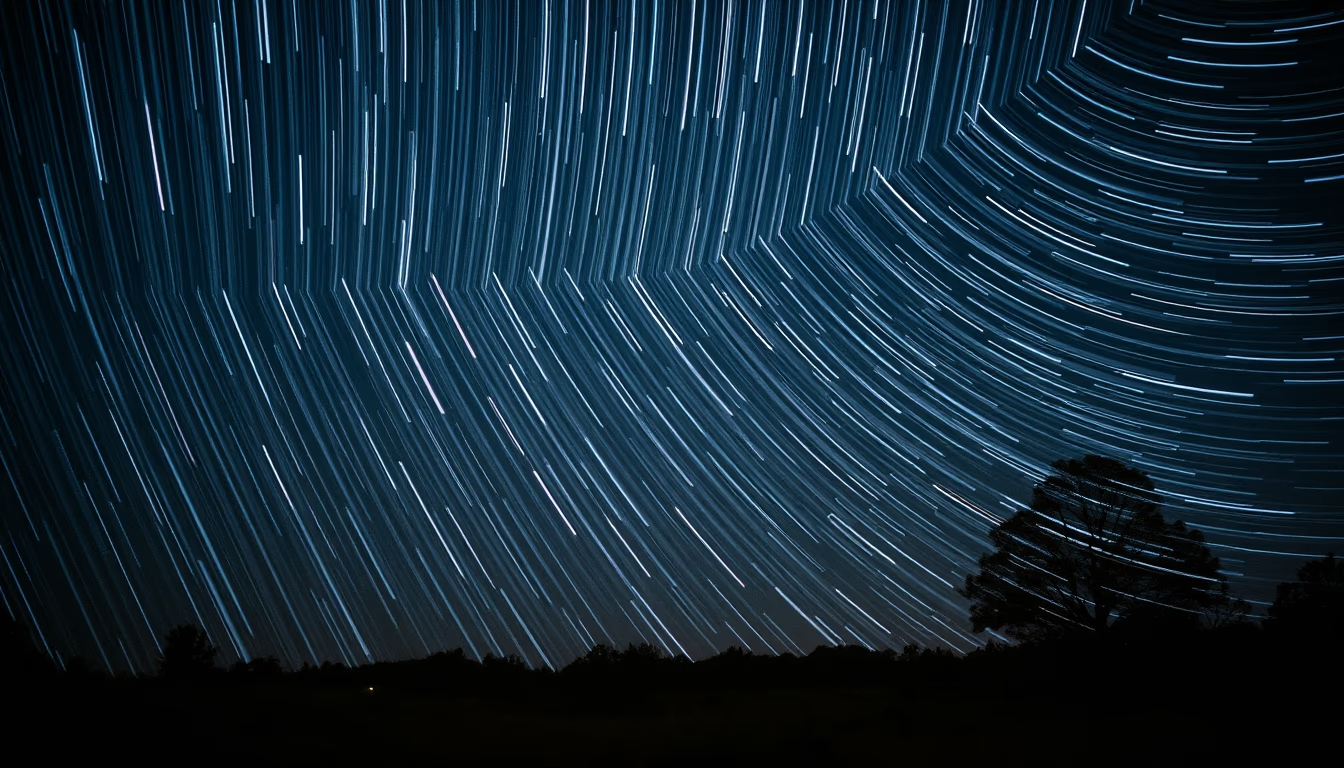
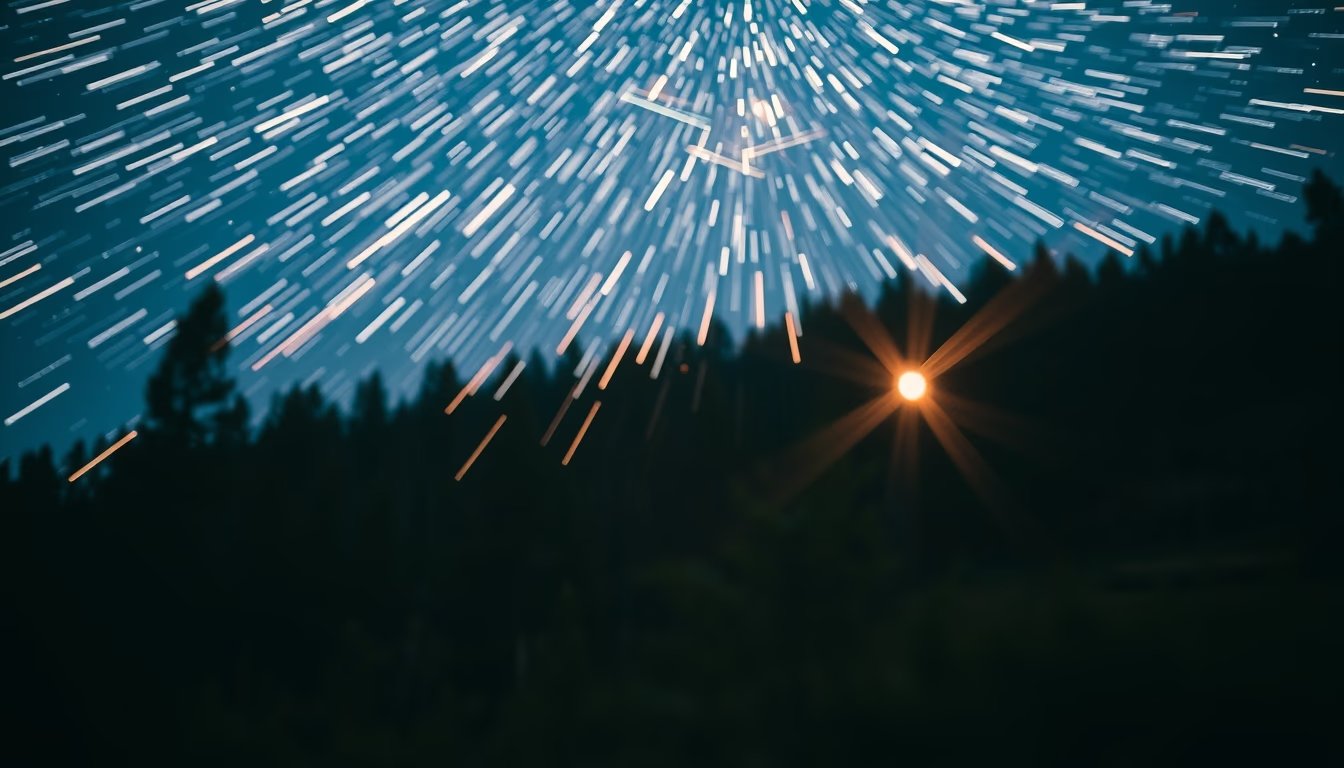
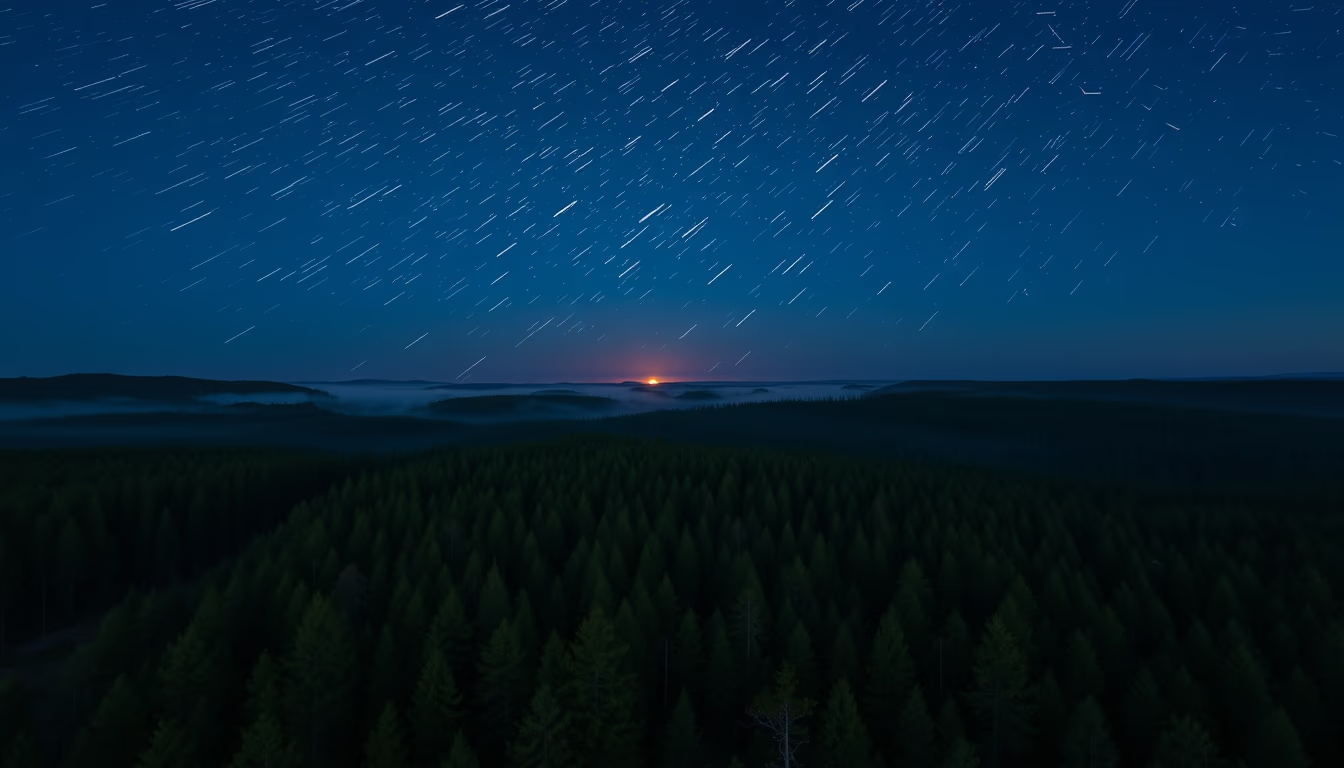
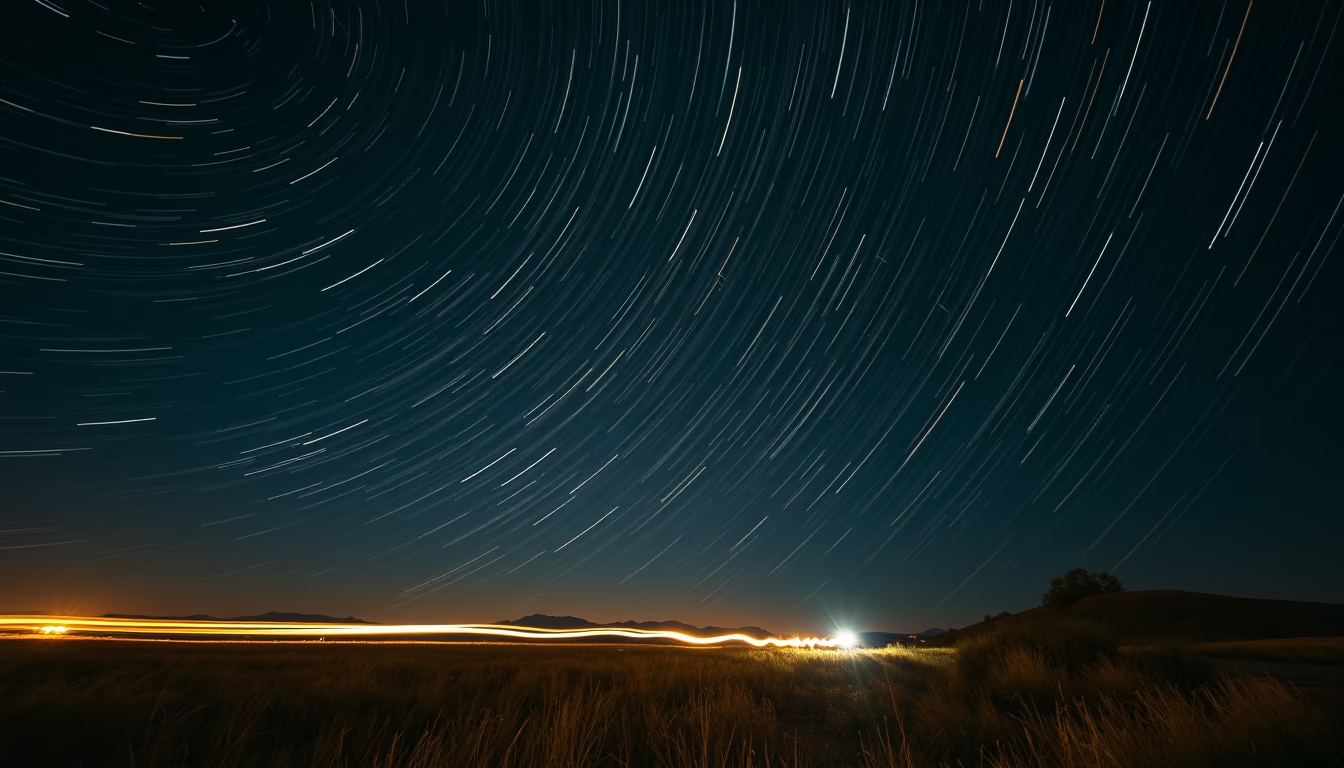
Star trails capture the apparent motion of stars around the celestial pole through long exposure photography, revealing Earth's rotation.
About this subject
Star trails are photographic phenomena that occur when a camera records the apparent movement of stars across the night sky during a long exposure. This visual effect is a direct consequence of Earth's rotation, causing stars to appear as circular arcs around the celestial poles. To achieve this, photographers use specific techniques such as sturdy tripods, intervalometers, and exposures lasting from several minutes to hours. The final image shows curved lines with a fixed central point: the celestial pole, marked in the northern hemisphere by Polaris and in the southern hemisphere by Sigma Octantis. This technique is especially popular in landscape astrophotography, combining terrestrial elements with celestial motion. A key fact is that the exposure time required depends on lens focal length: wide-angle lenses need longer exposures than telephoto lenses. Light pollution and moon phases directly affect contrast and trail sharpness. In the digital era, many photographers compose multiple short exposures stacked in specialized software, reducing noise and allowing correction of technical flaws. This method is known as 'digital star trails' and differs from analog methods where film is exposed continuously all night. Around the world, locations like Chile's Atacama Desert, New Zealand's Aoraki Mackenzie Dark Sky Reserve, and remote areas of the Australian outback are popular for star trail photography due to low light pollution and clear skies.
Frequently Asked Questions
What basic equipment is needed to photograph star trails?
A sturdy tripod is essential to keep the camera still. Use a camera with manual mode and a remote shutter or intervalometer. Wide-angle lenses (e.g., 14-24mm) are ideal. Extra batteries and sufficient memory cards are recommended for long sessions.
Why do star trails form circles around a fixed point?
That fixed point is the celestial pole, aligned with Earth's rotation axis. Stars appear to circle it due to the planet's rotation. In the northern hemisphere, Polaris marks this point; in the southern hemisphere, the Southern Cross helps locate the pole.
Can star trails be done in urban areas with light pollution?
Yes, but the results are limited. Light pollution reduces contrast and the number of visible stars. For best results, choose locations away from cities with low light pollution, such as national parks or rural interior areas.
Direct URL
https://pub-c7d6a6ea828543ac903a74a341ccb2e1.r2.dev/imagens/star-trails-long-exposure-film-grain-authentic-p2.avifHow to credit
Include a visible link back to UtilizAí. Copy one of the snippets below:
<a href="https://xn--utiliza-eza.com/en/midia/imagens/star-trails-long-exposure-film-grain-authentic-p2">Star trails long exposure</a> by <a href="https://xn--utiliza-eza.com">UtilizAí</a>, licensed under <a href="https://creativecommons.org/licenses/by/4.0/">CC BY 4.0</a>.
[Star trails long exposure](https://xn--utiliza-eza.com/en/midia/imagens/star-trails-long-exposure-film-grain-authentic-p2) by [UtilizAí](https://xn--utiliza-eza.com), CC BY 4.0
License: CC-BY-4.0