St basil cathedral
1344×768 · AVIF · CC BY 4.0
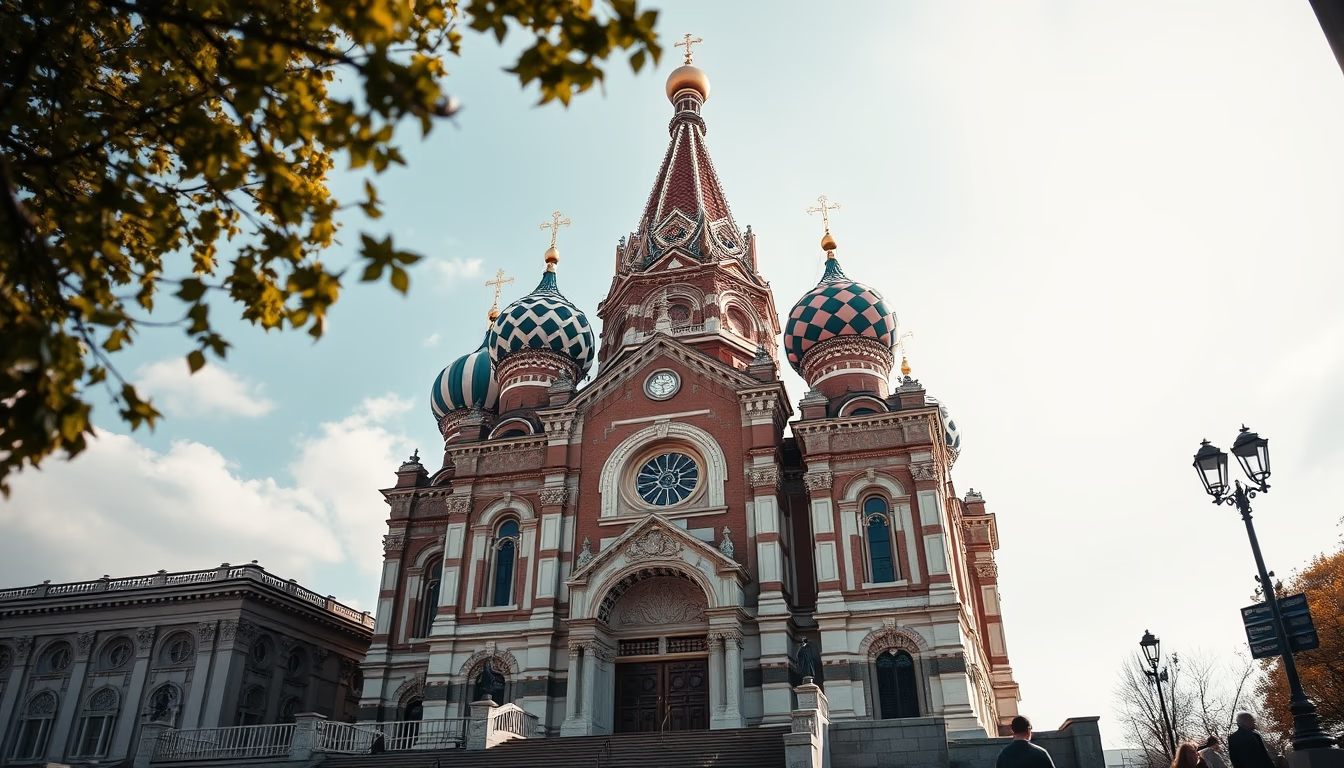
St. Basil's Cathedral in Moscow is an iconic Russian landmark known for its colorful onion domes, built in the 16th century under Ivan the Terrible.
About this subject
St. Basil's Cathedral, officially the Cathedral of the Intercession of the Virgin on the Moat, was built between 1555 and 1561 by order of Tsar Ivan IV (Ivan the Terrible) to commemorate the conquest of the Khanate of Kazan. Legend claims Ivan blinded the architects Postnik and Barma so they could never replicate its beauty, though historians dispute this. Located on Red Square in central Moscow, the cathedral is a complex of nine independent chapels, each with a uniquely shaped and colored dome. The central, tallest structure is surrounded by eight smaller chapels, all built on a common foundation. The onion domes were not originally painted in the vivid colors seen today; the polychrome decoration dates from the 17th and 18th centuries.
The architecture blends Byzantine and Russian influences, with abundant decorative details, keel arches, and kokoshniks (arched elements). Originally painted in red and white, the current combination of green, blue, yellow, red, and gold has made it one of Russia's most recognizable symbols. During the Soviet era, the cathedral was closed for worship and turned into a state museum. In 1990, it was inscribed as a UNESCO World Heritage site, along with the Kremlin and Red Square. It now houses a museum of history and architecture, occasionally holding religious services.
Interestingly, despite its iconic image, St. Basil's Cathedral is no longer a fully functioning church for regular services. It receives millions of visitors annually. One chapel is dedicated to St. Basil the Blessed, a holy fool for Christ who was buried on the site before the cathedral's construction. The asymmetrical shape and vibrant color palette were intended to evoke a sense of movement and life, reflecting the Heavenly Jerusalem described in the Book of Revelation.
Frequently Asked Questions
Why does St. Basil's Cathedral have such colorful domes?
The vibrant colors were added in the 17th and 18th centuries to create a celestial appearance. Each color may symbolize a religious aspect: blue represents the Virgin Mary, green hope, and gold divine glory.
Is the cathedral still used for religious services?
Yes, but only occasionally. It now functions as a museum, but masses are held on important dates, such as the Feast of the Intercession.
How many domes does St. Basil's Cathedral have?
The cathedral has 10 domes: one central, eight on the side chapels, and one small one over the bell tower. Together they form an asymmetrical and unique ensemble.
Direct URL
https://pub-c7d6a6ea828543ac903a74a341ccb2e1.r2.dev/imagens/st-basil-cathedral-documentary-photography-p9.avifHow to credit
Include a visible link back to UtilizAí. Copy one of the snippets below:
<a href="https://xn--utiliza-eza.com/en/midia/imagens/st-basil-cathedral-documentary-photography-p9">St basil cathedral</a> by <a href="https://xn--utiliza-eza.com">UtilizAí</a>, licensed under <a href="https://creativecommons.org/licenses/by/4.0/">CC BY 4.0</a>.
[St basil cathedral](https://xn--utiliza-eza.com/en/midia/imagens/st-basil-cathedral-documentary-photography-p9) by [UtilizAí](https://xn--utiliza-eza.com), CC BY 4.0
License: CC-BY-4.0