Spinning wheel antique
1344×768 · AVIF · CC BY 4.0
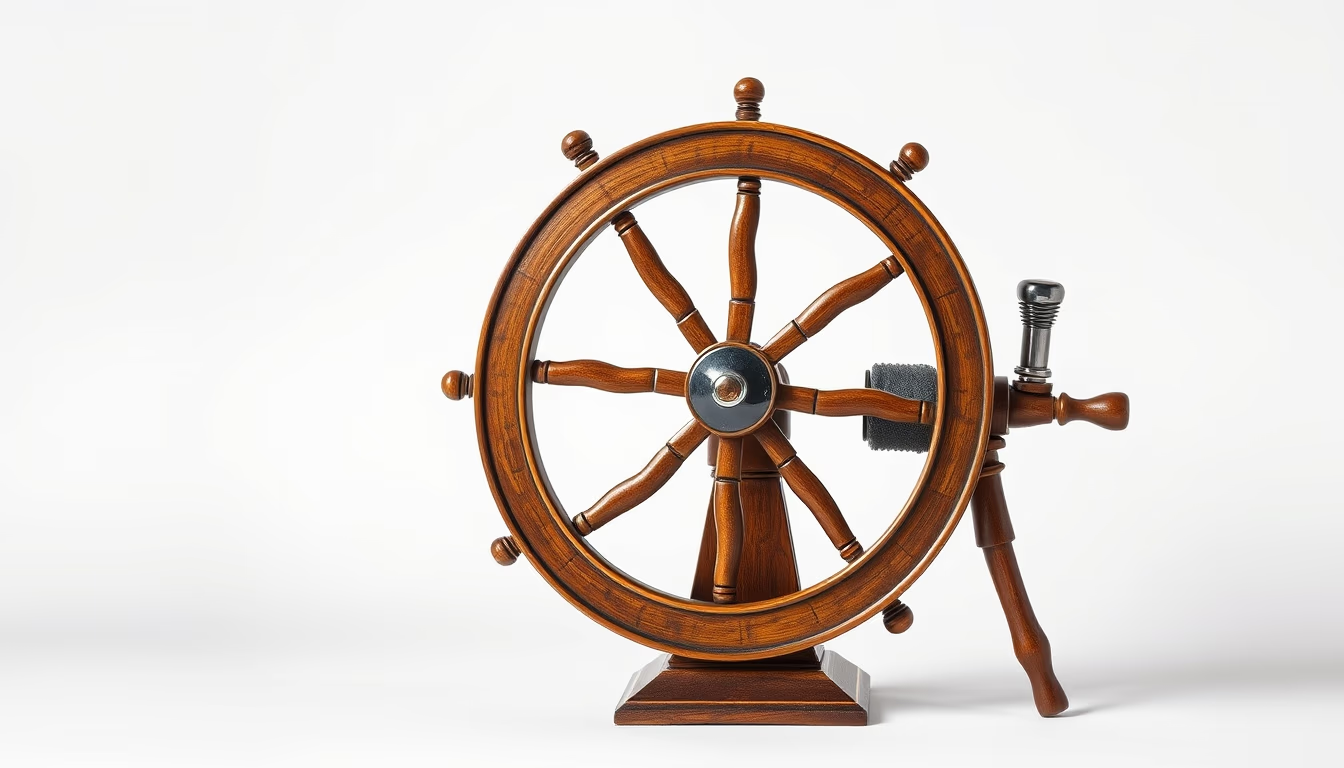
The antique spinning wheel, a vital tool in textile production for centuries, stands as a symbol of craftsmanship and tradition.
About this subject
The antique spinning wheel is a manual device used to transform textile fibers, such as wool, cotton, or linen, into continuous yarn. Originating in India around the 5th century, it spread to Europe during the Middle Ages, revolutionizing domestic cloth production. Its basic mechanism consists of a treadle-operated wheel that rotates a spindle, twisting and winding the fiber. Regional variations include the Saxony wheel with its tilted frame, the compact vertical Castle wheel, and the Indian Charkha, popularized by Gandhi as a symbol of self-reliance. In Brazil, spinning wheels were introduced by Portuguese colonizers and adopted by indigenous people and enslaved Africans to produce cotton and wool fabrics. With the Industrial Revolution, hand wheels were replaced by machinery, but they remain decorative items and collectibles, prized for their handcrafted beauty and history. A curious note: the spinning wheel appears in the fairy tale Sleeping Beauty, where the princess pricks her finger on a spindle, linking the object to magic and fate. Today, artisans and spinning enthusiasts keep the technique alive, using restored antique wheels or modern replicas to create unique yarns and revive textile traditions.
Frequently Asked Questions
How does an antique spinning wheel work?
An antique spinning wheel works with a treadle that turns a wheel, which rotates a spindle. The fiber is fed manually to the spindle, twisted and wound to form yarn. The process requires coordination between the treadle rhythm and fiber control.
What is the difference between a spinning wheel and a drop spindle?
A drop spindle is a simple, hand-held tool for spinning without a wheel. A spinning wheel incorporates a spindle driven by a wheel and treadle, allowing greater speed and efficiency. The spindle is portable, while the wheel is stationary or semi-portable.
Why is the spinning wheel associated with Sleeping Beauty?
In Charles Perrault's tale, the princess pricks her finger on a spinning wheel spindle, fulfilling a prophecy. This made the wheel a symbol of fate and eternal sleep in popular culture, though the Brothers Grimm version mentions only a spindle.
Direct URL
https://pub-c7d6a6ea828543ac903a74a341ccb2e1.r2.dev/imagens/spinning-wheel-antique-commercial-product-photography-fresh2.avifHow to credit
Include a visible link back to UtilizAí. Copy one of the snippets below:
<a href="https://xn--utiliza-eza.com/en/midia/imagens/spinning-wheel-antique-commercial-product-photography-fresh2">Spinning wheel antique</a> by <a href="https://xn--utiliza-eza.com">UtilizAí</a>, licensed under <a href="https://creativecommons.org/licenses/by/4.0/">CC BY 4.0</a>.
[Spinning wheel antique](https://xn--utiliza-eza.com/en/midia/imagens/spinning-wheel-antique-commercial-product-photography-fresh2) by [UtilizAí](https://xn--utiliza-eza.com), CC BY 4.0
License: CC-BY-4.0