Sphinx egypt face
1344×768 · AVIF · CC BY 4.0
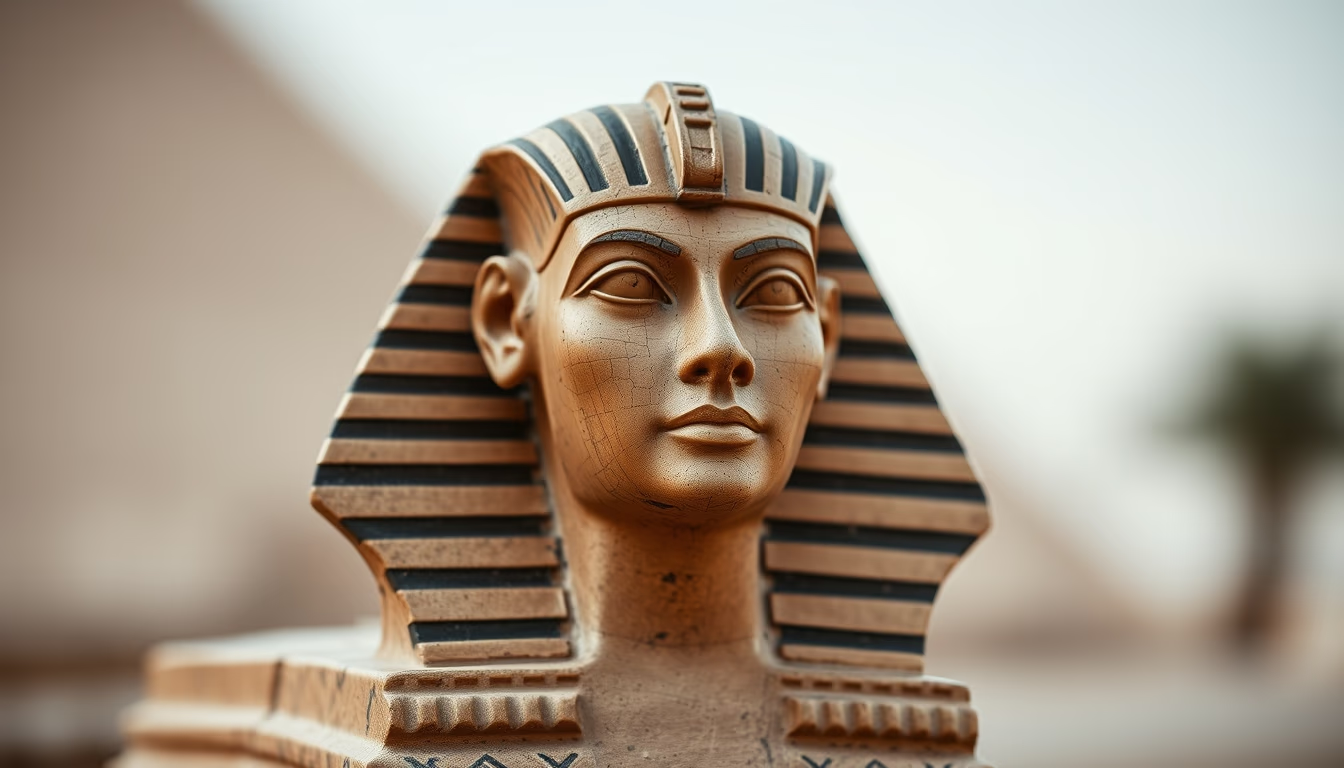
The Great Sphinx of Giza, a millennia-old limestone statue, is one of ancient Egypt's most imposing monuments, with a lion's body and a human head.
About this subject
The Great Sphinx of Giza, located on the Giza Plateau near Cairo, is the world's largest monolithic statue, measuring 73 meters long, 20 meters high, and 19 meters wide. Carved directly from limestone bedrock, it is believed to have been built during the reign of Pharaoh Khafre (c. 2558, 2532 BCE) as a guardian of the Giza necropolis. The lion's body symbolizes strength and royalty, while the human head represents the pharaoh, likely Khafre, wearing the nemes (royal headdress) and the uraeus (sacred cobra).
Over the centuries, the Sphinx has suffered natural erosion and human damage, including the loss of its nose, the origin of which is controversial: accounts by Arab historian al-Maqrizi (15th century) attribute the destruction to a religious fanatic, but others point to erosion or Ottoman vandalism. The statue was buried in sand for much of its history, only being excavated in the 19th century by archaeologists. Today, the Sphinx is an iconic symbol of Egypt and a UNESCO World Heritage site, attracting millions of tourists annually.
The tilt-shift miniature technique applied to the image creates the illusion that the Sphinx is a miniature model, enhancing details of the stone and the contrast between the monument and the sky. This photographic effect is achieved with specialized lenses or post-processing, selectively blurring parts of the scene to simulate the depth of field of small objects. Thus, the image offers a playful and artistic perspective of one of the world's most photographed monuments, inviting the viewer to appreciate its grandeur from a new angle.
The Giza Sphinx is not the only one in Egypt: smaller ones exist at temples and necropolises, such as the Sphinx of Memphis and the Avenue of Sphinxes in Luxor. However, none match the scale and fame of the Great Sphinx, which continues to inspire legends and theories, from a supposed hidden chamber under its paws to astrological interpretations of its eastward orientation. Recent studies suggest the statue may be even older than Khafre's reign based on water erosion patterns, but the archaeological consensus maintains the traditional dating.
Frequently Asked Questions
Who built the Great Sphinx of Giza?
It is believed to have been built during the reign of Pharaoh Khafre (c. 2558, 2532 BCE) as a guardian of the Giza necropolis. However, some theories suggest an older origin.
Why did the Sphinx lose its nose?
The exact cause is uncertain. Historical accounts attribute it to a religious fanatic in the 15th century, but it could also result from natural erosion or vandalism.
What is the meaning of the lion body with a human head?
The lion body symbolizes strength and royalty, while the human head represents the pharaoh, combining divine and human power.
Direct URL
https://pub-c7d6a6ea828543ac903a74a341ccb2e1.r2.dev/imagens/sphinx-egypt-face-tilt-shift-miniature-p0.avifHow to credit
Include a visible link back to UtilizAí. Copy one of the snippets below:
<a href="https://xn--utiliza-eza.com/en/midia/imagens/sphinx-egypt-face-tilt-shift-miniature-p0">Sphinx egypt face</a> by <a href="https://xn--utiliza-eza.com">UtilizAí</a>, licensed under <a href="https://creativecommons.org/licenses/by/4.0/">CC BY 4.0</a>.
[Sphinx egypt face](https://xn--utiliza-eza.com/en/midia/imagens/sphinx-egypt-face-tilt-shift-miniature-p0) by [UtilizAí](https://xn--utiliza-eza.com), CC BY 4.0
License: CC-BY-4.0