Sphinx egypt face
1344×768 · AVIF · CC BY 4.0
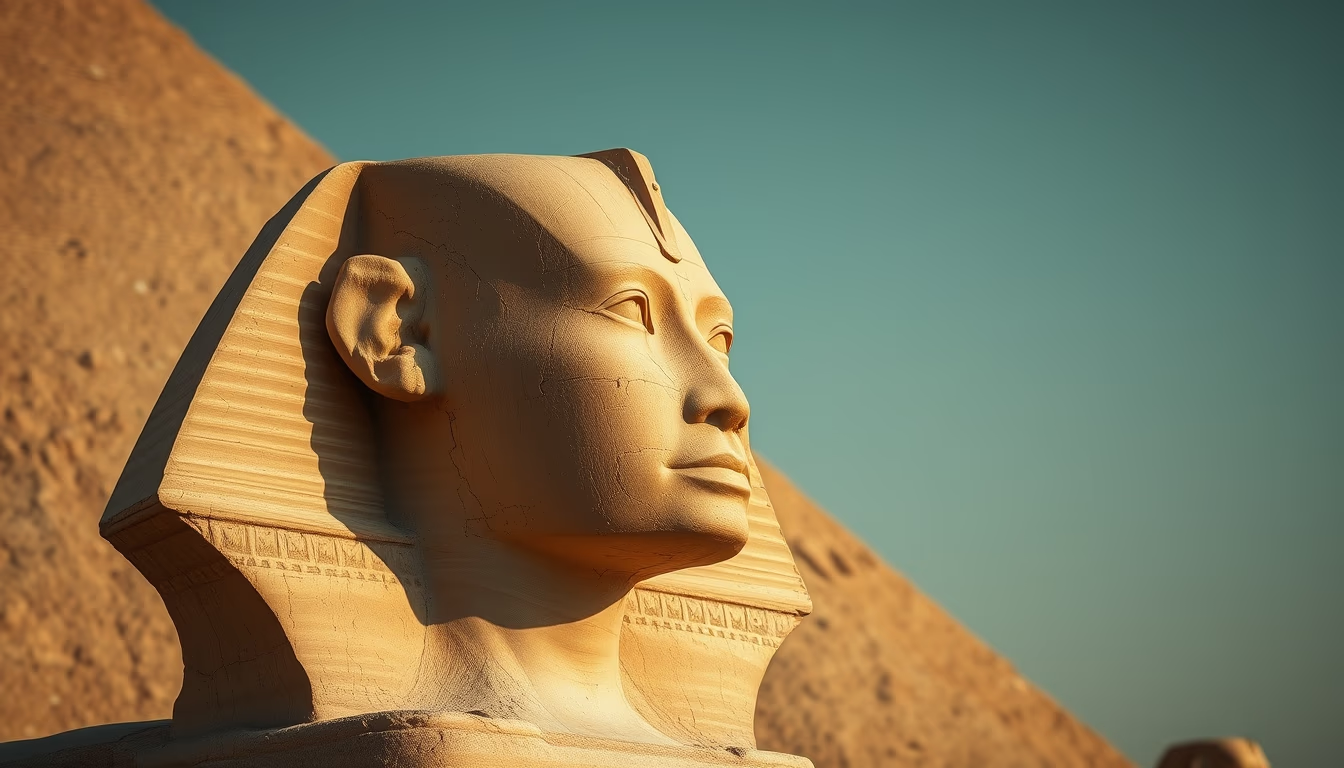
The Great Sphinx of Giza, with a lion's body and a human head, is one of ancient Egypt's most iconic monuments, carved from limestone over 4,500 years ago.
About this subject
The Great Sphinx of Giza is situated on the Giza Plateau, on the west bank of the Nile River, near the famous pyramids. Carved directly from limestone bedrock, the statue measures approximately 73 meters long and 20 meters high. Its construction is believed to have occurred during the reign of Pharaoh Khafre, around 2500 BCE, although no definitive inscriptions confirm this theory.
The face of the Sphinx is widely recognized as a representation of Pharaoh Khafre, featuring the characteristic nemes (royal headdress) and a ceremonial beard, now fragmented. Over millennia, the statue has suffered natural erosion from wind and sand, as well as damage from historical vandalism, such as the broken nose, whose absence has fueled various legends.
Culturally, the Sphinx symbolizes royalty and protection, serving as guardian of the funerary complex. During the New Kingdom, it was restored and associated with the god Horus. In the Greco-Roman era, it acquired the name 'Sphinx', derived from the Greek 'sphinx' meaning 'strangler', linked to a Theban myth. To this day, the monument remains one of the most visited tourist destinations in the world, attracting millions of people annually.
Frequently Asked Questions
Who built the Great Sphinx of Giza?
It is believed to have been built during the reign of Pharaoh Khafre, around 2500 BCE, though no direct evidence exists. The statue aligns with Khafre's pyramid in the Giza complex.
Why is the Sphinx's nose broken?
The nose was lost over centuries, possibly due to vandalism or natural erosion. A popular legend claims Napoleon's soldiers used the statue for target practice, but historical records do not support this.
What does the Sphinx represent in Egyptian culture?
The Sphinx symbolizes royalty and protection, serving as a guardian of the funerary complex. Its hybrid form, with a lion's body and human head, represents strength and intelligence.
Direct URL
https://pub-c7d6a6ea828543ac903a74a341ccb2e1.r2.dev/imagens/sphinx-egypt-face-magazine-editorial-p8.avifHow to credit
Include a visible link back to UtilizAí. Copy one of the snippets below:
<a href="https://xn--utiliza-eza.com/en/midia/imagens/sphinx-egypt-face-magazine-editorial-p8">Sphinx egypt face</a> by <a href="https://xn--utiliza-eza.com">UtilizAí</a>, licensed under <a href="https://creativecommons.org/licenses/by/4.0/">CC BY 4.0</a>.
[Sphinx egypt face](https://xn--utiliza-eza.com/en/midia/imagens/sphinx-egypt-face-magazine-editorial-p8) by [UtilizAí](https://xn--utiliza-eza.com), CC BY 4.0
License: CC-BY-4.0