Sphinx egypt face
1344×768 · AVIF · CC BY 4.0
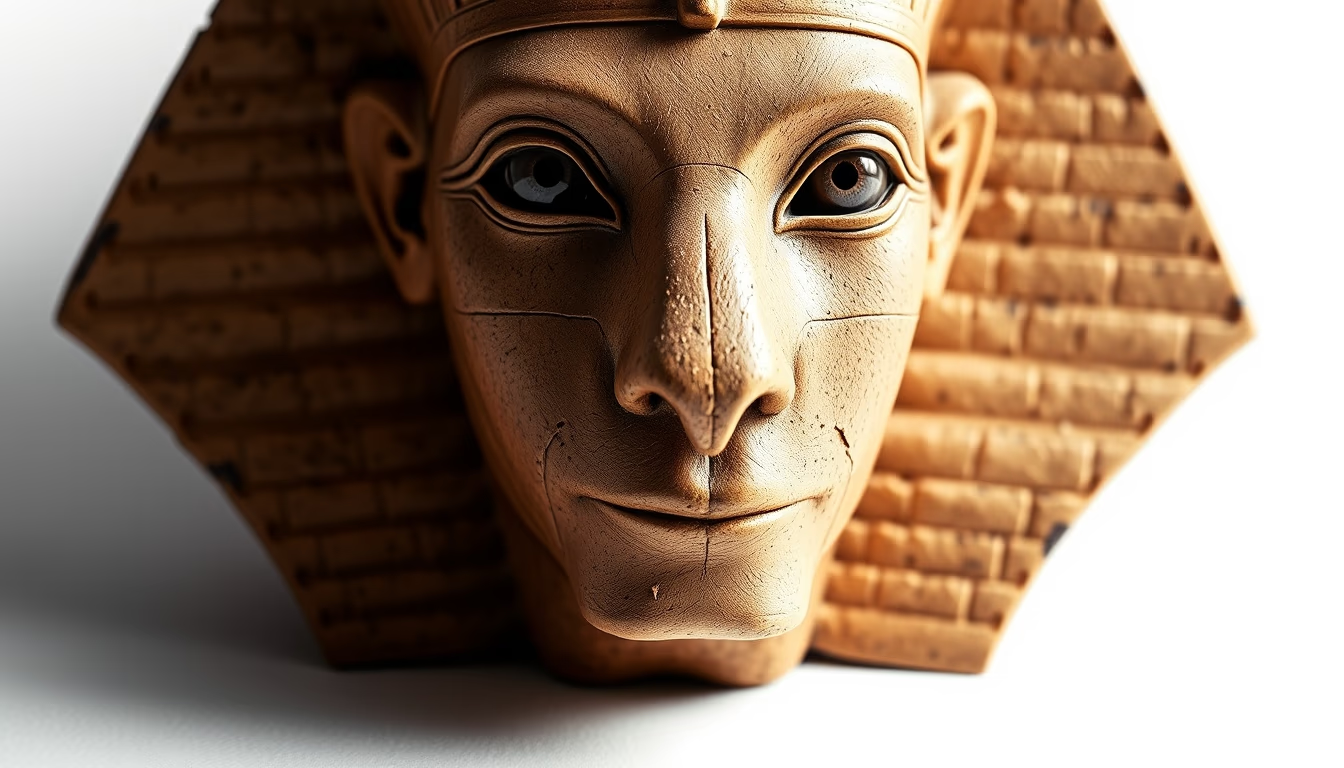
The Great Sphinx of Giza in Egypt is a colossal statue with a lion's body and a human head, carved from limestone over 4,500 years ago.
About this subject
The Great Sphinx of Giza is one of the most iconic and enigmatic statues of the ancient world. Located on the Giza Plateau near Cairo, it was carved directly from limestone bedrock during the Fourth Dynasty of Ancient Egypt, around 2550 BCE. The statue measures 73 meters in length, 20 meters in height, and 19 meters in width, making it the largest monolithic statue in the world. Its face is believed to represent Pharaoh Khafre, the ruler responsible for building the Second Pyramid of Giza, located nearby.
The sphinx was a symbol of power and protection in Egyptian culture, combining the strength of a lion with human intelligence, serving as a guardian of tombs and temples. Over millennia, it suffered natural erosion and human damage, including the loss of its nose, often attributed to cannon fire by Mamluk soldiers in the 15th century, though other sources suggest earlier vandalism. The statue remained buried in desert sand for centuries, periodically excavated.
Notably, the Sphinx has an astronomical alignment: its east-west axis points to the sunrise on the equinoxes. Recent geophysical surveys indicate possible hidden chambers beneath its base, but official excavations have not confirmed them. In 1979, the Giza complex, including the Sphinx, was declared a UNESCO World Heritage Site. Today, it is a major tourist destination, attracting millions of visitors annually. The statue remains a subject of study and mystery, with theories ranging from its age to connections with lost civilizations.
Frequently Asked Questions
What is the age of the Great Sphinx of Giza?
The Sphinx is believed to have been built around 2550 BCE during the Fourth Dynasty of Ancient Egypt, making it over 4,500 years old.
What happened to the Sphinx's nose?
The nose was lost over time. The most common theory is that it was destroyed by cannon fire from Mamluk soldiers in the 15th century, though earlier vandalism is also reported.
Does the Sphinx have secret chambers?
Geophysical surveys suggest possible chambers or tunnels beneath the Sphinx, but official excavations have not confirmed their presence.
Direct URL
https://pub-c7d6a6ea828543ac903a74a341ccb2e1.r2.dev/imagens/sphinx-egypt-face-commercial-product-photography-p9.avifHow to credit
Include a visible link back to UtilizAí. Copy one of the snippets below:
<a href="https://xn--utiliza-eza.com/en/midia/imagens/sphinx-egypt-face-commercial-product-photography-p9">Sphinx egypt face</a> by <a href="https://xn--utiliza-eza.com">UtilizAí</a>, licensed under <a href="https://creativecommons.org/licenses/by/4.0/">CC BY 4.0</a>.
[Sphinx egypt face](https://xn--utiliza-eza.com/en/midia/imagens/sphinx-egypt-face-commercial-product-photography-p9) by [UtilizAí](https://xn--utiliza-eza.com), CC BY 4.0
License: CC-BY-4.0