Snow capped mountain peak sunrise
1344×768 · AVIF · CC BY 4.0
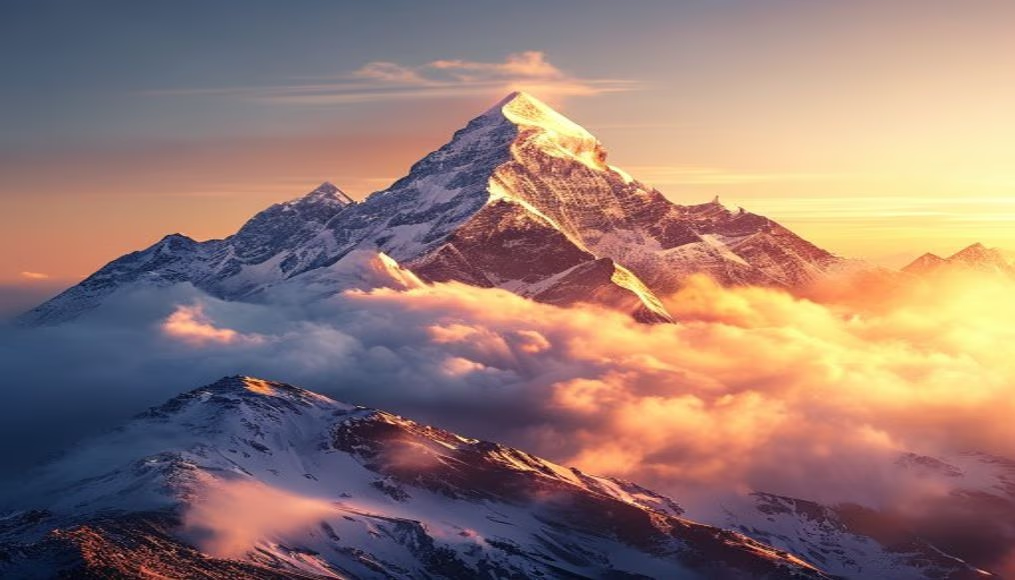
Sunrise illuminates a snow-capped mountain peak, a natural spectacle that attracts climbers and photographers worldwide.
About this subject
Snow-capped mountain peaks are among the most iconic natural landscapes. The contrast between perpetual ice and the warm hues of dawn creates striking visual compositions. Peaks such as Mount Everest (8,848 m), K2 (8,611 m), and Mont Blanc (4,808 m) are classic examples that challenge climbers and landscape enthusiasts alike.
Sunrise at high altitudes occurs when solar rays pass through a thicker atmospheric layer, enhancing red and orange wavelengths. This differential refraction produces color gradients ranging from gold to magenta, depending on suspended particles. Professional photographers often arrive at viewpoints hours in advance, using graduated filters to balance exposure between the bright sky and mountain shadows.
Mountainous regions like the Swiss Alps, the Nepalese Himalayas, and the Andes offer strategic vantage points. In Brazil, although there are no permanent snow caps, the Mantiqueira Range and Pico da Neblina (2,995 m) may experience rare frost and snow. Site selection depends on accessibility, altitude, and weather forecast, clear, dry days maximize visibility.
To capture mountain sunrise, a full-frame or APS-C camera, wide-angle lens (16-35 mm), sturdy tripod, and remote shutter are recommended. Typical settings include ISO 100, aperture f/8 to f/11, and shutter speeds of 1/30 to 1/125 seconds. Exposure should be adjusted to preserve highlight detail, as snow reflects up to 90% of incoming light.
Frequently Asked Questions
What is the best time of year to photograph sunrise on snowy mountains?
The best season varies by region. In the northern hemisphere, spring and fall offer more stable weather and fewer crowds. In the Himalayas, April, May and September, October are ideal, with clear skies and mild temperatures.
What equipment is recommended for mountain photography?
A large sensor camera (full frame or APS-C), wide-angle lenses, a lightweight but sturdy tripod, polarizing and graduated ND filters, and extra batteries (cold reduces battery life) are recommended.
Where can I find the most iconic peaks for this type of photo?
Iconic peaks include the Matterhorn (Swiss Alps), Mount Fitz Roy (Argentine Patagonia), and Ama Dablam (Nepal). In Brazil, views from Pico da Bandeira and Pedra da Mina in the Mantiqueira Range can be rewarding on frosty days.
Direct URL
https://pub-c7d6a6ea828543ac903a74a341ccb2e1.r2.dev/imagens/snow-capped-mountain-peak-sunrise-travel-photography-v10.avifHow to credit
Include a visible link back to UtilizAí. Copy one of the snippets below:
<a href="https://xn--utiliza-eza.com/en/midia/imagens/snow-capped-mountain-peak-sunrise-travel-photography-v10">Snow capped mountain peak sunrise</a> by <a href="https://xn--utiliza-eza.com">UtilizAí</a>, licensed under <a href="https://creativecommons.org/licenses/by/4.0/">CC BY 4.0</a>.
[Snow capped mountain peak sunrise](https://xn--utiliza-eza.com/en/midia/imagens/snow-capped-mountain-peak-sunrise-travel-photography-v10) by [UtilizAí](https://xn--utiliza-eza.com), CC BY 4.0
License: CC-BY-4.0