Smart traffic signal
1344×768 · AVIF · CC BY 4.0
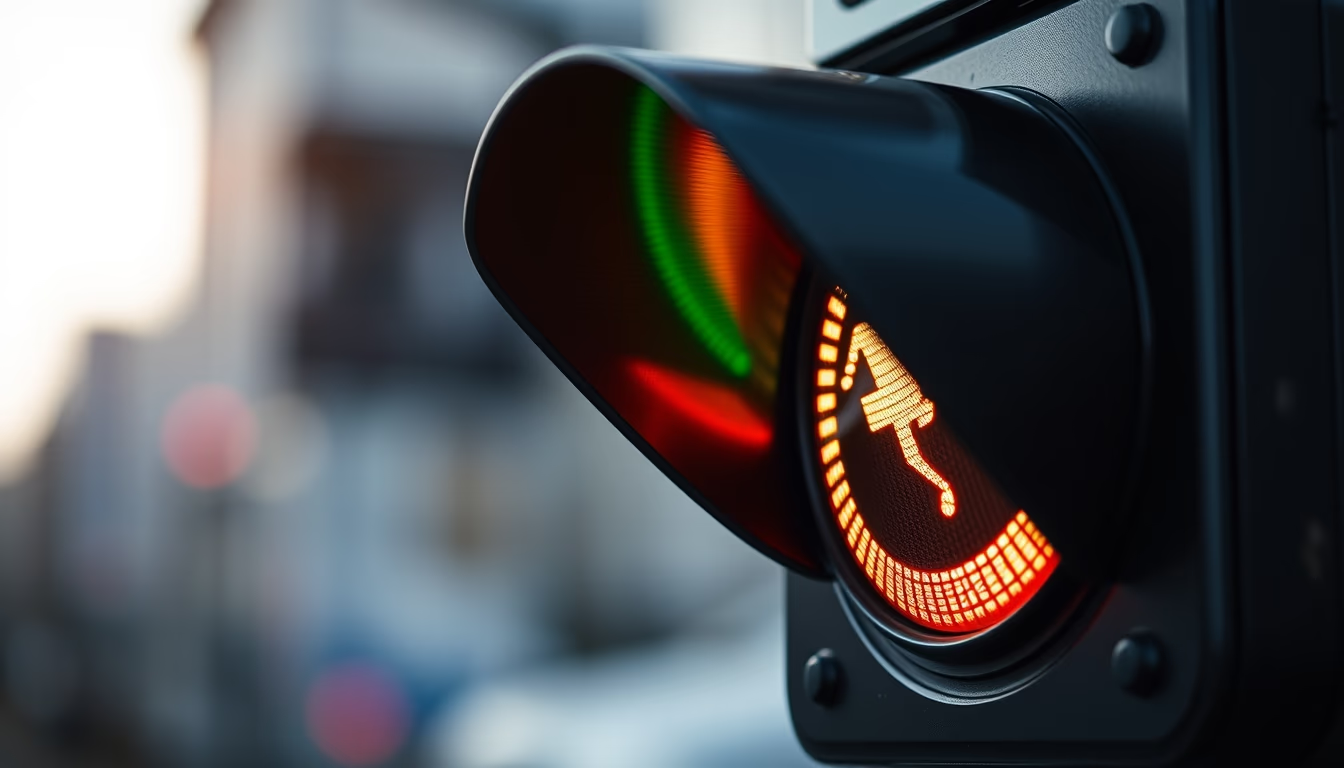
Smart traffic signals use AI and sensors to optimize urban traffic, reducing congestion and emissions in cities worldwide.
About this subject
Smart traffic signals represent the evolution of traffic control systems. Equipped with cameras, radar, and loop sensors, they communicate with a central unit that processes real‑time data. Artificial intelligence algorithms adjust green, yellow, and red cycles according to demand, prioritizing emergency vehicles and public transport. Cities such as São Paulo and Belo Horizonte have adopted these systems, which reduce waiting times at intersections by up to 30%. The technology also allows integration with neighboring signals to create green waves for traffic flow.
Beyond mobility gains, smart traffic signals contribute to urban sustainability. By avoiding unnecessary stops, they reduce fuel consumption and CO2 emissions. Pilot projects show a drop of up to 20% in local pollution. They are part of the smart city concept, connecting to management centers that monitor accidents and roadworks. In Brazil, expansion is gradual, but successful examples exist on bus corridors and busy roads.
Safety is another key aspect. Sensors detect pedestrians and cyclists, extending crossing times when needed. The system can also be programmed to reduce the maximum speed limit during peak hours. In countries like the United States, Germany, and Japan, smart signals are standard and operate with vehicle‑to‑infrastructure communications. The potential for adaptation to different Brazilian realities is great, especially with growing vehicle fleets and the need to optimize urban space.
Frequently Asked Questions
How does a smart traffic signal work?
It uses cameras, radar, and inductive loop sensors to monitor traffic. A central AI unit analyzes the data and adjusts signal timings in real time, prioritizing emergency vehicles and public transit.
Which Brazilian cities already use smart traffic signals?
São Paulo, Belo Horizonte, and Curitiba are examples of cities that have implemented smart systems on major corridors. Other capitals like Rio de Janeiro and Recife also have pilot projects.
What are the main benefits of smart traffic signals?
Reduced congestion by up to 30%, lower pollutant emissions, fuel savings, prioritization of ambulances and fire trucks, and improved safety for pedestrians and cyclists.
Direct URL
https://pub-c7d6a6ea828543ac903a74a341ccb2e1.r2.dev/imagens/smart-traffic-signal-macro-closeup-p3.avifHow to credit
Include a visible link back to UtilizAí. Copy one of the snippets below:
<a href="https://xn--utiliza-eza.com/en/midia/imagens/smart-traffic-signal-macro-closeup-p3">Smart traffic signal</a> by <a href="https://xn--utiliza-eza.com">UtilizAí</a>, licensed under <a href="https://creativecommons.org/licenses/by/4.0/">CC BY 4.0</a>.
[Smart traffic signal](https://xn--utiliza-eza.com/en/midia/imagens/smart-traffic-signal-macro-closeup-p3) by [UtilizAí](https://xn--utiliza-eza.com), CC BY 4.0
License: CC-BY-4.0