Sitar indian carved
1344×768 · AVIF · CC BY 4.0
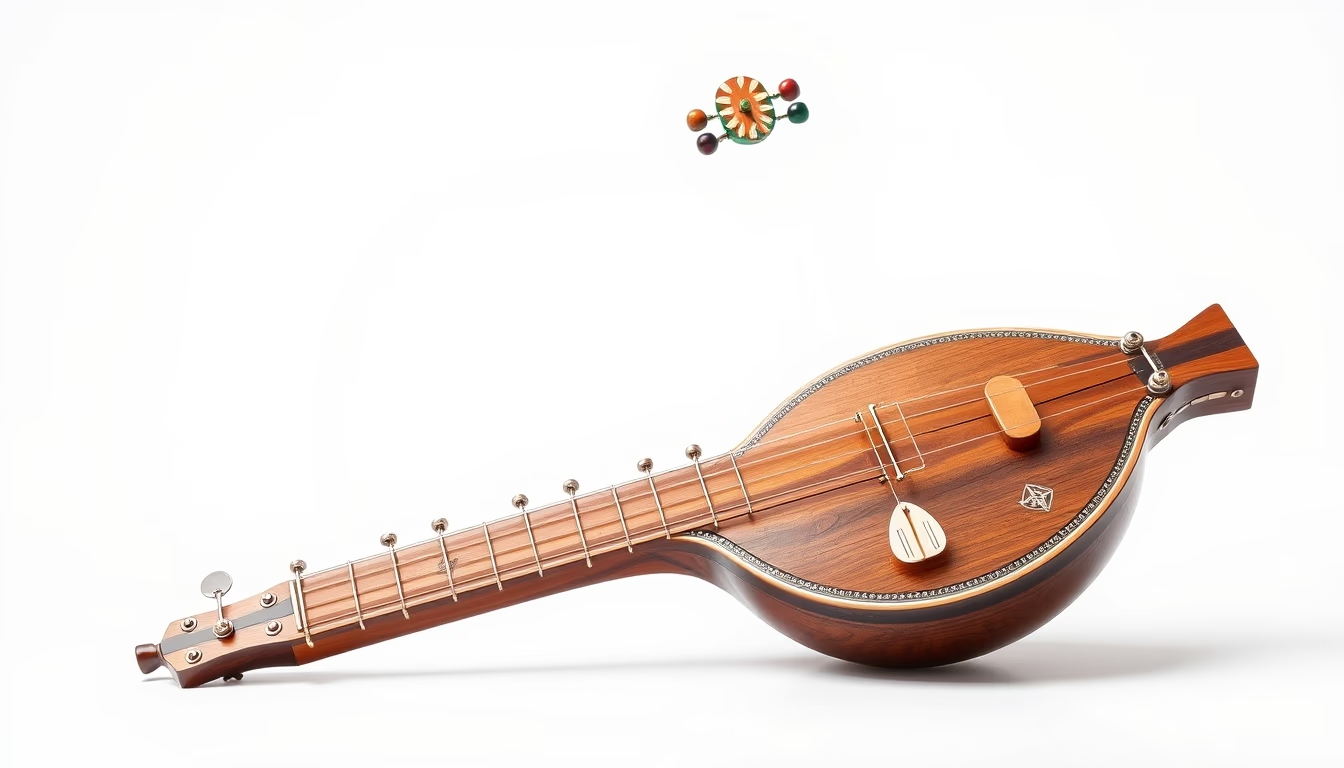
The sitar is a plucked string instrument from India, known for its resonant sound and richly carved decoration.
About this subject
The sitar is a plucked string instrument deeply rooted in Indian classical music. Its construction typically features a hollow wooden body, a long neck, and a gourd resonator at the top, which amplifies the sound. The intricate carvings on the sitar often depict floral patterns or mythological figures, making each instrument a unique work of art. It usually has seven main strings: five melody strings and two drone strings (tambura), along with sympathetic strings that vibrate in resonance, creating a rich, hypnotic tone.
Historically, the modern sitar evolved from Persian instruments like the setar, but it took its current form in India. It became emblematic during the Mughal period and was refined by musicians such as Amir Khusrow. In the 20th century, virtuoso Ravi Shankar popularized the sitar in the West, influencing artists like the Beatles and the 1960s counterculture. Its ethereal sound marked film scores and international collaborations.
Tuning of the sitar varies according to the raga (melodic scale) to be played. The musician sits cross-legged, holding the instrument diagonally, and plucks the strings with a metal plectrum called a mizrab. Techniques include glissandos and ornaments like meend, sliding the strings across the frets. Famous sitarists include Ravi Shankar, Vilayat Khan, and Shahid Parvez, each with distinct styles and schools (gharanas).
Culturally, the sitar transcends music: it symbolizes Indian spirituality and philosophy. Its handcrafted production is a family tradition in cities like Varanasi and Kolkata, where luthiers spend months on a single instrument. The sitar is also used in contemporary fusion and film scores, remaining relevant in world music. As a carved art object, each piece reflects regional craftsmanship and dedication to aesthetics.
Frequently Asked Questions
What is the difference between a sitar and a guitar?
A sitar has sympathetic strings that vibrate sympathetically without being plucked, producing a resonant sound, and uses movable frets for microtones. It also has a gourd resonator and is played with a metal plectrum, while a guitar typically has steel or nylon strings without sympathetic resonance.
How many strings does a typical sitar have?
A classical sitar has 7 main strings: 5 melody and 2 drone strings. Additionally, it has between 11 and 13 sympathetic strings, totaling between 18 and 20 strings overall.
What does the word 'sitar' mean?
'Sitar' derives from the Persian word 'setar', meaning 'three strings'. Although the modern sitar has many more strings, the name has persisted due to historical heritage.
Direct URL
https://pub-c7d6a6ea828543ac903a74a341ccb2e1.r2.dev/imagens/sitar-indian-carved-commercial-product-photography-p6.avifHow to credit
Include a visible link back to UtilizAí. Copy one of the snippets below:
<a href="https://xn--utiliza-eza.com/en/midia/imagens/sitar-indian-carved-commercial-product-photography-p6">Sitar indian carved</a> by <a href="https://xn--utiliza-eza.com">UtilizAí</a>, licensed under <a href="https://creativecommons.org/licenses/by/4.0/">CC BY 4.0</a>.
[Sitar indian carved](https://xn--utiliza-eza.com/en/midia/imagens/sitar-indian-carved-commercial-product-photography-p6) by [UtilizAí](https://xn--utiliza-eza.com), CC BY 4.0
License: CC-BY-4.0