Silk road spices arrayed
1344×768 · AVIF · CC BY 4.0
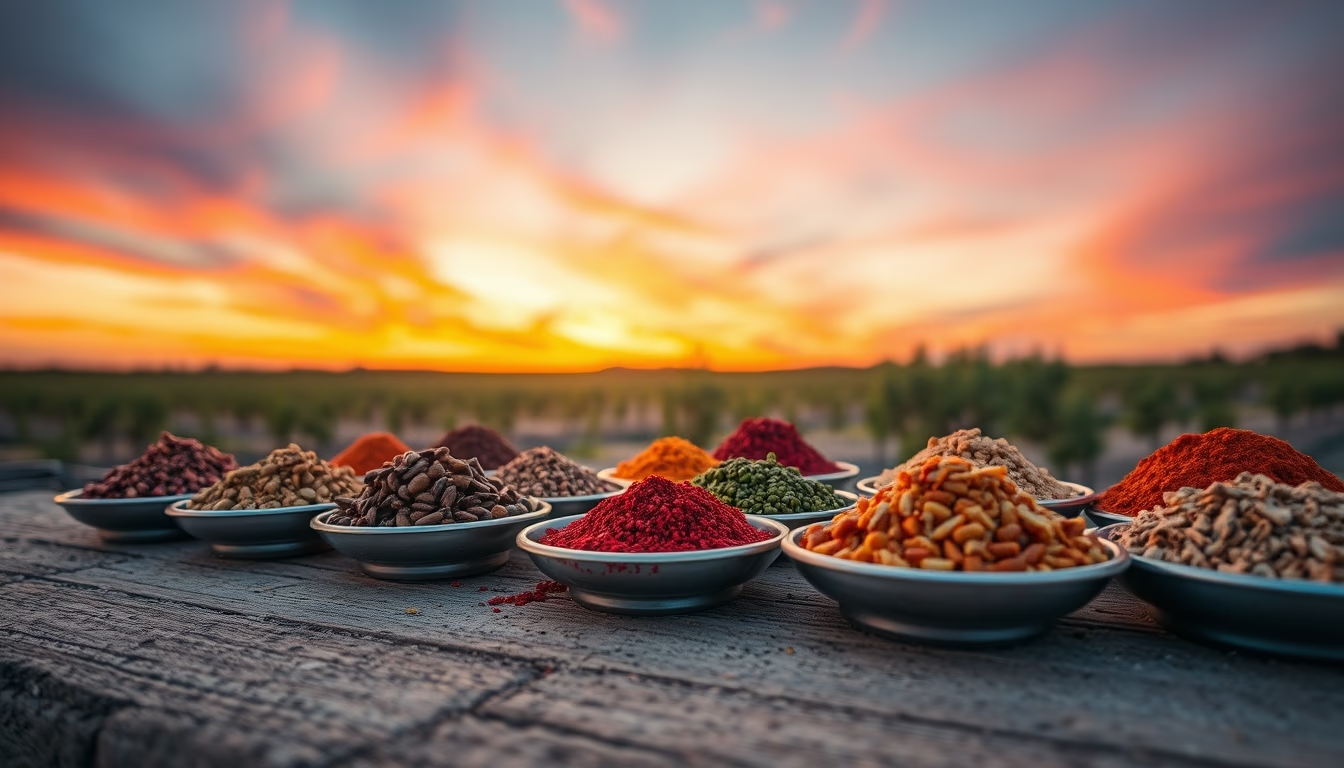
Silk Road spices: a showcase of flavors that connected civilizations for millennia, from Persian saffron to Indian pepper.
About this subject
The Silk Road was not merely a route for silk, but a vast corridor through which spices traveled from Asia to Europe, transforming cuisines and economies. Spices like cinnamon, cloves, nutmeg, and black pepper were so valuable that they often traded for their weight in gold. The spice trade fueled maritime exploration, with European powers seeking direct routes to the East Indies.
The diversity of spices along the Silk Road reflects the regions that composed it. Saffron, cultivated in Persia (modern Iran), was used both in cooking and as a textile dye. Black pepper, originating from southern India, was transported overland and by sea to Mediterranean markets. Ginger and turmeric, from China and Southeast Asia, reached ancient Rome through intermediaries.
The cultural significance of spices goes beyond cuisine. In medieval Europe, they were symbols of status and wealth, used in feasts and as offerings. They also played medicinal roles: cloves were used as an anesthetic, and cinnamon as a preservative. The demand for spices led to the establishment of trading posts and empires, such as the Vijayanagara Empire in India and the Italian city-states.
Interestingly, many spices were so precious that fantastic stories were invented to justify their prices. For example, cinnamon was believed to be harvested from phoenix nests on inaccessible cliffs. In reality, cinnamon is the bark of trees from the genus Cinnamomum, native to Sri Lanka and southern India. Today, these spices continue to be pillars of global cuisine, bridging ancient and modern traditions.
Frequently Asked Questions
Which were the most valuable spices on the Silk Road?
Black pepper, saffron, cinnamon, cloves, and nutmeg were among the most valuable. Pepper was often used as currency.
How did spices influence maritime exploration?
The quest for direct routes to spice sources motivated voyages by explorers like Vasco da Gama and Christopher Columbus, leading to the Age of Discovery.
What role did spices play in medieval medicine?
They were used as painkillers, preservatives, and treatments. Cloves were an anesthetic, cinnamon fought infections, and turmeric was anti-inflammatory.
Direct URL
https://pub-c7d6a6ea828543ac903a74a341ccb2e1.r2.dev/imagens/silk-road-spices-arrayed-long-exposure-fresh2.avifHow to credit
Include a visible link back to UtilizAí. Copy one of the snippets below:
<a href="https://xn--utiliza-eza.com/en/midia/imagens/silk-road-spices-arrayed-long-exposure-fresh2">Silk road spices arrayed</a> by <a href="https://xn--utiliza-eza.com">UtilizAí</a>, licensed under <a href="https://creativecommons.org/licenses/by/4.0/">CC BY 4.0</a>.
[Silk road spices arrayed](https://xn--utiliza-eza.com/en/midia/imagens/silk-road-spices-arrayed-long-exposure-fresh2) by [UtilizAí](https://xn--utiliza-eza.com), CC BY 4.0
License: CC-BY-4.0