Silk road spices arrayed
1344×768 · AVIF · CC BY 4.0
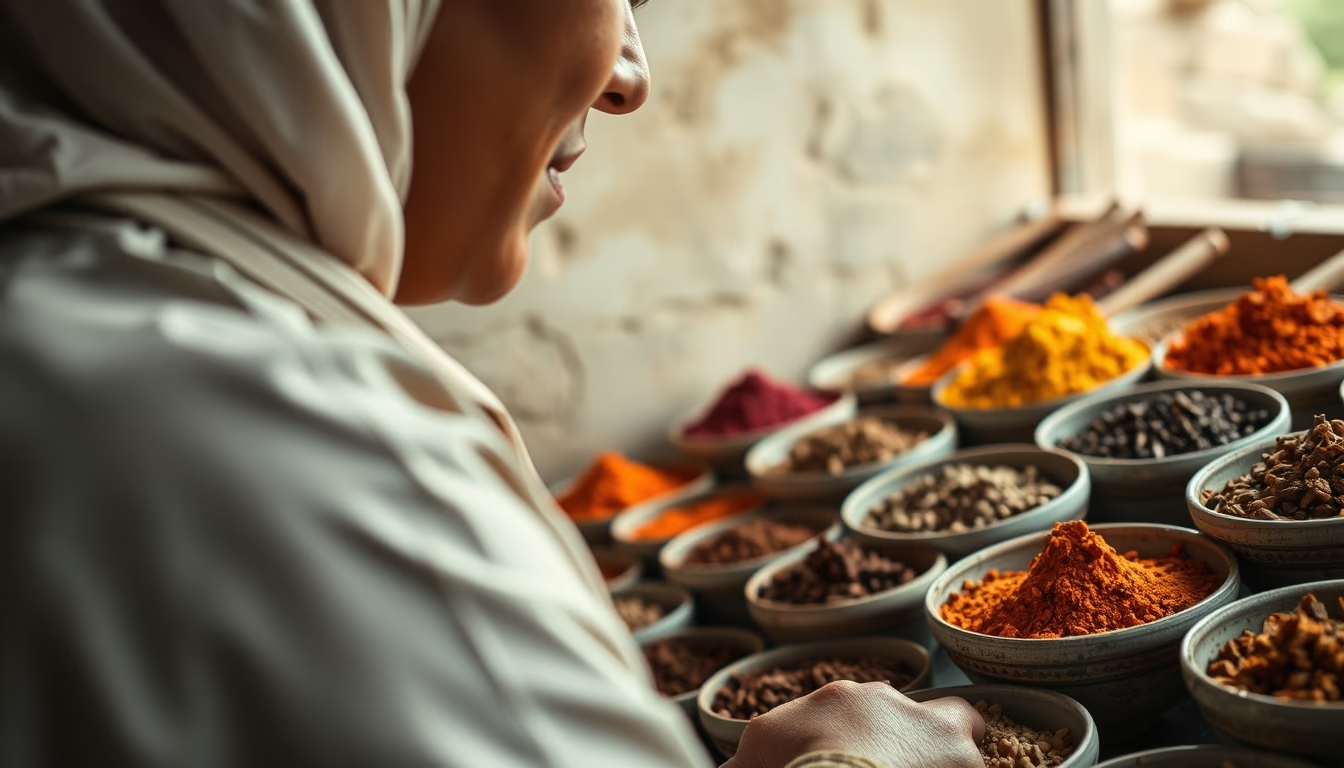
Spices like pepper, cinnamon, and clove drove the Silk Road for centuries, shaping economies and cultures across continents.
About this subject
The Silk Road, a network of trade routes connecting China to the Mediterranean, was a vibrant artery for the spice trade. Many spices originated in Southeast Asia and India, traveling thousands of kilometers across deserts, mountains, and oceans to reach eager consumers. Black pepper (Piper nigrum) was among the most prized, often used as currency in medieval Europe. Cinnamon, harvested from the bark of trees in Sri Lanka and southern India, was so valued that its source was kept secret by merchants to control prices.
The spice trade had a profound impact on global history. It spurred European maritime exploration in the 15th and 16th centuries, as navigators like Vasco da Gama and Christopher Columbus sought direct routes to spice sources. Clove (Syzygium aromaticum) and nutmeg (Myristica fragrans) were so coveted that they triggered colonial conflicts among Portuguese, Dutch, and English powers in the Moluccas, known as the Spice Islands.
Beyond economics, spices influenced cuisine and medicine. Saffron, for example, was used both to color and flavor royal dishes in Persia and Europe and as a textile dye. Ginger and cardamom were employed in Ayurvedic and Chinese medicine for digestive ailments. The demand for these goods created a complex trade network that integrated cultures and technologies, from camel caravans in Central Asia to merchant ships on the Indian Ocean.
Interestingly, many spices also served as natural preservatives before refrigeration. Pepper and clove inhibit bacterial growth, making them especially useful for preserving meat in Europe before winter. Thus, the Silk Road was not merely a route for luxury; it was a vehicle for practical solutions that shaped dietary habits and health practices worldwide.
Frequently Asked Questions
Which spices were most valuable on the Silk Road?
Black pepper was the most valuable, followed by cinnamon, clove, nutmeg, and saffron. These spices were often traded for gold and silver.
How were spices transported along the Silk Road?
Spices traveled via camel caravans across Central Asia and also by ships on the Indian Ocean. Routes combined overland and maritime segments, with merchants stopping at cities like Samarkand and Hormuz.
What impact did spices have on European exploration?
The high demand and monopoly of intermediaries spurred Europeans to seek direct sea routes to the Indies, leading to the Age of Discovery with figures like Vasco da Gama and Columbus.
Direct URL
https://pub-c7d6a6ea828543ac903a74a341ccb2e1.r2.dev/imagens/silk-road-spices-arrayed-documentary-photography-fresh7.avifHow to credit
Include a visible link back to UtilizAí. Copy one of the snippets below:
<a href="https://xn--utiliza-eza.com/en/midia/imagens/silk-road-spices-arrayed-documentary-photography-fresh7">Silk road spices arrayed</a> by <a href="https://xn--utiliza-eza.com">UtilizAí</a>, licensed under <a href="https://creativecommons.org/licenses/by/4.0/">CC BY 4.0</a>.
[Silk road spices arrayed](https://xn--utiliza-eza.com/en/midia/imagens/silk-road-spices-arrayed-documentary-photography-fresh7) by [UtilizAí](https://xn--utiliza-eza.com), CC BY 4.0
License: CC-BY-4.0