Silk road spices arrayed
1344×768 · AVIF · CC BY 4.0
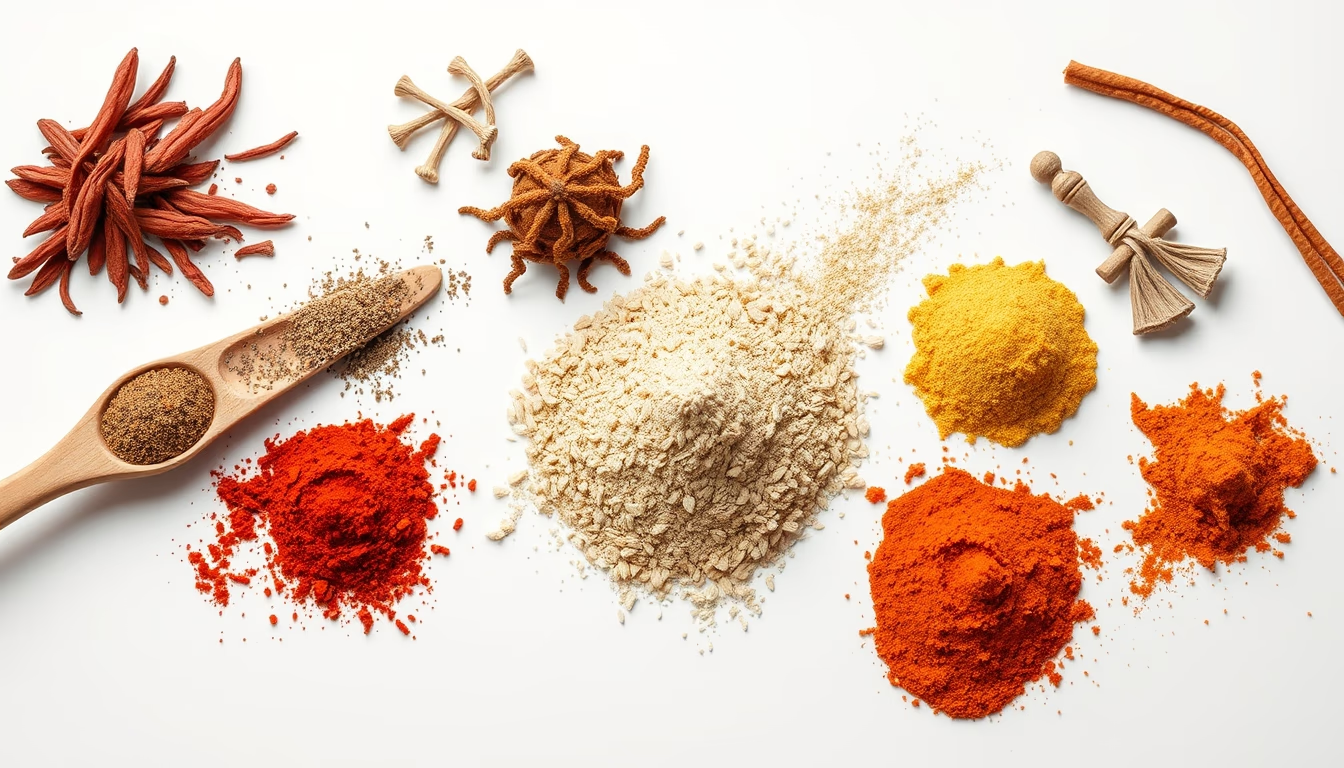
Silk Road spices such as black pepper, cinnamon, and cloves drove trade between Asia and Europe for over two millennia.
About this subject
The Silk Road was a network of trade routes linking East and West, and spices were among the most valuable goods transported. Black pepper, native to southern India and Southeast Asia, was so precious that it was used as currency and to pay taxes. Cinnamon, from Sri Lanka, was used in religious rituals and as a preservative. Cloves and nutmeg, indigenous to the Maluku Islands (Indonesia), were considered rare treasures and sparked colonial disputes.
The economic impact of spices was colossal. For centuries, Venetian merchants controlled the European monopoly, selling pepper at exorbitant prices. The search for direct routes to spice sources motivated Portuguese and Spanish explorations. Vasco da Gama reached India in 1498, and the Portuguese soon dominated the spice trade, displacing Arab and Italian intermediaries. In the 17th century, the Dutch, through the Dutch East India Company, monopolized clove and nutmeg production, even limiting supply to maintain high prices.
Culturally, spices transformed global cuisine. In medieval Europe, spices were used to season meats, preserve food, and mask rancid flavors. Beyond cooking, they were employed in medicine (such as the humoral theory) and perfumery. In Asia, ginger, cardamom, and turmeric were essential in Ayurvedic medicine and cooking. Interestingly, nutmeg was used as a hallucinogen and aphrodisiac, while cinnamon was associated with royalty.
Today, spices are affordable, but their history on the Silk Road has left a deep legacy. The spice trade not only shaped economies and empires but also fostered cultural exchange and early globalization. The diversity of flavors we enjoy today is a result of these ancient routes that connected civilizations.
Frequently Asked Questions
Which spices were traded on the Silk Road?
Key spices included black pepper, cinnamon, cloves, nutmeg, ginger, cardamom, saffron, and turmeric, sourced from India, Southeast Asia, and Sri Lanka.
Why were spices so valuable in the past?
They were rare, difficult to transport, and used for food preservation, medicine, religious rituals, and as status symbols. Their value often rivaled gold.
What impact did the Silk Road have on world cuisine?
It introduced exotic flavors to Europe and Asia, transforming culinary practices. The spice demand drove globalization and the exchange of gastronomic techniques.
Direct URL
https://pub-c7d6a6ea828543ac903a74a341ccb2e1.r2.dev/imagens/silk-road-spices-arrayed-commercial-product-photography-fresh15.avifHow to credit
Include a visible link back to UtilizAí. Copy one of the snippets below:
<a href="https://xn--utiliza-eza.com/en/midia/imagens/silk-road-spices-arrayed-commercial-product-photography-fresh15">Silk road spices arrayed</a> by <a href="https://xn--utiliza-eza.com">UtilizAí</a>, licensed under <a href="https://creativecommons.org/licenses/by/4.0/">CC BY 4.0</a>.
[Silk road spices arrayed](https://xn--utiliza-eza.com/en/midia/imagens/silk-road-spices-arrayed-commercial-product-photography-fresh15) by [UtilizAí](https://xn--utiliza-eza.com), CC BY 4.0
License: CC-BY-4.0