Silk road spices arrayed
1344×768 · AVIF · CC BY 4.0
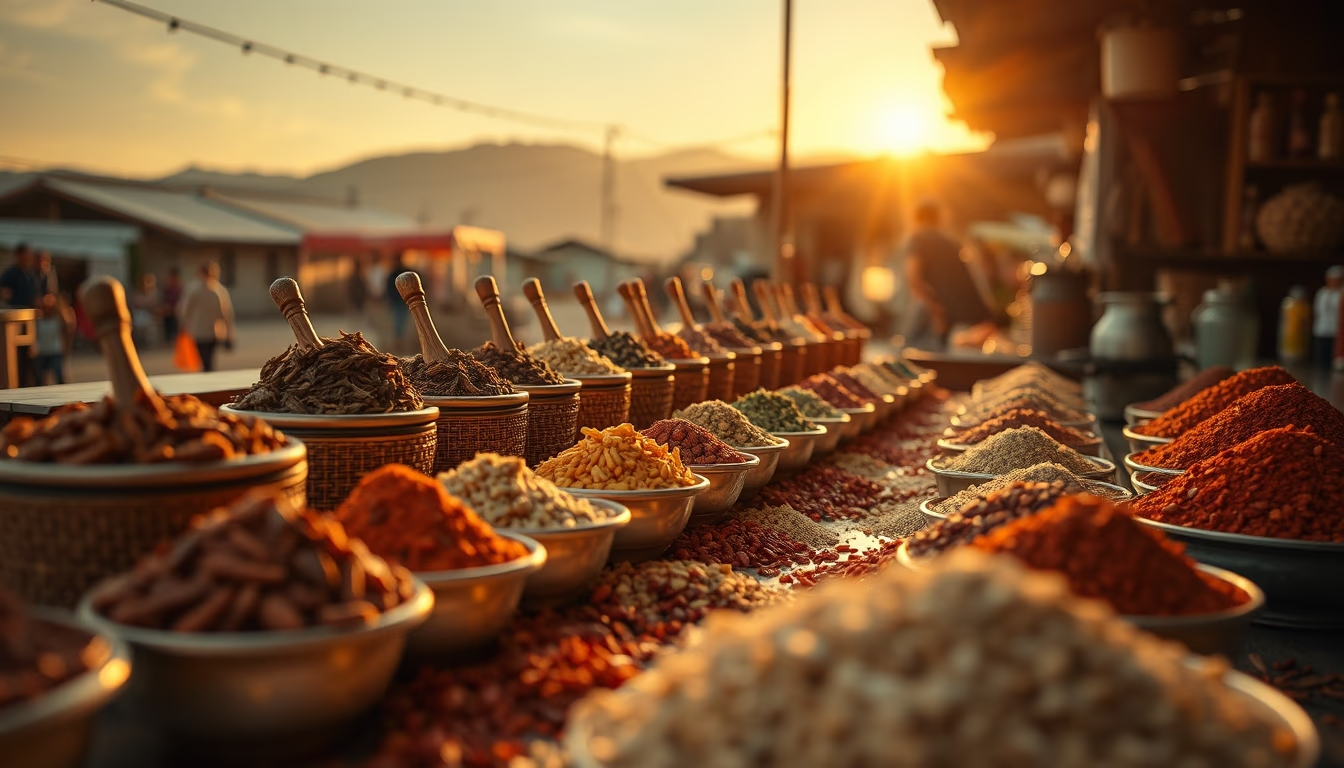
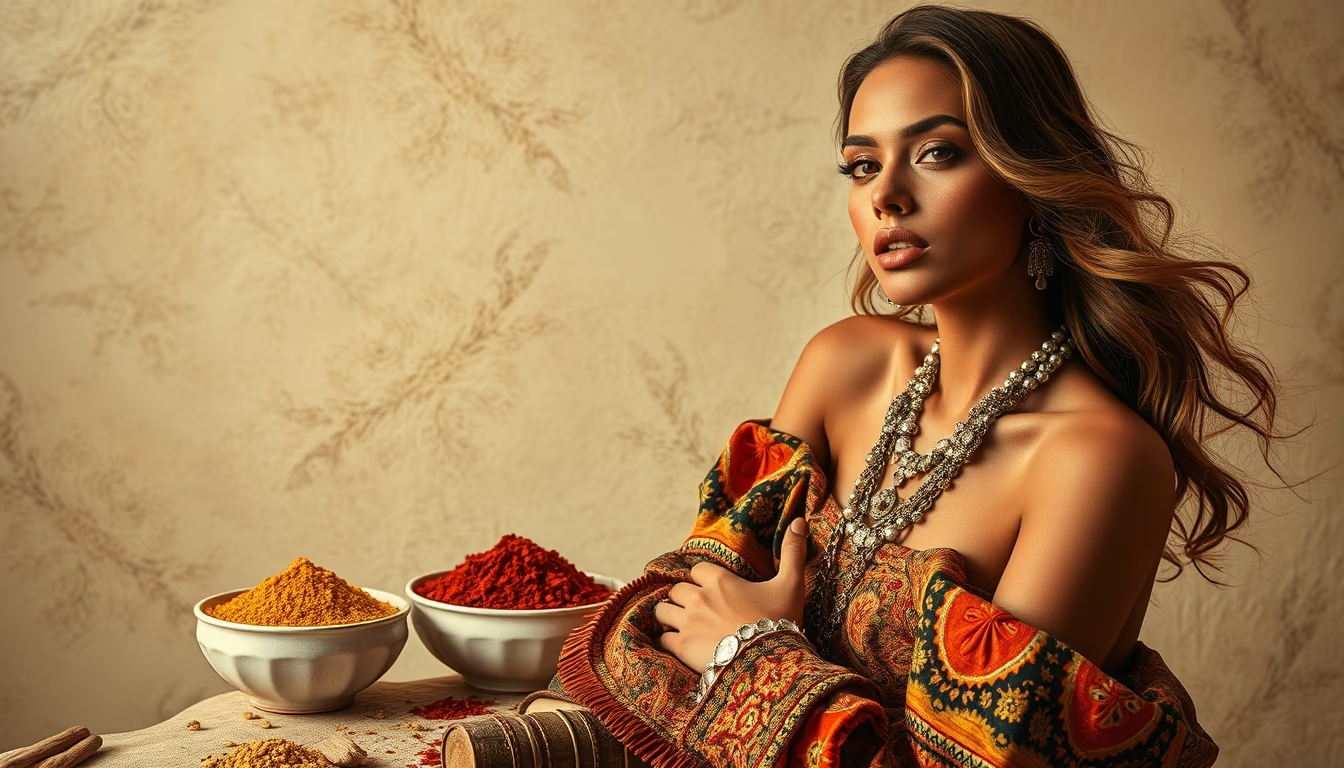
An array of Silk Road spices, including saffron, cinnamon, and pepper, that shaped global trade and cuisine.
About this subject
The Silk Road was not only a route for silk but also a complex spice trade network connecting East and West. Spices like cinnamon, cloves, nutmeg, black pepper, and saffron traveled thousands of kilometers from the Spice Islands (Maluku) and the Indian subcontinent to markets in Constantinople and Venice. These goods were so valuable that in medieval Europe they were worth their weight in gold and even used as currency.
The spice trade drove maritime exploration. Bartolomeu Dias and Vasco da Gama sought alternative routes to break the Venetian and Ottoman monopoly. Pepper, in particular, was essential for preserving meat and masking spoiled flavors. Saffron, hand-harvested from the stigmas of Crocus sativus, remains the world's most expensive spice, requiring about 150 flowers to produce one gram.
Beyond economic value, spices influenced traditional medicine, perfumery, and religion. Frankincense and myrrh, also transported along the Silk Road, were used in rituals. Today, the legacy of this exchange is visible in global cuisine: Indian curries, Moroccan tagines, European spiced breads. The diversity of colors and aromas of the spices reflects centuries of history, conflicts, and cultural exchanges.
Frequently Asked Questions
What were the main spices traded on the Silk Road?
The main spices included black pepper, cinnamon, cloves, nutmeg, saffron, ginger, and cardamom, sourced mainly from India, Southeast Asia, and Persia.
Why were spices so valuable in medieval Europe?
They were used to preserve food, mask spoiled flavors, in medicines and perfumes, and as status symbols. Their high cost was due to the long and dangerous transportation journey.
How did the spice trade influence maritime exploration?
The quest for direct routes to spice sources led to discoveries such as Vasco da Gama's sea route to India and Columbus's voyage to the Americas, seeking alternatives to the Venetian and Ottoman monopoly.
Direct URL
https://pub-c7d6a6ea828543ac903a74a341ccb2e1.r2.dev/imagens/silk-road-spices-arrayed-cinematic-wide-shot-fresh8.avifHow to credit
Include a visible link back to UtilizAí. Copy one of the snippets below:
<a href="https://xn--utiliza-eza.com/en/midia/imagens/silk-road-spices-arrayed-cinematic-wide-shot-fresh8">Silk road spices arrayed</a> by <a href="https://xn--utiliza-eza.com">UtilizAí</a>, licensed under <a href="https://creativecommons.org/licenses/by/4.0/">CC BY 4.0</a>.
[Silk road spices arrayed](https://xn--utiliza-eza.com/en/midia/imagens/silk-road-spices-arrayed-cinematic-wide-shot-fresh8) by [UtilizAí](https://xn--utiliza-eza.com), CC BY 4.0
License: CC-BY-4.0