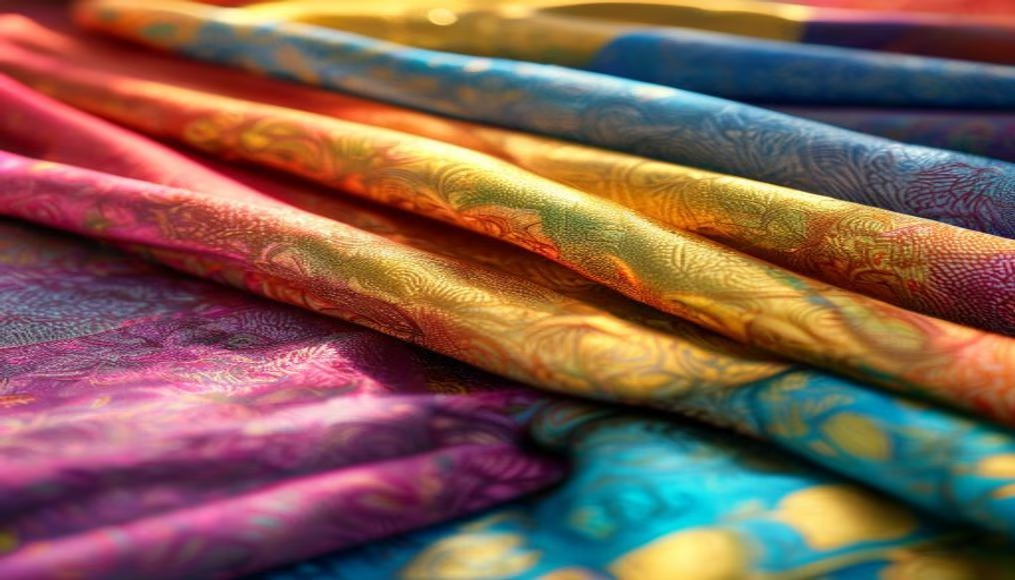
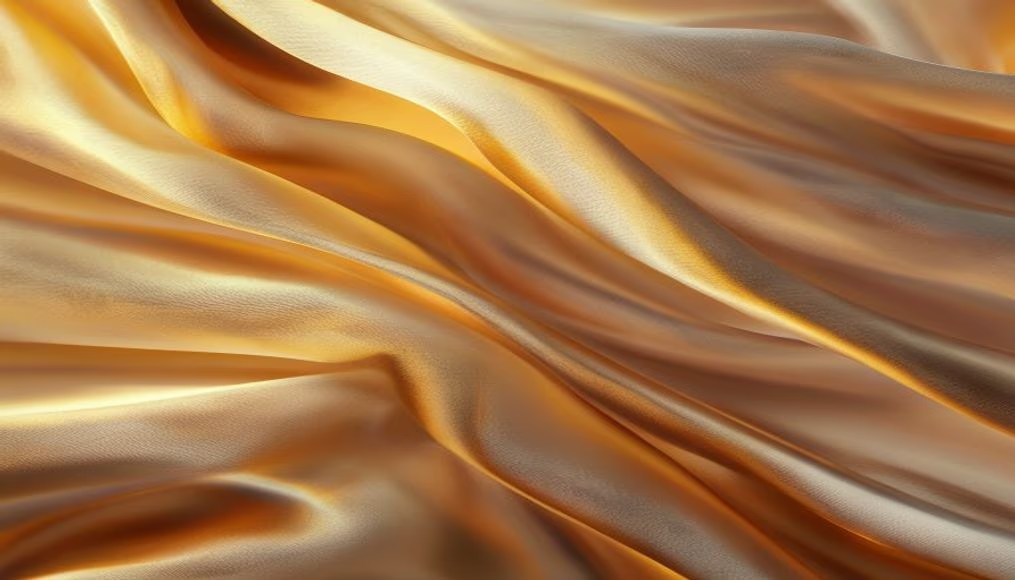
Silk fabric flowing close-up
1344×768 · AVIF · CC BY 4.0

Close-up of flowing silk fabric, capturing the texture and movement of the luxurious natural fiber in detail.
About this subject
Silk is a natural protein fiber produced by the silkworm (Bombyx mori) during cocoon formation. Originating in China, where it was cultivated as early as the third millennium BCE, silk became one of the most valuable commodities in international trade, giving rise to the legendary Silk Road. The production process involves raising silkworms, harvesting cocoons, and spinning fibers that can reach up to 1,500 meters in length per cocoon. The soft texture and characteristic luster of silk result from its triangular prismatic structure, which refracts light in a unique way.
In the fashion world, silk is synonymous with elegance and comfort, used in haute couture garments, lingerie, scarves, and ties. Its ability to regulate temperature makes it ideal for both warm and cold climates. Additionally, silk is hypoallergenic and resistant to dust mites, often recommended for sensitive skin. Global silk production is led by China, followed by India, which together account for over 80% of world production.
Interestingly, silk also has applications beyond fashion, such as in surgical sutures due to its biocompatibility and strength. Silk fibers are used in tissue engineering and biodegradable medical devices. Raw silk, before dyeing, can range from white to light yellow, depending on the silkworm's diet. The close-up of flowing fabric reveals the delicate weave of threads that give silk its unmistakable fluidity and drape.
Frequently Asked Questions
How is silk produced?
Silk is produced from the cocoons of silkworms. The cocoons are boiled to soften the sericin, a natural gum, and then the filaments are unwound and spun into silk threads.
What are the advantages of silk over other fabrics?
Silk is hypoallergenic, breathable, temperature-regulating, and has a natural luster. It is also resistant to dust mites and fungi, making it ideal for sensitive skin.
Is silk a sustainable fabric?
Silk production can be sustainable if done ethically, with organic farming practices and fair treatment of workers. Silk is biodegradable and renewable, but conventional production may involve chemical use.
Direct URL
https://pub-c7d6a6ea828543ac903a74a341ccb2e1.r2.dev/imagens/silk-fabric-flowing-close-up-aerial-drone-shot.avifHow to credit
Include a visible link back to UtilizAí. Copy one of the snippets below:
<a href="https://xn--utiliza-eza.com/en/midia/imagens/silk-fabric-flowing-close-up-aerial-drone-shot">Silk fabric flowing close-up</a> by <a href="https://xn--utiliza-eza.com">UtilizAí</a>, licensed under <a href="https://creativecommons.org/licenses/by/4.0/">CC BY 4.0</a>.
[Silk fabric flowing close-up](https://xn--utiliza-eza.com/en/midia/imagens/silk-fabric-flowing-close-up-aerial-drone-shot) by [UtilizAí](https://xn--utiliza-eza.com), CC BY 4.0
License: CC-BY-4.0