Shopping mall crowd during Black Friday sales
1344×768 · AVIF · CC BY 4.0
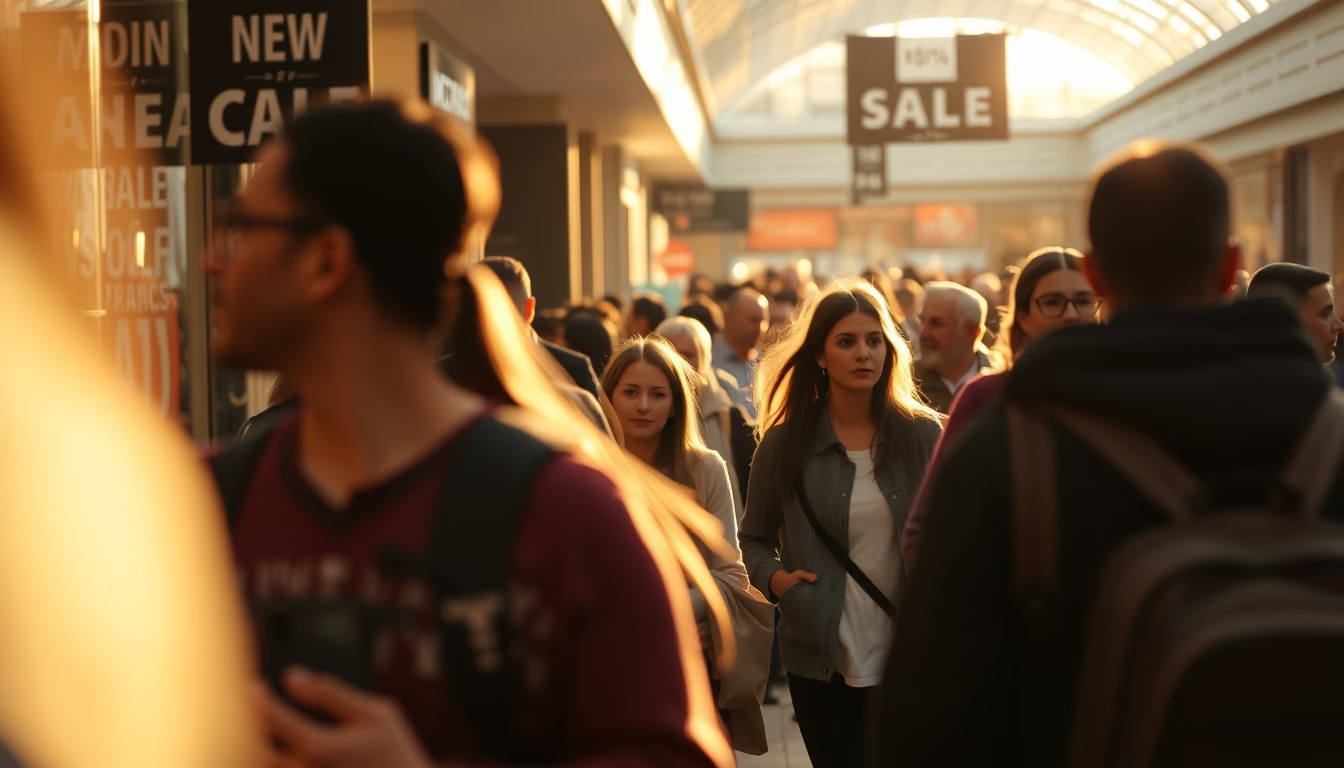
Heavy consumer traffic in a shopping mall during Black Friday, with crowded stores and hallways filled with people during peak hours.
About this subject
Black Friday, imported from the United States, has become the biggest discount event in Brazilian retail. In 2023, e-commerce revenue exceeded BRL 6 billion, but physical stores still account for about 70% of total sales. Shopping malls like MorumbiShopping (São Paulo) and BarraShopping (Rio de Janeiro) can register over 200,000 visitors on the day, with queues forming as early as dawn. The phenomenon is not recent: since 2010, the date has consolidated in the national calendar, driven by aggressive campaigns and adherence by major retail chains. The crowding, although expected, creates logistical challenges such as the need for reinforced security and flow control. In 2024, the Brazilian Association of Shopping Mall Retailers (Alshop) projected an 8% increase in traffic compared to the previous year. Interestingly, the term "Black Friday" originated in 1950s Philadelphia to describe the chaos after Thanksgiving, but in Brazil it has taken on its own characteristics, with promotions extending for weeks and even a full month of discounts.
The image captures the peak of the afternoon, when consumer flow reaches its highest point. Central corridors become impassable, and electronics, clothing, and footwear stores are the most sought after. Data from the National Confederation of Commerce indicates that 40% of Brazilians take advantage of Black Friday to buy Christmas gifts, anticipating the year-end festivities. Additionally, the date boosts sectors such as private security and cleaning, which hire extra teams to meet increased demand. Despite complaints about queues and disorganization, many consumers view the experience as a social event, comparable to concerts or soccer games.
The concentration of people also raises questions about conscious consumption and financial planning. Surveys by Serasa show that 30% of Brazilians go into debt from Black Friday purchases, attracted by discounts that are not always real. Procon conducts inspections to curb the so-called "half of double" practice, where stores raise prices beforehand to simulate larger discounts. Still, the event remains an economic barometer, reflecting consumer confidence and retail health.
Frequently Asked Questions
What is the origin of Black Friday?
Black Friday originated in Philadelphia, USA, in the 1950s to describe the chaos and traffic congestion after Thanksgiving. The term was adopted by retailers as a day of big discounts and spread globally.
What are the main risks for consumers on Black Friday?
Main risks include the 'half of double' practice (price increases before the date to simulate discounts), debt from impulsive purchases, and low-quality products. It is recommended to research prices in advance and use comparison sites.
How do shopping malls prepare for the increased traffic on Black Friday?
Malls reinforce security with extra staff, control people flow with barriers and guidance, and extend operating hours. Many also offer free parking or discounted rates to attract consumers.
Direct URL
https://pub-c7d6a6ea828543ac903a74a341ccb2e1.r2.dev/imagens/shopping-mall-crowd-during-black-friday-sales-wide-late-afternoon-4.avifHow to credit
Include a visible link back to UtilizAí. Copy one of the snippets below:
<a href="https://xn--utiliza-eza.com/en/midia/imagens/shopping-mall-crowd-during-black-friday-sales-wide-late-afternoon-4">Shopping mall crowd during Black Friday sales</a> by <a href="https://xn--utiliza-eza.com">UtilizAí</a>, licensed under <a href="https://creativecommons.org/licenses/by/4.0/">CC BY 4.0</a>.
[Shopping mall crowd during Black Friday sales](https://xn--utiliza-eza.com/en/midia/imagens/shopping-mall-crowd-during-black-friday-sales-wide-late-afternoon-4) by [UtilizAí](https://xn--utiliza-eza.com), CC BY 4.0
License: CC-BY-4.0