Shibuya crossing aerial
1344×768 · AVIF · CC BY 4.0
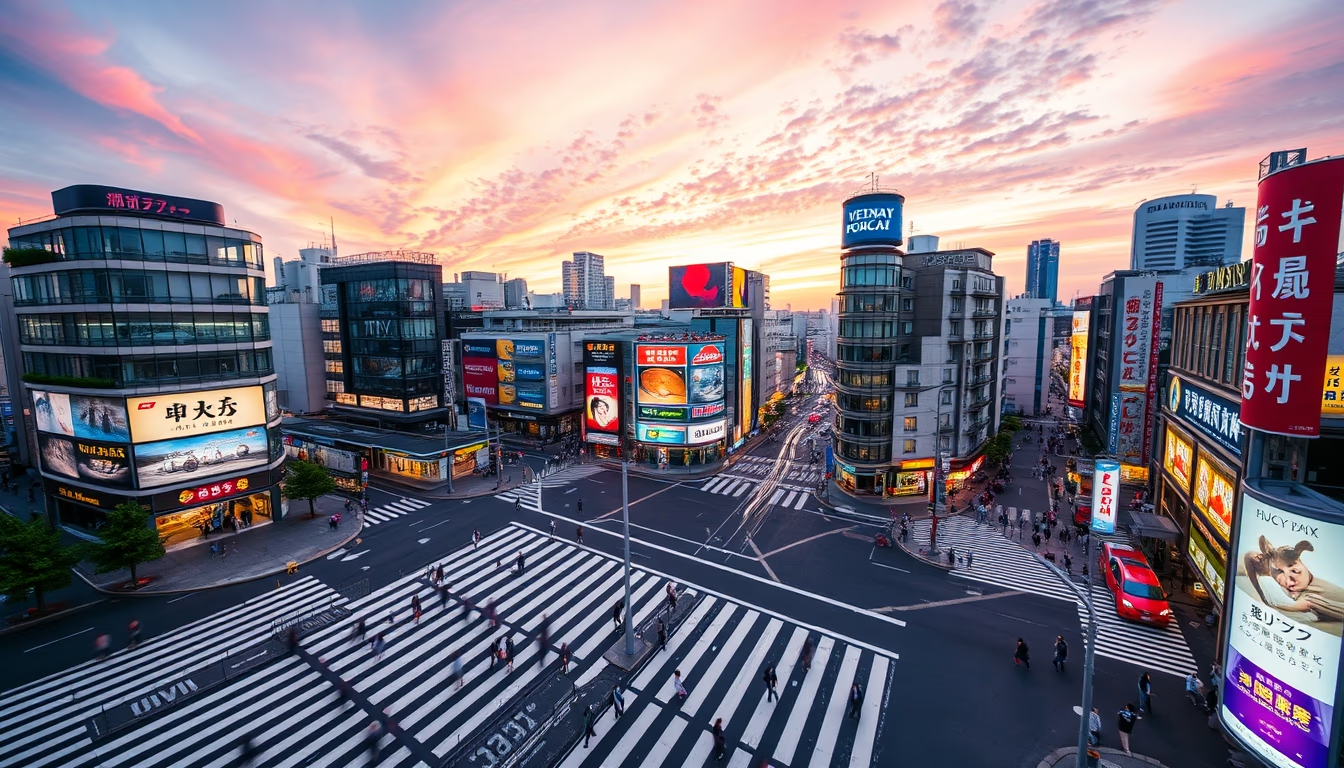
Aerial view of Shibuya Crossing, the busiest pedestrian intersection in the world, famous for its intense flow of people and Tokyo lights.
About this subject
Shibuya Crossing, located in front of Shibuya Station in Tokyo, Japan, is a urban and tourist phenomenon. Known as a "scramble crossing," it halts all vehicle traffic so pedestrians can cross in every direction simultaneously. An estimated 3,000 people cross per traffic light cycle, totaling about 2.4 million pedestrians on a weekday. This makes it one of the most photographed spots in the world, especially with long exposure shots that capture light trails.
The crossing gained global prominence in the 1990s, boosted by appearances in films like "Lost in Translation" and "The Fast and the Furious: Tokyo Drift." Its image is often used as a symbol of Japanese modernity and urban hustle. The surrounding area features shops, restaurants, the famous Shibuya police box, and the statue of Hachiko, a traditional meeting point.
A technical curiosity: long exposure aerial photography enhances the contrast between the continuous flow of pedestrians (becoming blurs) and the rigid, illuminated buildings. This technique is popular among photographers visiting the site, especially at night when neon lights and car headlights create vibrant patterns. The crossing is also monitored by security cameras to manage crowds, especially during holidays like New Year's.
Despite its fame, the crossing is constantly evolving. In 2023, the area underwent renovations to improve accessibility and pedestrian experience. The Shibuya Scramble Square building, opened in 2019, offers an observation deck with a prime view of the crossing, further solidifying its status as an architectural and cultural icon of Tokyo.
Frequently Asked Questions
What is Shibuya Crossing?
It is a pedestrian scramble crossing in Tokyo, Japan, where all traffic directions open simultaneously. It is widely regarded as the busiest pedestrian crossing in the world, with thousands of people crossing each traffic light cycle.
Why is Shibuya Crossing so famous?
Its fame stems from the massive pedestrian flow, neon lights, and appearances in movies and shows. It has become an icon of Japanese pop culture and Tokyo's urban life.
What is the best time to photograph the crossing?
Nighttime is ideal for long exposure shots, as building lights, car headlights, and people movement create dramatic effects. Peak hours (late afternoon and evening) yield the highest pedestrian volume.
Direct URL
https://pub-c7d6a6ea828543ac903a74a341ccb2e1.r2.dev/imagens/shibuya-crossing-aerial-long-exposure-p11.avifHow to credit
Include a visible link back to UtilizAí. Copy one of the snippets below:
<a href="https://xn--utiliza-eza.com/en/midia/imagens/shibuya-crossing-aerial-long-exposure-p11">Shibuya crossing aerial</a> by <a href="https://xn--utiliza-eza.com">UtilizAí</a>, licensed under <a href="https://creativecommons.org/licenses/by/4.0/">CC BY 4.0</a>.
[Shibuya crossing aerial](https://xn--utiliza-eza.com/en/midia/imagens/shibuya-crossing-aerial-long-exposure-p11) by [UtilizAí](https://xn--utiliza-eza.com), CC BY 4.0
License: CC-BY-4.0