Shark underwater menacing
1344×768 · AVIF · CC BY 4.0
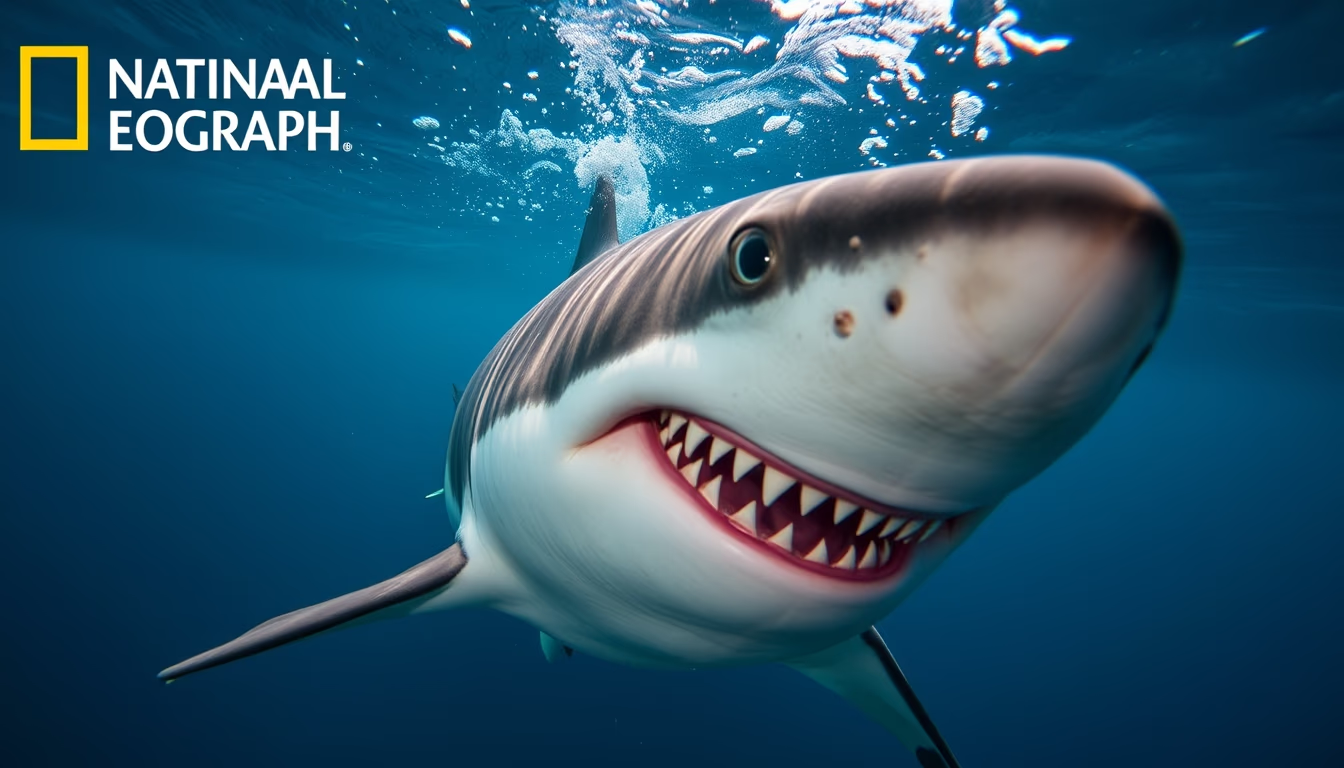
Sharks are ancient marine predators, with over 400 species, playing a vital role in ocean ecosystems.
About this subject
Sharks are cartilaginous fish that have existed for over 400 million years, predating dinosaurs. They belong to the class Chondrichthyes and are found in all oceans, from shallow waters to abyssal depths. Despite their 'killer' reputation, most species are harmless to humans. In fact, fatal attacks are extremely rare, with about 10 deaths per year globally, while humans kill approximately 100 million sharks annually, mainly for the fin trade.
Sharks have highly acute senses. They possess ampullae of Lorenzini, organs that detect electric fields generated by other animals, and a lateral line that perceives vibrations in the water. Some species, like the great white shark, can detect a drop of blood from kilometers away. Their teeth are replaceable: teeth fall out and are continuously replaced, potentially losing thousands over a lifetime.
Species like the whale shark, the largest fish in the world, are filter feeders that consume plankton. The hammerhead shark has a T-shaped head that improves stereoscopic vision and prey detection. Many sharks are ovoviviparous, with pups developing inside the mother and being born live. Gestation periods can range from 9 to 22 months, depending on the species.
Shark conservation is crucial for ocean health. As apex predators, they control populations of other species and maintain ecological balance. Overfishing and bycatch in fishing nets threaten many species, some of which are critically endangered. Protection initiatives, such as marine sanctuaries and fin trade regulations, are underway in several countries.
Frequently Asked Questions
How many species of sharks are there?
There are over 400 species of sharks, ranging from the small dwarf lanternshark (about 20 cm) to the huge whale shark (up to 12 meters).
Do sharks really attack humans often?
No. Shark attacks are rare and usually not fatal. On average, there are about 80 unprovoked attacks per year worldwide, with approximately 10 deaths. Most attacks are due to curiosity or mistaken identity.
Why are sharks important for the ocean?
As apex predators, sharks regulate the populations of their prey, maintaining ecological balance. Their removal can cause trophic cascades, affecting the entire marine ecosystem.
Direct URL
https://pub-c7d6a6ea828543ac903a74a341ccb2e1.r2.dev/imagens/shark-underwater-menacing-national-geographic-style.avifHow to credit
Include a visible link back to UtilizAí. Copy one of the snippets below:
<a href="https://xn--utiliza-eza.com/en/midia/imagens/shark-underwater-menacing-national-geographic-style">Shark underwater menacing</a> by <a href="https://xn--utiliza-eza.com">UtilizAí</a>, licensed under <a href="https://creativecommons.org/licenses/by/4.0/">CC BY 4.0</a>.
[Shark underwater menacing](https://xn--utiliza-eza.com/en/midia/imagens/shark-underwater-menacing-national-geographic-style) by [UtilizAí](https://xn--utiliza-eza.com), CC BY 4.0
License: CC-BY-4.0