Shamisen japanese
1344×768 · AVIF · CC BY 4.0
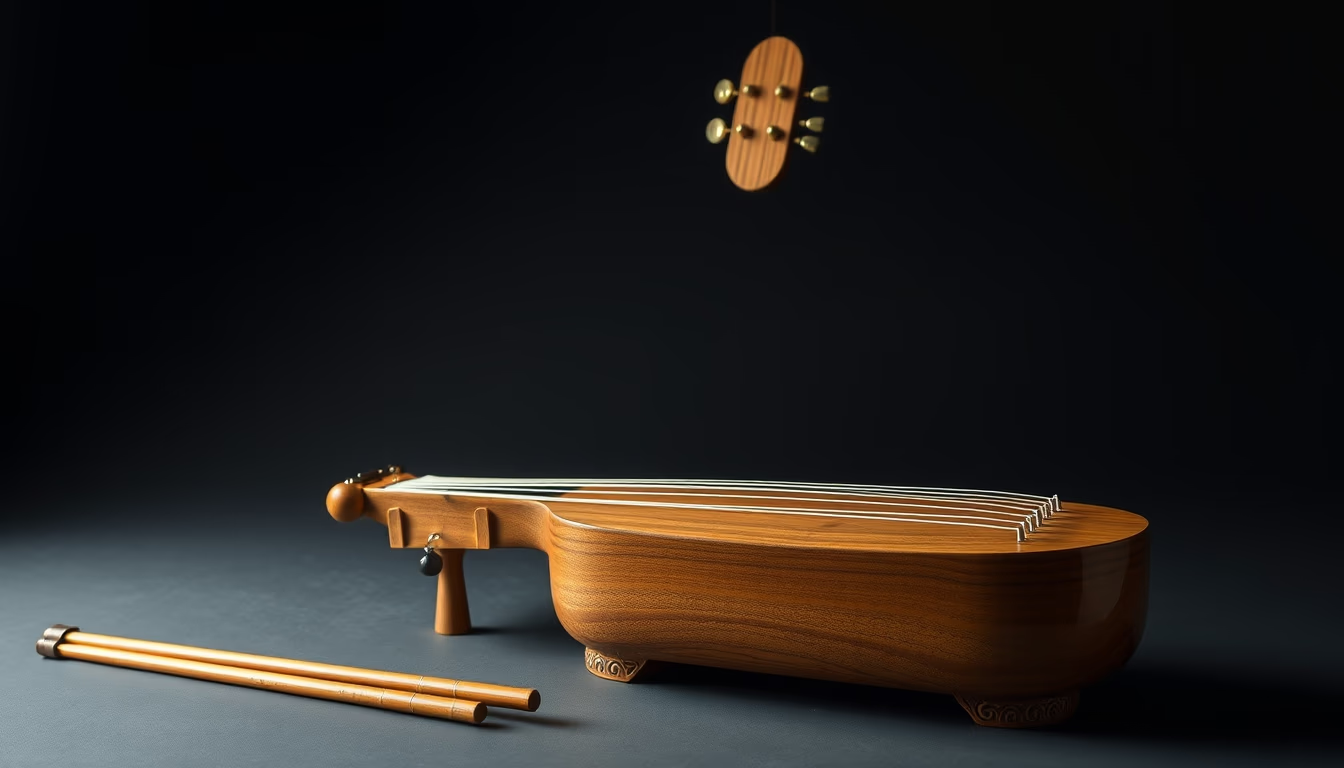
The shamisen is a traditional Japanese three-stringed instrument with a skin-covered body, used in genres such as kabuki and folk music.
About this subject
The shamisen, also known as sanshin in Okinawa, is a traditional Japanese plucked string instrument. It originated from the Chinese sanxian, arriving in Japan via the Ryukyu Kingdom (present-day Okinawa) in the 16th century, and quickly became integrated into Japanese musical culture. It has three strings stretched over a long fretless neck and a square body covered with animal skin, traditionally cat or dog, but nowadays often synthetic. The sound is produced using a plectrum called bachi, typically made of wood or ivory, which strikes the strings percussively and melodically.
There are different types of shamisen, classified by neck thickness and sound character. The hosozao (thin neck) is used in styles like nagauta (music for kabuki theater) and kouta (short songs). The chuzao (medium neck) is common in jiuta (classical shamisen music) and min'yo (folk music). The futozao (thick neck) produces a deeper, more powerful sound, essential for gidayu-bushi (narrative music for bunraku puppet theater) and some folk forms. Pitch can be adjusted by moving the bridge (koma) along the body, changing the effective string length.
The shamisen plays a central role in several Japanese performing arts. In kabuki theater, it accompanies dramatic action with musical commentary; in bunraku puppet theater, the shamisen plays the narrative part while the singer (tayu) recites the story. It is also vital in min'yo, where folk musicians play lively melodies at festivals and celebrations. The instrument is often decorated with inlays of mother-of-pearl, bone, or ivory on the neck and body, and the skin may be painted with traditional scenes. Playing techniques include vibrato, glissando, and rhythmic strikes of the bachi on the skin, creating a distinctive sound that blends percussion and melody.
Frequently Asked Questions
What is the origin of the shamisen?
The shamisen originated from the Chinese sanxian, arriving in Japan via Okinawa in the 16th century and integrating into Japanese musical culture.
What are the main types of shamisen?
The main types are hosozao (thin neck, used in kabuki and kouta), chuzao (medium neck, for jiuta and folk), and futozao (thick neck, for bunraku and powerful folk).
In which music genres is the shamisen used?
The shamisen is used in genres such as nagauta (kabuki), gidayu-bushi (bunraku), jiuta (classical music), and min'yo (folk music).
Direct URL
https://pub-c7d6a6ea828543ac903a74a341ccb2e1.r2.dev/imagens/shamisen-japanese-studio-still-life-p7.avifHow to credit
Include a visible link back to UtilizAí. Copy one of the snippets below:
<a href="https://xn--utiliza-eza.com/en/midia/imagens/shamisen-japanese-studio-still-life-p7">Shamisen japanese</a> by <a href="https://xn--utiliza-eza.com">UtilizAí</a>, licensed under <a href="https://creativecommons.org/licenses/by/4.0/">CC BY 4.0</a>.
[Shamisen japanese](https://xn--utiliza-eza.com/en/midia/imagens/shamisen-japanese-studio-still-life-p7) by [UtilizAí](https://xn--utiliza-eza.com), CC BY 4.0
License: CC-BY-4.0