Shamisen japanese
1344×768 · AVIF · CC BY 4.0
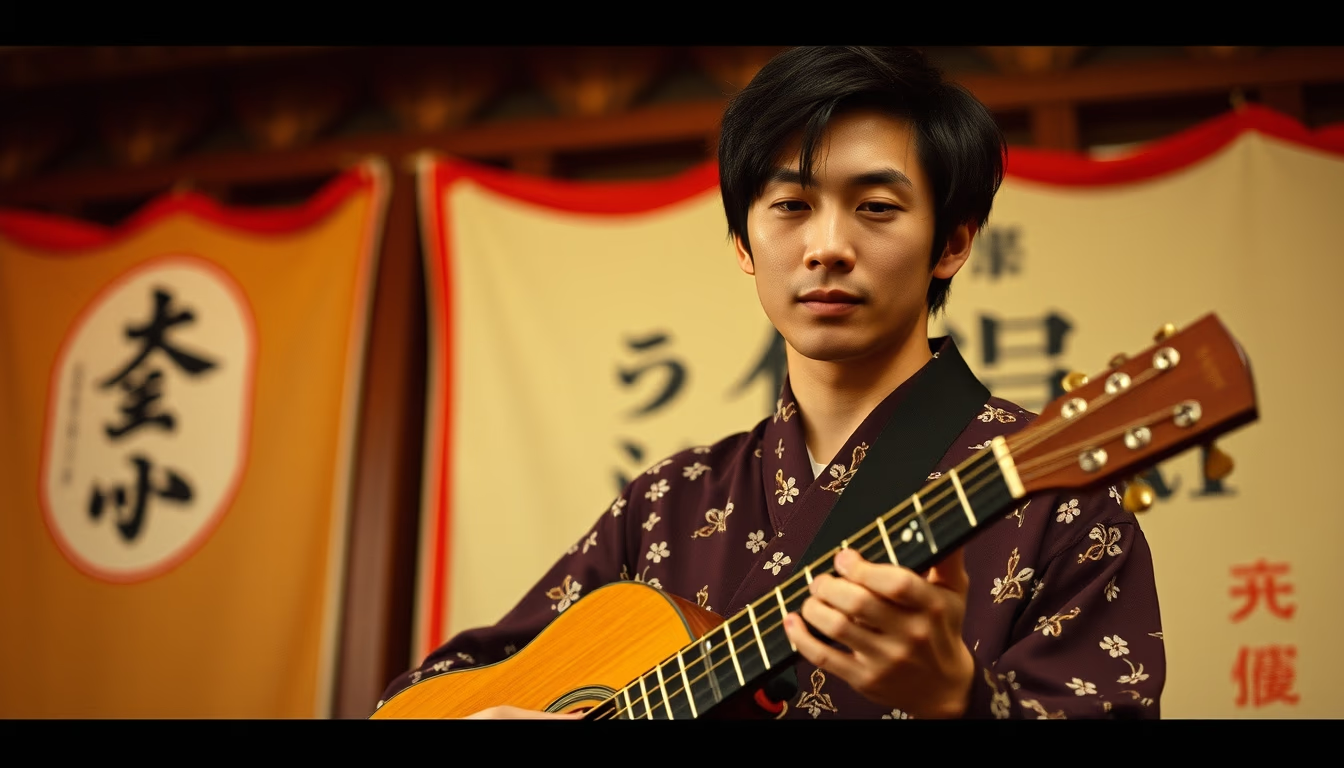
The shamisen is a traditional Japanese three-stringed musical instrument used in genres such as minyo, kabuki and bunraku, with over 400 years of history.
About this subject
The shamisen, also known as sangen, is a plucked string instrument originating from China and introduced to Japan during the Muromachi period (16th century). It is constructed with a wooden body covered with animal skin, traditionally cat or dog, though synthetic materials are used today. The neck (sao) is fretless, and the three strings are tuned in various ways, including honchoshi, niagari or sansagari, depending on the musical genre.
The shamisen plays a central role in several forms of Japanese art. In kabuki, it accompanies dramatic action and rhythmic dialogues. In bunraku (puppet theater), the shamisen player and narrator (tayu) tell the story in unison. In folk music (minyo), the shamisen is used for regional dances and songs, with styles ranging from Tsugaru (north) to Okinawa, where the local instrument is called sanshin.
There are different sizes of shamisen: the hosozao (narrow neck) for kabuki, the chuzao (medium neck) and the futozao (thick neck) for minyo and Tsugaru-jamisen. The bachi, a plectrum used to play, has a leaf-like shape and is made of wood, ivory or plastic, impacting the timbre. Playing techniques include percussive strikes on the skin and rapid vibratos, especially in the Tsugaru style, which has gained worldwide fame.
Interestingly, the shamisen has influenced modern Western musicians, being incorporated into rock and jazz bands. In Japan, masters like Shirakawa Gensui and Yamada Yokei perpetuate the tradition. The instrument is also central to the annual Shamisen Taikai festival, which brings together players from across the country.
Frequently Asked Questions
What is the difference between shamisen and sanshin?
The sanshin is the Okinawan version of the shamisen, with a body covered in snakeskin and a thinner neck. The mainland shamisen uses cat or dog skin and has a more piercing sound.
What wood is used to make a shamisen?
Traditionally, the body is made of mulberry wood (kuwa) or zelkova (keyaki). The neck is made of persimmon or mahogany wood, depending on the craftsman.
Can the shamisen be tuned in different ways?
Yes, the most common tunings are honchoshi (D-A-D), niagari (D-A-E) and sansagari (D-B-D). Each tuning is used for specific musical styles.
Direct URL
https://pub-c7d6a6ea828543ac903a74a341ccb2e1.r2.dev/imagens/shamisen-japanese-lo-fi-disposable-camera-p6.avifHow to credit
Include a visible link back to UtilizAí. Copy one of the snippets below:
<a href="https://xn--utiliza-eza.com/en/midia/imagens/shamisen-japanese-lo-fi-disposable-camera-p6">Shamisen japanese</a> by <a href="https://xn--utiliza-eza.com">UtilizAí</a>, licensed under <a href="https://creativecommons.org/licenses/by/4.0/">CC BY 4.0</a>.
[Shamisen japanese](https://xn--utiliza-eza.com/en/midia/imagens/shamisen-japanese-lo-fi-disposable-camera-p6) by [UtilizAí](https://xn--utiliza-eza.com), CC BY 4.0
License: CC-BY-4.0