Shamisen japanese
1344×768 · AVIF · CC BY 4.0
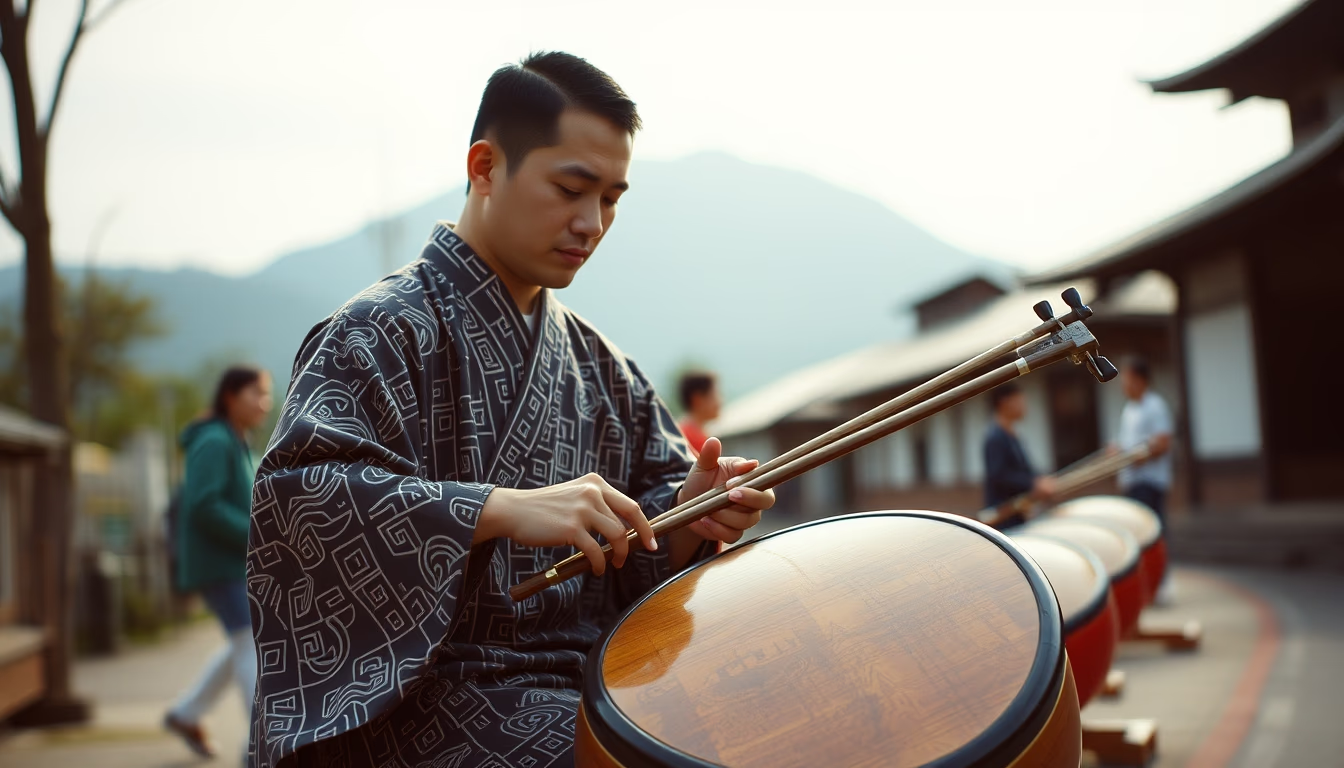
The shamisen is a traditional Japanese three-stringed instrument with a skin-covered body, used in kabuki theater and folk music.
About this subject
The shamisen is a plucked string instrument that arrived in Japan from China via Okinawa around the 16th century. It resembles the Western banjo but has a unique construction: a square body covered with animal skin (traditionally cat or dog, though synthetic skin is now common) and a long fretless neck. The three strings are tuned according to Japanese musical scales, and the instrument is played with a large plectrum called bachi, usually made of ivory or wood.
The shamisen plays a central role in several Japanese art forms. In kabuki theater, it accompanies dramatic scenes and dances, while in bunraku puppet theater, the shamisen provides the soundtrack alongside the narrator. It is also essential in folk music (min'yō) and the vocal genre nagauta. There are different sizes of shamisen: the hosozao (thin neck) for classical music, the chuzao (medium) for min'yō, and the futozao (thick neck) for gidayu, the style used in bunraku.
An interesting fact is that the shamisen was once associated with a lower social class during the Edo period, played by blind musicians and street performers. Over time, it gained prestige and is now considered a symbol of Japanese culture. Contemporary musicians like the Yoshida Brothers have modernized the instrument by incorporating rock and jazz elements, expanding its global reach.
The construction of a shamisen is highly artisanal. Each instrument can take months to make, with specialized craftsmen for each part: the body (do), the neck (sao), and the head (tenjin). The skin is stretched over the body and fixed with decorative nails. The basic tuning is called honchoshi, but variations like niagari and sansagari exist. The sound of the shamisen is percussive and melancholic, capable of expressing a wide range of emotions.
Frequently Asked Questions
What is the origin of the shamisen?
The shamisen originated in China and arrived in Japan via Okinawa in the 16th century, adapting to Japanese music and culture.
In which Japanese music genres is the shamisen used?
It is used in kabuki theater, bunraku, folk music min'yō, and the nagauta genre, as well as modern styles.
What are the differences between shamisen types?
There are three main sizes: hosozao (thin neck, classical), chuzao (medium, folk), and futozao (thick neck, bunraku).
Direct URL
https://pub-c7d6a6ea828543ac903a74a341ccb2e1.r2.dev/imagens/shamisen-japanese-film-grain-authentic-p5.avifHow to credit
Include a visible link back to UtilizAí. Copy one of the snippets below:
<a href="https://xn--utiliza-eza.com/en/midia/imagens/shamisen-japanese-film-grain-authentic-p5">Shamisen japanese</a> by <a href="https://xn--utiliza-eza.com">UtilizAí</a>, licensed under <a href="https://creativecommons.org/licenses/by/4.0/">CC BY 4.0</a>.
[Shamisen japanese](https://xn--utiliza-eza.com/en/midia/imagens/shamisen-japanese-film-grain-authentic-p5) by [UtilizAí](https://xn--utiliza-eza.com), CC BY 4.0
License: CC-BY-4.0