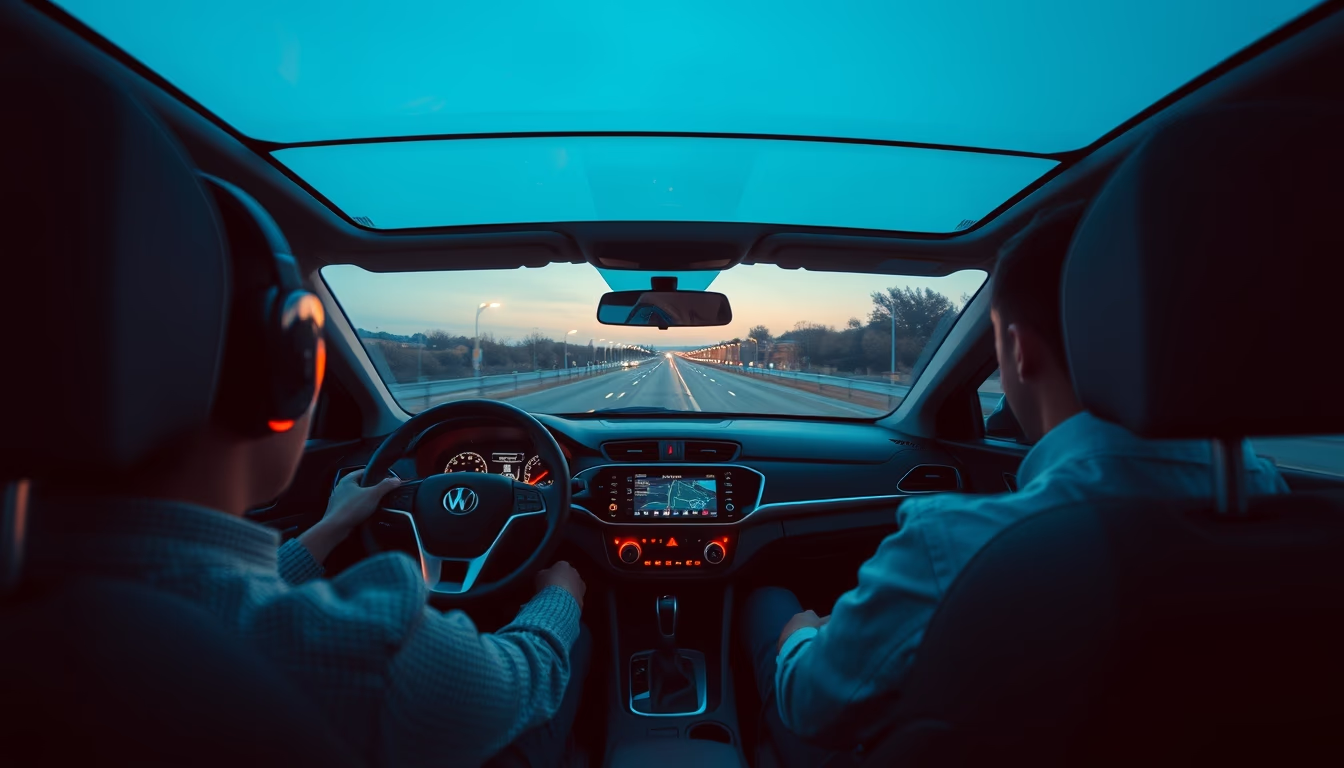
Self driving car interior
1344×768 · AVIF · CC BY 4.0
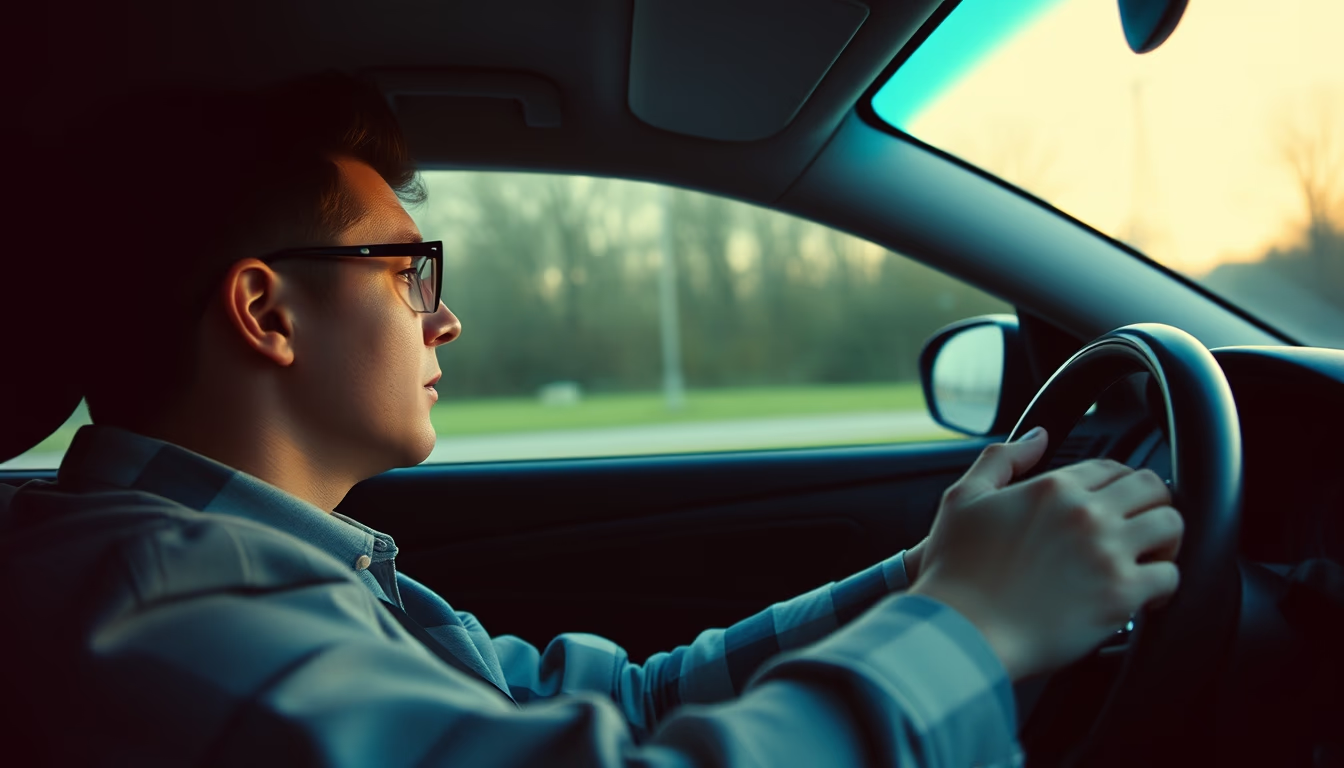
Self-driving car interior reveals a cabin transformed into a living space, without steering wheel or pedals, featuring interactive screens and rotating seats.
About this subject
The interior of a self-driving car represents a radical break from traditional automotive design. Without the need for a steering wheel, instrument panel, or pedals, the cabin space is redesigned to prioritize comfort, productivity, and entertainment. Companies like Waymo, Cruise, and Zoox already test prototypes where front seats can rotate 180 degrees, creating a living area with retractable tables and touchscreens integrated into the panels. Adjustable ambient lighting and advanced soundproofing complete the experience.
The 'lo-fi disposable camera' aesthetic of this image, with grain and desaturated colors, evokes a documentary record of the early autonomous era, reminiscent of first amateur footage of driverless vehicles. In practice, modular interiors allow for varied configurations: from individual reclining seats for naps to armchairs facing a central screen for video calls. Biometric sensors monitor occupant state, adjusting temperature, sound, and aroma automatically. Passive safety is also rethought: side airbags and curtain shields are positioned for scenarios without the traditional driving posture.
By 2026, it is projected that level 4 and 5 autonomous vehicles will begin operating in commercial fleets in selected cities, such as San Francisco and Shanghai. In these models, the interior becomes a 'third space' between home and work, with 5G connectivity, wireless device charging, and even mini-fridges. The absence of a steering wheel also allows the layout to be completely symmetrical, eliminating the distinction between driver and passenger and promoting social interaction.
Despite progress, regulation of autonomous interiors still faces challenges: it is necessary to ensure occupants can take control in emergencies (in levels 3 and 4) and that all entertainment systems do not distract in critical situations. Companies like Tesla retain the steering wheel in their 'Full Self-Driving' beta, while Waymo has completely removed the steering wheel in its modified Jaguar I‑PACE. This divergence reflects the ongoing debate about the transition to fully autonomous mobility.
Frequently Asked Questions
What is the interior of a steering wheel‑less self‑driving car like?
The interior is designed as a multifunctional space, with seats that can rotate and recline, interactive screens, retractable tables, and customizable lighting. The focus is on occupant comfort and productivity, allowing them to work, sleep, or socialize during the ride.
Which companies are already testing self‑driving cars with modified interiors?
Waymo (with steering wheel‑less Jaguar I‑PACE), Cruise (Origin with inward‑facing seats), Zoox (bidirectional vehicle with shell‑shaped seats), and Mercedes‑Benz (F 015 concept) are examples of manufacturers experimenting with steering wheel‑free layouts.
When will self‑driving cars with innovative interiors hit the market?
Level 4 commercial fleets are expected to start operating in some cities by 2026, but mass adoption depends on regulation, cost, and public acceptance. Luxury models may offer modular interiors earlier in ride‑hailing services.
Direct URL
https://pub-c7d6a6ea828543ac903a74a341ccb2e1.r2.dev/imagens/self-driving-car-interior-lo-fi-disposable-camera-p2.avifHow to credit
Include a visible link back to UtilizAí. Copy one of the snippets below:
<a href="https://xn--utiliza-eza.com/en/midia/imagens/self-driving-car-interior-lo-fi-disposable-camera-p2">Self driving car interior</a> by <a href="https://xn--utiliza-eza.com">UtilizAí</a>, licensed under <a href="https://creativecommons.org/licenses/by/4.0/">CC BY 4.0</a>.
[Self driving car interior](https://xn--utiliza-eza.com/en/midia/imagens/self-driving-car-interior-lo-fi-disposable-camera-p2) by [UtilizAí](https://xn--utiliza-eza.com), CC BY 4.0
License: CC-BY-4.0