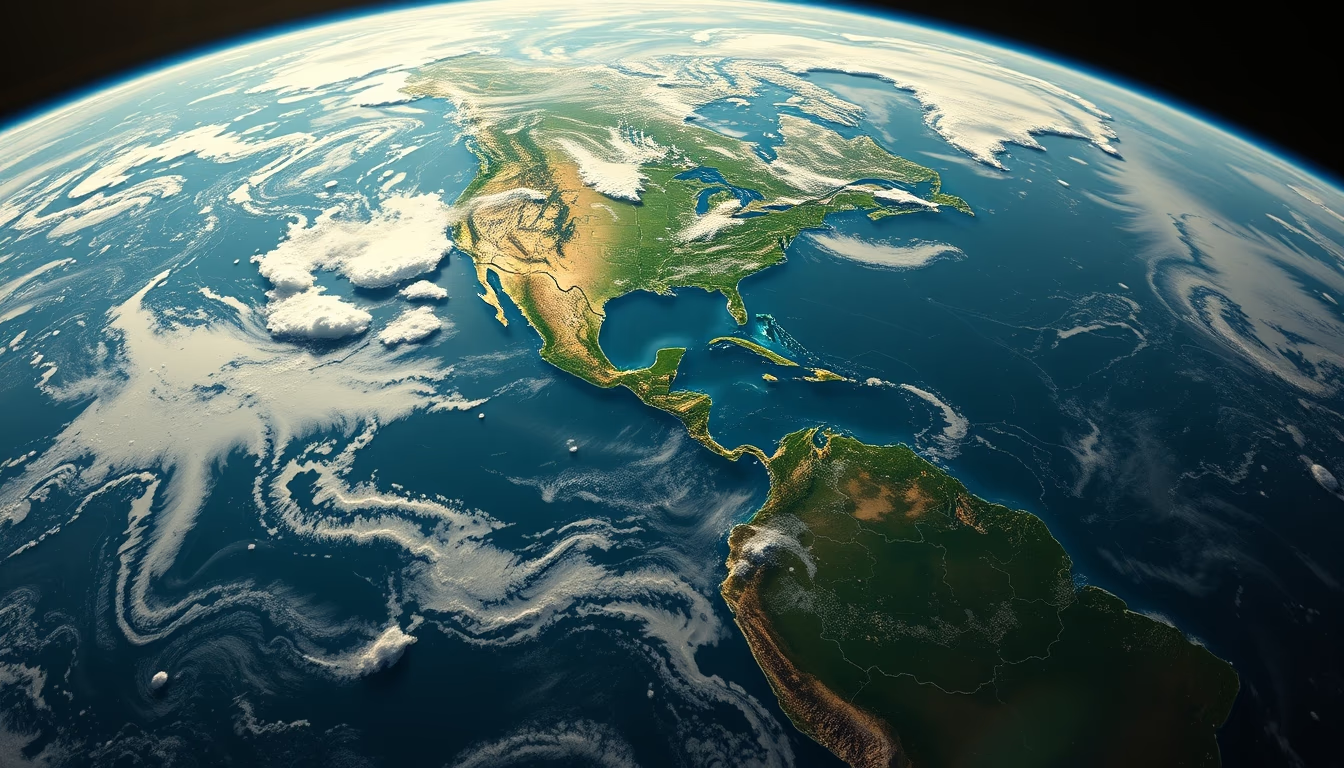
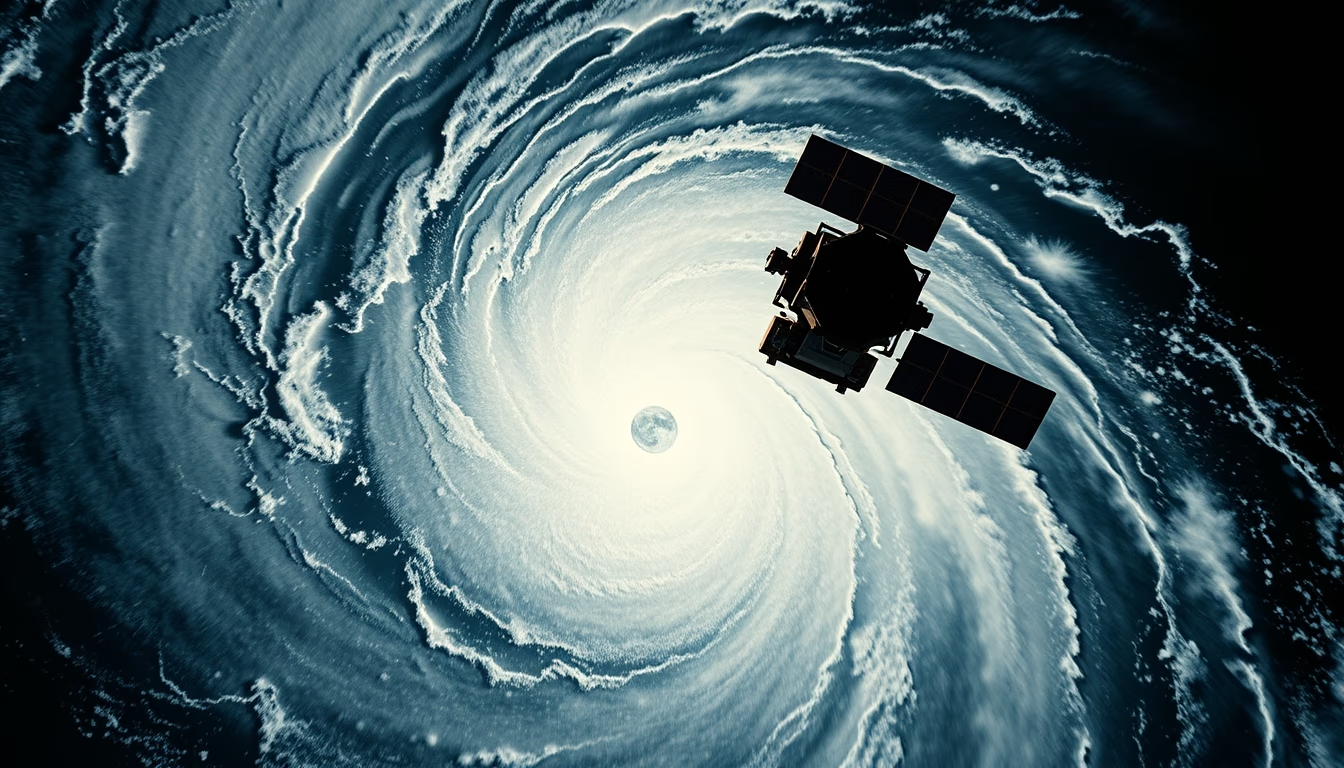
Satellite earth view atmosphere
1344×768 · AVIF · CC BY 4.0

Satellite image reveals Earth's atmosphere as a thin blue layer enveloping the planet, highlighting its fragility and complexity.
About this subject
Earth's atmosphere is a thin layer of gases surrounding the planet, extending about 480 km in altitude, but with 99% of its mass within the first 30 km. Composed mainly of nitrogen (78%) and oxygen (21%), plus argon, carbon dioxide, and water vapor, it plays essential roles: regulating temperature via the natural greenhouse effect, protecting against ultraviolet radiation with the ozone layer, and enabling combustion and respiration.
Satellite observations, from the GOES series to Suomi NPP, allow monitoring of weather phenomena, pollution, and greenhouse gas evolution. The minimalist image style, common in scientific visualizations, highlights the thin blue line of atmosphere against the darkness of space. This perspective, first captured during the Apollo missions, changed human perception of the planet, giving rise to the “overview effect.”
Weather and remote-sensing satellites provide crucial data for weather forecasting, climate studies, and natural resource management. The ozone layer, located in the stratosphere, absorbs about 98% of harmful UV radiation. Its discovery and the subsequent Montreal Protocol (1987) represent one of the greatest successes in international environmental cooperation.
Interestingly, Earth's atmosphere has no sharp upper boundary; the Kármán line at 100 km is an arbitrary definition of the start of space. The minimalist satellite image underscores the smooth transition between atmosphere and vacuum, a visual reminder of the fragility of our protective shield.
Frequently Asked Questions
What is the composition of Earth's atmosphere?
The atmosphere is mainly nitrogen (78%) and oxygen (21%), with small amounts of argon, carbon dioxide, water vapor, and other trace gases.
Why does the atmosphere appear as a thin blue layer in satellite images?
Rayleigh scattering causes sunlight to interact with air molecules, scattering blue light more, giving the atmosphere a blue hue when viewed from space.
What is the importance of the atmosphere for life on Earth?
It protects against ultraviolet radiation, maintains stable temperature via the greenhouse effect, provides oxygen for respiration, and enables the water cycle.
Direct URL
https://pub-c7d6a6ea828543ac903a74a341ccb2e1.r2.dev/imagens/satellite-earth-view-atmosphere-minimalist-composition-fresh3.avifHow to credit
Include a visible link back to UtilizAí. Copy one of the snippets below:
<a href="https://xn--utiliza-eza.com/en/midia/imagens/satellite-earth-view-atmosphere-minimalist-composition-fresh3">Satellite earth view atmosphere</a> by <a href="https://xn--utiliza-eza.com">UtilizAí</a>, licensed under <a href="https://creativecommons.org/licenses/by/4.0/">CC BY 4.0</a>.
[Satellite earth view atmosphere](https://xn--utiliza-eza.com/en/midia/imagens/satellite-earth-view-atmosphere-minimalist-composition-fresh3) by [UtilizAí](https://xn--utiliza-eza.com), CC BY 4.0
License: CC-BY-4.0