Salt crystal macro
1344×768 · AVIF · CC BY 4.0
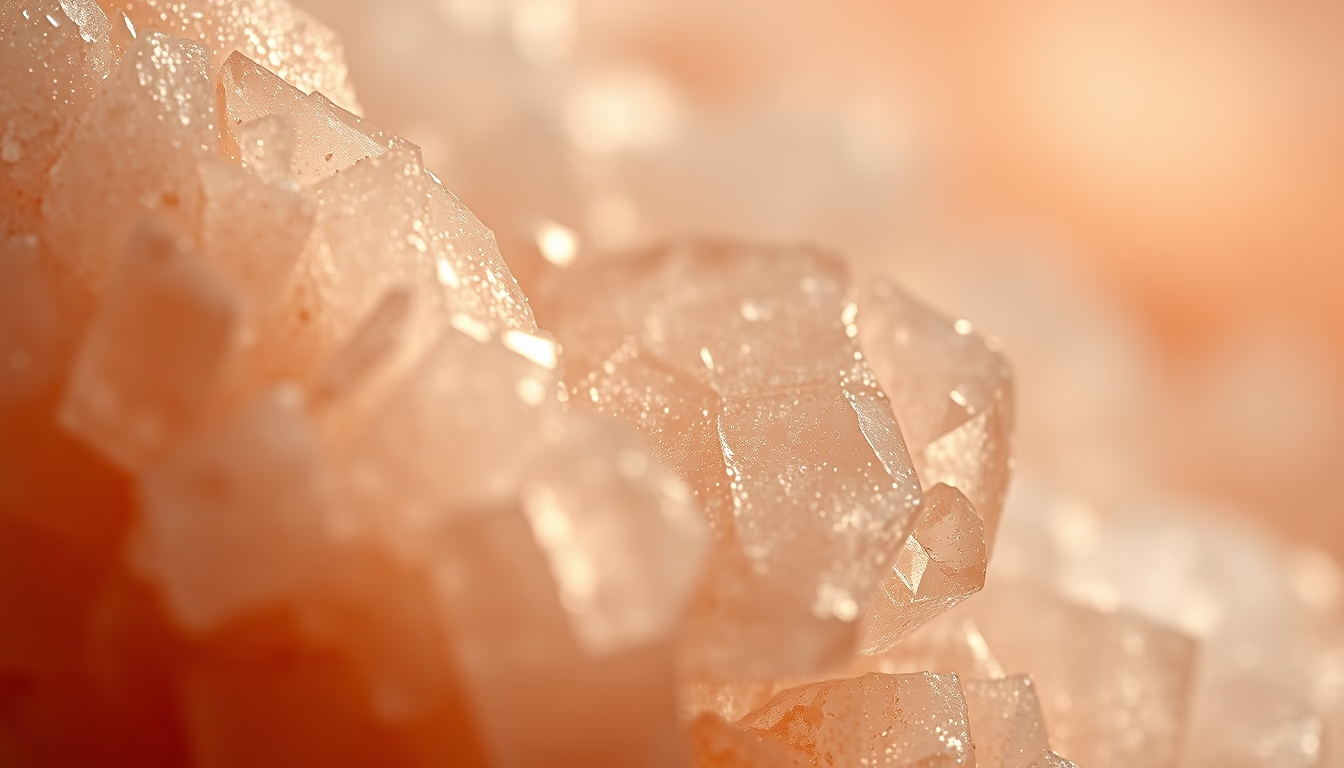
Examining salt crystal structures through macro photography: a fusion of science and art
About this subject
Salt crystals (sodium chloride) form hexagonal structures due to their molecular arrangement, with sodium and chlorine atoms bonding at 90° angles. Naturally, they occur in evaporitic environments such as salt flats or crusts in rivers of arid regions. Macro photography unveils microscopic details invisible to the naked eye, including crystal face irregularities or secondary mineral inclusions. Historically, salt has shaped medieval trade routes and even wars, such as India's Salt March in 1930. In laboratories, controlled salt crystallization is crucial for chemical and pharmaceutical research. Fun fact: salt crystals can act as pressure sensors in geological experiments.
Frequently Asked Questions
How do salt crystals form?
They form through the gradual evaporation of saltwater, allowing sodium and chlorine ions to arrange into stable hexagonal structures.
What is salt's historical significance?
Salt was vital for food preservation, shaped trade routes, and even wars, such as India's Salt March, which challenged colonial restrictions.
Why is macro photography important in science?
It reveals microscopic details like imperfections or inclusions, critical for chemical analysis and material studies.
Direct URL
https://pub-c7d6a6ea828543ac903a74a341ccb2e1.r2.dev/imagens/salt-crystal-macro-fine-art-photography-v7.avifHow to credit
Include a visible link back to UtilizAí. Copy one of the snippets below:
<a href="https://xn--utiliza-eza.com/en/midia/imagens/salt-crystal-macro-fine-art-photography-v7">Salt crystal macro</a> by <a href="https://xn--utiliza-eza.com">UtilizAí</a>, licensed under <a href="https://creativecommons.org/licenses/by/4.0/">CC BY 4.0</a>.
[Salt crystal macro](https://xn--utiliza-eza.com/en/midia/imagens/salt-crystal-macro-fine-art-photography-v7) by [UtilizAí](https://xn--utiliza-eza.com), CC BY 4.0
License: CC-BY-4.0