Sahara desert dunes pattern
1344×768 · AVIF · CC BY 4.0
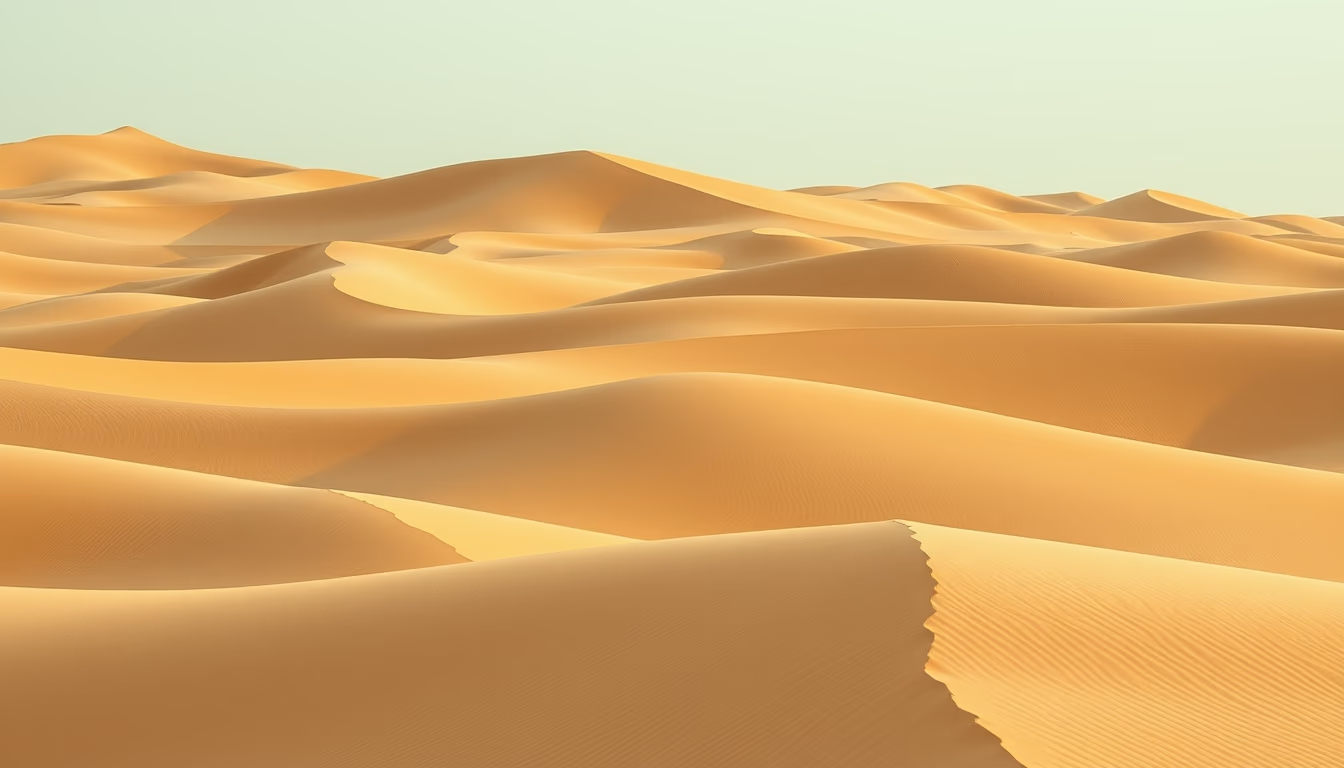
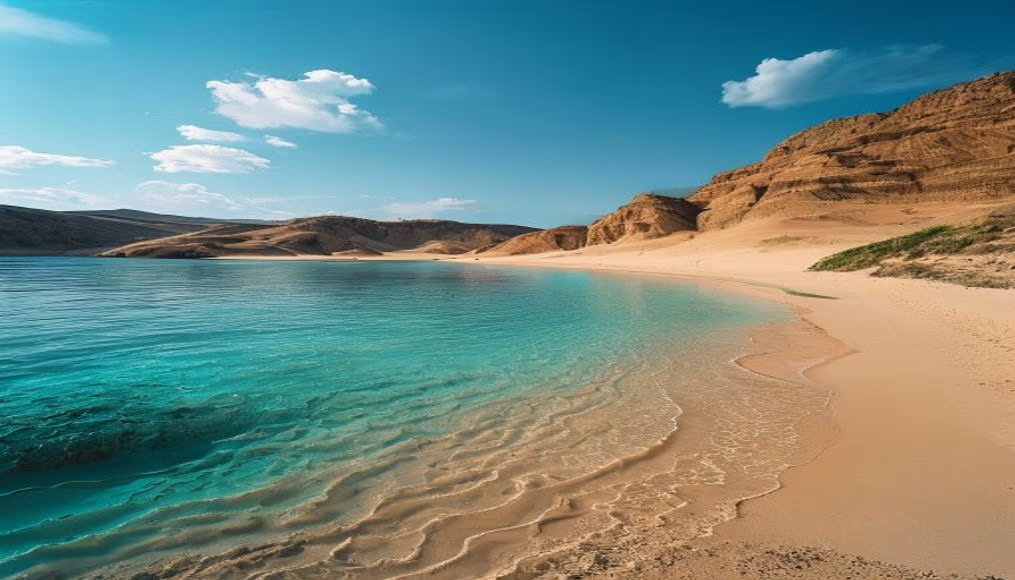
Sahara dunes showcase wind dynamics and the geological history of one of the world’s largest deserts.
About this subject
Sahara dunes are shaped by sand grains ranging from 0.05 to 0.25 millimeters that accumulate under the influence of prevailing northeast winds. When sand is transported at low altitudes, it advances in ribbons, forming barchan dunes that exhibit pointed tips and curved slopes. Dune movement can reach 30 meters per year, reshaping the landscape at a pace visible only over decades.
Covering roughly nine million square kilometers, the Sahara spans nine African nations. Among the most famous sites are the Erg Chebbi in Morocco and the Erg Chigaga in Algeria, where dunes rise over 300 meters. The mineral composition of the grains, mainly silica, gives the dunes a reddish hue that intensifies at sunset.
Culturally, dunes are significant for Berber nomadic communities that use ancient trade routes for migration. For science, they serve as natural laboratories for sedimentology, climatology, and ecosystems adapted to extreme aridity. In 2020, the Sahel Dune Monitoring System, in partnership with African universities, began collecting radar data on dune displacement, enabling predictions of habitat change.
For travelers, the experience of traversing dunes at dawn offers dramatic silhouettes and star‑filled nights free of light pollution, a rare chance to witness the vitality of an ecosystem that persists despite harsh conditions.
Frequently Asked Questions
How are Sahara dunes formed?
Wind continuously transports sand grains, creating ribbons that accumulate into barchan patterns when they encounter obstacles or directional changes.
What is the average movement speed of the dunes?
Research shows dunes can shift 10 to 30 meters per year, depending on wind velocity and available sand.
Which species inhabit Sahara dune regions?
Small invertebrates, sand lizards, and migratory birds thrive in dunes, adapted to extreme temperatures and scarce water.
Direct URL
https://pub-c7d6a6ea828543ac903a74a341ccb2e1.r2.dev/imagens/sahara-desert-dunes-pattern-magazine-editorial-v8.avifHow to credit
Include a visible link back to UtilizAí. Copy one of the snippets below:
<a href="https://xn--utiliza-eza.com/en/midia/imagens/sahara-desert-dunes-pattern-magazine-editorial-v8">Sahara desert dunes pattern</a> by <a href="https://xn--utiliza-eza.com">UtilizAí</a>, licensed under <a href="https://creativecommons.org/licenses/by/4.0/">CC BY 4.0</a>.
[Sahara desert dunes pattern](https://xn--utiliza-eza.com/en/midia/imagens/sahara-desert-dunes-pattern-magazine-editorial-v8) by [UtilizAí](https://xn--utiliza-eza.com), CC BY 4.0
License: CC-BY-4.0