Sahara desert dunes pattern
1344×768 · AVIF · CC BY 4.0
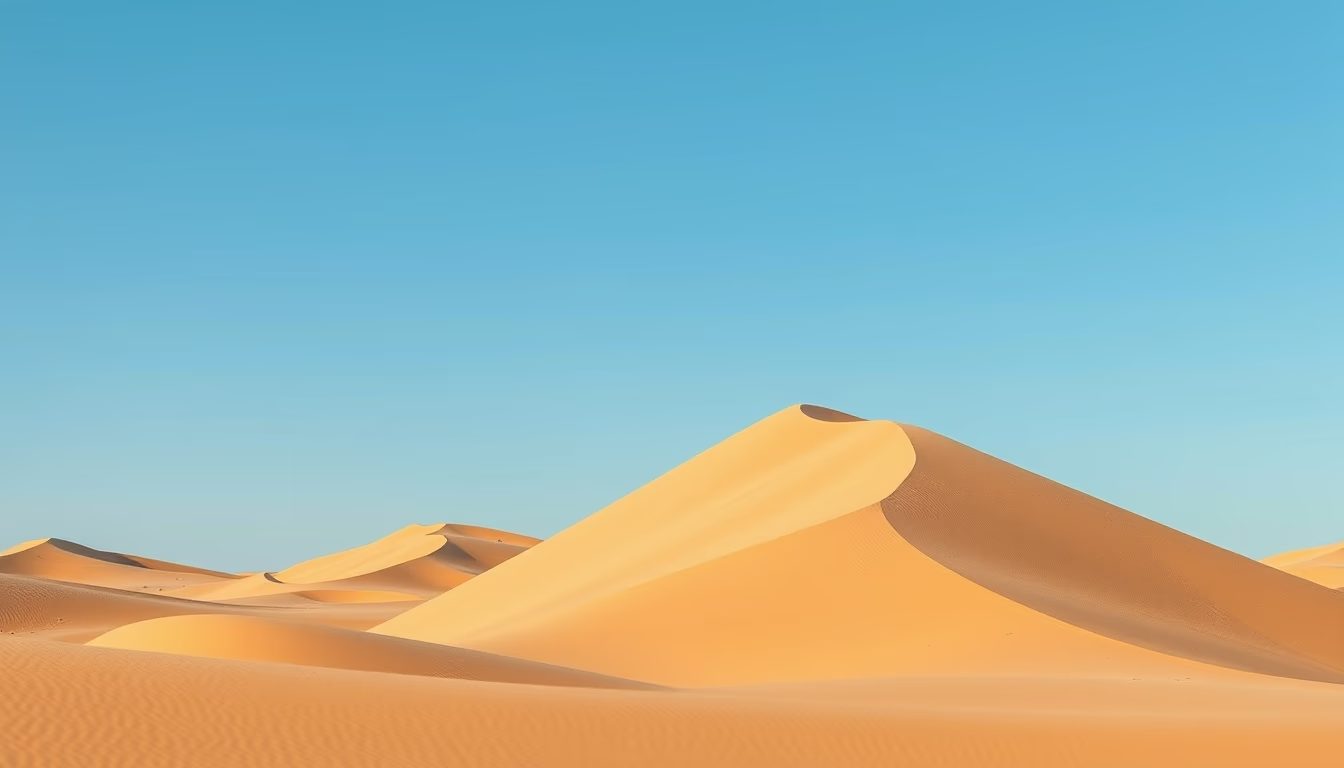
The dunes of the Sahara create one of the most striking natural patterns on Earth, sculpted by wind over millennia.
About this subject
The Sahara Desert, the largest hot desert in the world, covers about 9.2 million square kilometers in North Africa. Its dunes, known as ergs, occupy only 20% of the total area but are the most iconic. These formations are created by the constant action of trade winds, which transport and deposit sand into undulating chains. The height of the dunes can range from a few meters to an impressive 300 meters, such as the Issaouane dunes in Algeria.
The morphology of Sahara dunes is diverse, including star-shaped, barchan, and linear dunes. Star dunes, or pyramidal, form in areas with variable wind directions, while barchan dunes are crescent-shaped and move with the prevailing wind. This movement can reach up to 15 meters per year, swallowing roads and small settlements. The visual pattern of dunes, with sharp ridges and deep shadows, has inspired artists, photographers, and even architects.
Culturally, the Sahara is home to nomadic peoples such as the Tuareg and Bedouins, who have crossed its sands for centuries using camels and ancestral knowledge of stellar navigation. The desert also holds economic importance due to its reserves of oil, natural gas, and minerals, but adventure tourism and photography are growing, attracting visitors to view the dunes at sunrise and sunset. The region faces environmental challenges such as desertification and climate change, which affect wind patterns and dune stability.
Frequently Asked Questions
How are the dunes of the Sahara formed?
Dunes form by the accumulation of sand transported by wind. When wind meets an obstacle, it deposits sand grains, which gradually build up into mounds. The dune shape depends on wind direction and strength, and the amount of available sand.
What is the tallest dune in the Sahara?
The tallest known dune is the Issaouane dune in Algeria, reaching about 300 meters. However, dunes up to 500 meters exist in remote areas, but their exact dimensions are hard to measure due to constant movement.
Do the Sahara dunes move?
Yes, dunes migrate with the wind. Barchan dunes, for example, can move up to 15 meters per year. This movement can alter landscapes and even bury infrastructure like roads and villages.
Direct URL
https://pub-c7d6a6ea828543ac903a74a341ccb2e1.r2.dev/imagens/sahara-desert-dunes-pattern-commercial-product-photography-v9.avifHow to credit
Include a visible link back to UtilizAí. Copy one of the snippets below:
<a href="https://xn--utiliza-eza.com/en/midia/imagens/sahara-desert-dunes-pattern-commercial-product-photography-v9">Sahara desert dunes pattern</a> by <a href="https://xn--utiliza-eza.com">UtilizAí</a>, licensed under <a href="https://creativecommons.org/licenses/by/4.0/">CC BY 4.0</a>.
[Sahara desert dunes pattern](https://xn--utiliza-eza.com/en/midia/imagens/sahara-desert-dunes-pattern-commercial-product-photography-v9) by [UtilizAí](https://xn--utiliza-eza.com), CC BY 4.0
License: CC-BY-4.0