Roman silver denarius coin
1344×768 · AVIF · CC BY 4.0
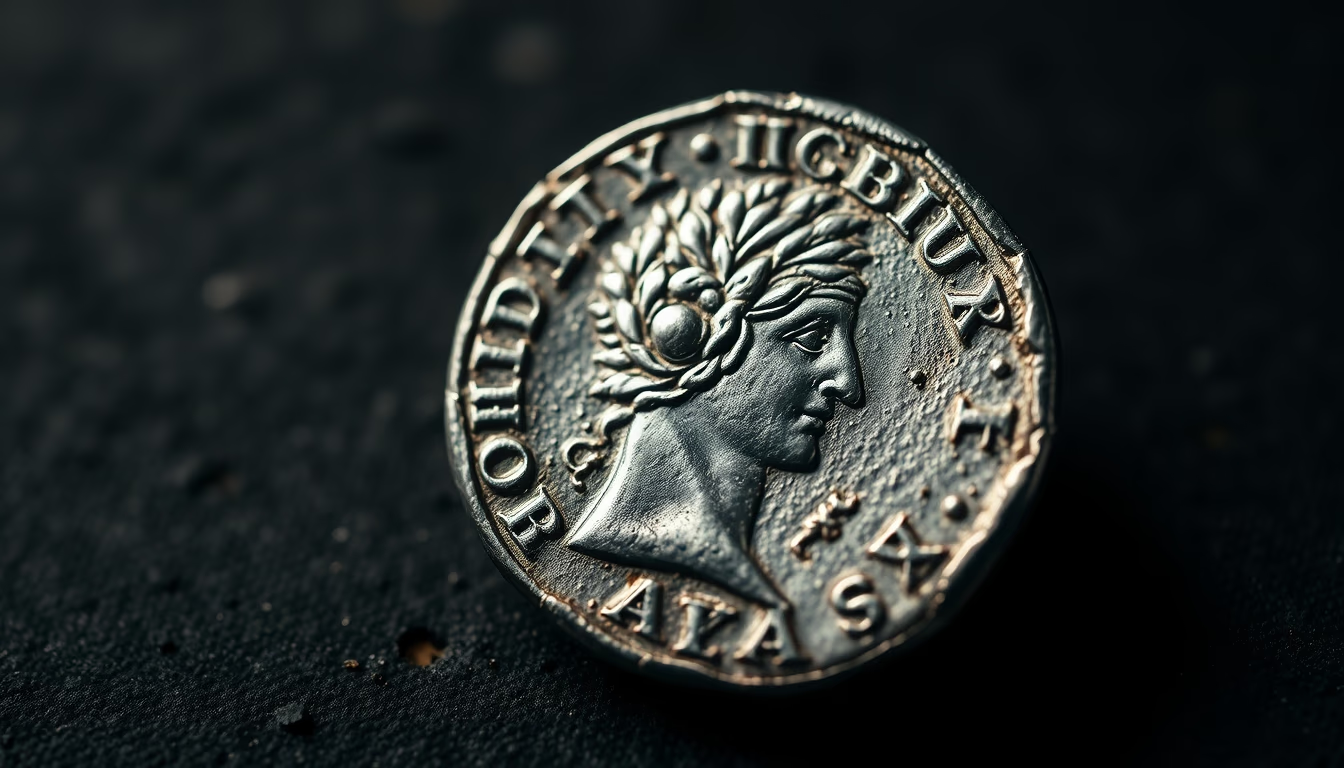
The Roman silver denarius was the empire's primary coin for centuries, minted from 211 BC to the 3rd century AD, vital for economy and imperial propaganda.
About this subject
The Roman silver denarius was introduced in 211 BC during the Second Punic War to unify the monetary system and fund the legions. Its name derives from "deni" (containing ten), as it was initially worth 10 bronze asses. Early coins weighed about 4.5 grams of nearly pure silver, ensuring widespread acceptance across the Mediterranean. Production was overseen by the Senate and later by emperors, who used denarii to disseminate their image and achievements.
Denarius minting evolved over time: early issues featured gods or symbols of Rome, while from Julius Caesar onward imperial portraits became common. Coins like Brutus' "Eid Mar" issue commemorating Caesar's assassination are historical rarities. The artistry of denarii reflects each era's style, with increasingly realistic detail. Silver purity also varied; under Nero it dropped to around 80%, and by the 3rd century it fell below 5%, causing inflation.
The denarius circulated for over four centuries, being the Empire's most common coin. Its devaluation led to Diocletian's reform (294 AD) and later Constantine's gold solidus. Today, the denarius is one of the most studied artifacts in Roman numismatics. Each coin provides clues about metallurgy, politics, and trade. In the Bible, Matthew 20:2 mentions the denarius as a worker's daily wage, highlighting its contemporary value.
Collectors prize denarii for their beauty and historical context. Well-preserved coins of emperors like Trajan or Marcus Aurelius can fetch thousands of dollars at auction. Analysis of metal alloy markers helps archaeologists date sites and trade routes. The denarius is not merely a coin but a testament to the economic and artistic engineering of the ancient world.
Frequently Asked Questions
What is the value of a Roman denarius today?
Value varies greatly depending on emperor, year, condition, and rarity. Common denarii can cost tens of dollars, while rare pieces fetch thousands. Well-preserved coins of famous emperors are more valuable.
How were denarii manufactured?
They were struck manually: a heated metal disk was placed between two dies and hammered. The lower die was fixed, and the upper die was struck. Many denarii show minting errors, like letter doubling.
Why is the denarius important for historians?
Because it provides precise dating and portraits of emperors, as well as political propaganda. The images and inscriptions help understand events, values, and the Roman economy. Each coin is a primary source.
Direct URL
https://pub-c7d6a6ea828543ac903a74a341ccb2e1.r2.dev/imagens/roman-silver-denarius-coin-fine-art-photography-fresh6.avifHow to credit
Include a visible link back to UtilizAí. Copy one of the snippets below:
<a href="https://xn--utiliza-eza.com/en/midia/imagens/roman-silver-denarius-coin-fine-art-photography-fresh6">Roman silver denarius coin</a> by <a href="https://xn--utiliza-eza.com">UtilizAí</a>, licensed under <a href="https://creativecommons.org/licenses/by/4.0/">CC BY 4.0</a>.
[Roman silver denarius coin](https://xn--utiliza-eza.com/en/midia/imagens/roman-silver-denarius-coin-fine-art-photography-fresh6) by [UtilizAí](https://xn--utiliza-eza.com), CC BY 4.0
License: CC-BY-4.0