Roman forum ruins
1344×768 · AVIF · CC BY 4.0
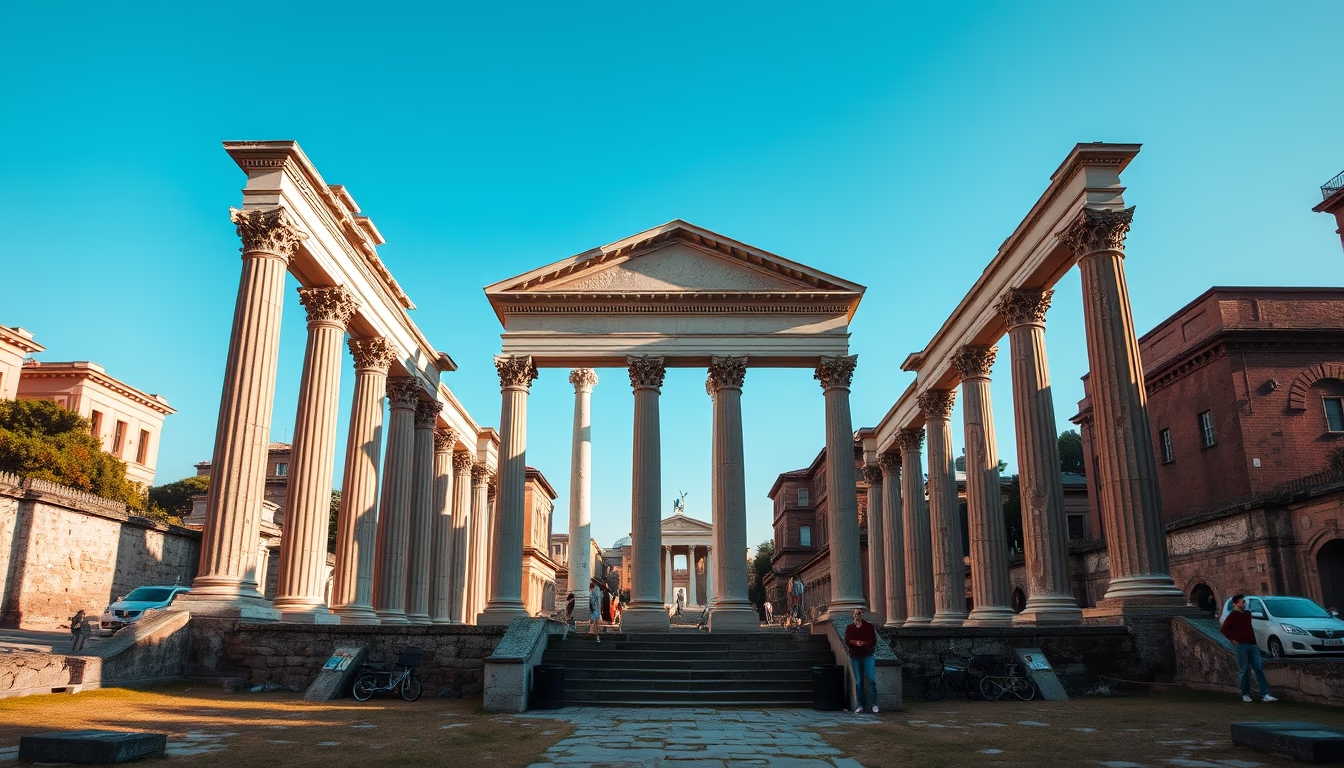
The Roman Forum ruins reveal the political, religious, and commercial heart of ancient Rome, now one of the world's most visited archaeological sites.
About this subject
The Roman Forum, located in the valley between the Palatine and Capitoline Hills, was the center of public life in ancient Rome for over a thousand years. Originally a marshy area drained in the 6th century BC, the forum housed temples, basilicas, triumphal arches, and spaces for commerce and assemblies. Among its most iconic monuments are the Temple of Saturn, the Curia Julia (Senate house), the Arch of Septimius Severus, and the Basilica of Maxentius. The structures varied in architectural styles, from Etruscan to Imperial, reflecting centuries of political and cultural evolution.
After the fall of the Roman Empire, the forum fell into disuse and was gradually buried by debris and medieval constructions. During the Renaissance, some of its ruins were dismantled to reuse materials in new buildings, but archaeological interest revived in the 19th century with systematic excavations. Today, the archaeological site is a park where tourists walk among the ruins, with replicas of statues and inscriptions evoking the lost grandeur. The Via Sacra, the main road of the forum, can still be walked, connecting various historical points.
The Roman Forum was not just a physical space: it was a symbol of Roman power and identity. Elections, trials, religious ceremonies, and political speeches took place there. Julius Caesar, for example, was cremated on a pyre in the forum, and his Temple of Caesar was built on the site. The proximity to the Colosseum and Palatine Hill makes the complex a fundamental part of any visit to Rome, attracting millions of tourists annually. Despite natural degradation, conservation efforts continue, with new discoveries being made periodically, such as the recent revelation of a 1st century BC marble floor.
Frequently Asked Questions
How old is the Roman Forum?
The Roman Forum began development in the 6th century BC with drainage of the marshy area, and continued to be expanded and renovated until the 4th century AD, totaling about a thousand years of active use.
What happened to the Forum structures after the fall of Rome?
After the Roman Empire, the forum was abandoned, looted, and buried. Many stones and marbles were reused in medieval and Renaissance buildings. Archaeological excavations began in the 19th century and continue today.
Can I visit the Roman Forum today?
Yes, the Roman Forum is an archaeological park open to the public, usually included with the Colosseum and Palatine Hill ticket. Visitors can walk the Via Sacra and see ruins of temples, basilicas, and arches.
Direct URL
https://pub-c7d6a6ea828543ac903a74a341ccb2e1.r2.dev/imagens/roman-forum-ruins-architectural-photography-p1.avifHow to credit
Include a visible link back to UtilizAí. Copy one of the snippets below:
<a href="https://xn--utiliza-eza.com/en/midia/imagens/roman-forum-ruins-architectural-photography-p1">Roman forum ruins</a> by <a href="https://xn--utiliza-eza.com">UtilizAí</a>, licensed under <a href="https://creativecommons.org/licenses/by/4.0/">CC BY 4.0</a>.
[Roman forum ruins](https://xn--utiliza-eza.com/en/midia/imagens/roman-forum-ruins-architectural-photography-p1) by [UtilizAí](https://xn--utiliza-eza.com), CC BY 4.0
License: CC-BY-4.0