Rolleiflex tlr vintage
1344×768 · AVIF · CC BY 4.0

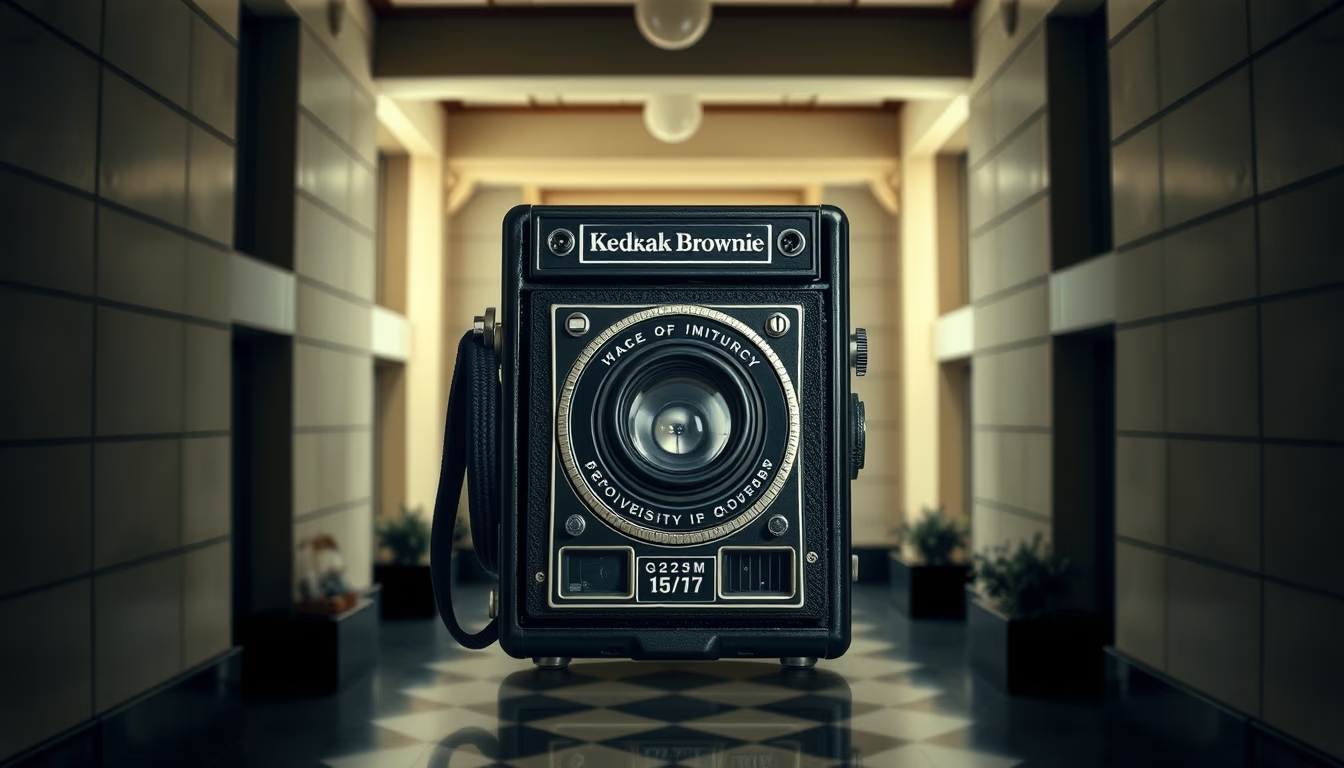
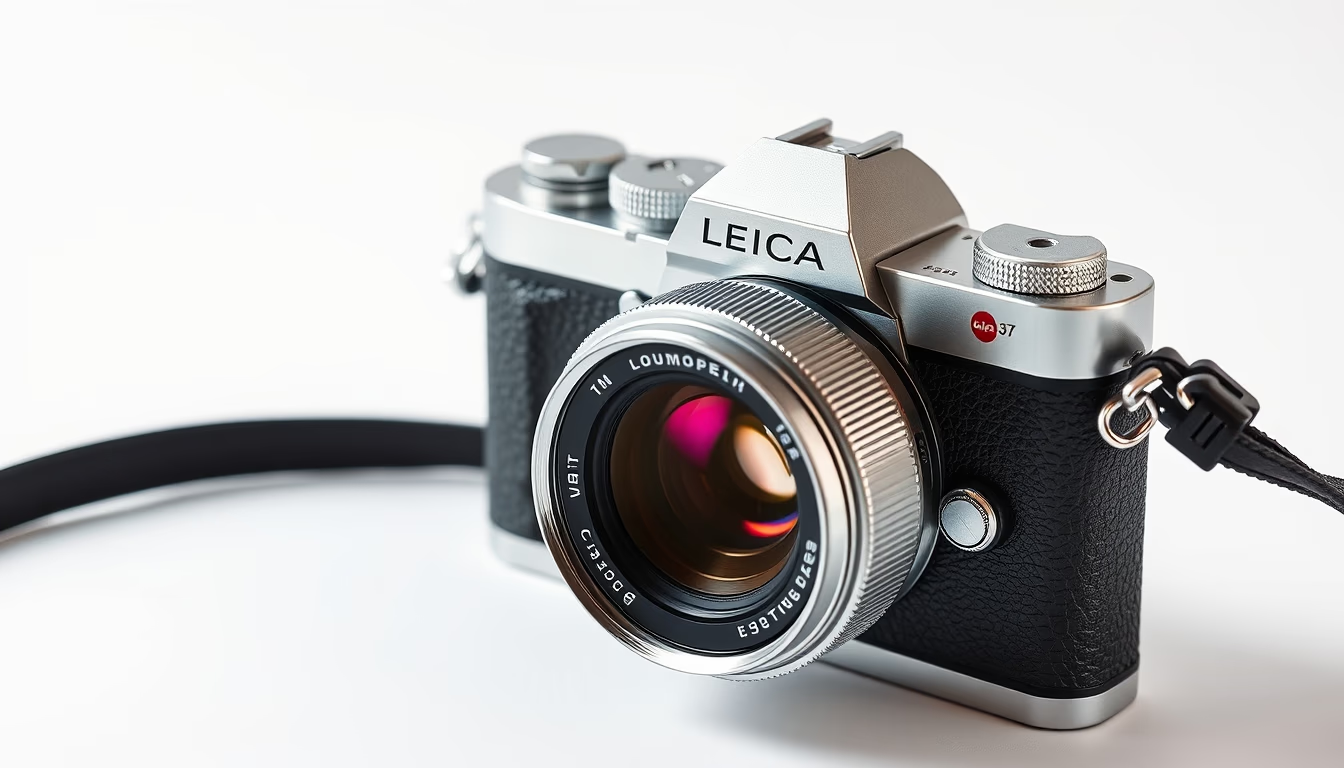
The Rolleiflex TLR is a classic medium format camera, renowned for its optical quality and iconic design that defined 20th-century photography.
About this subject
The Rolleiflex is a twin-lens reflex (TLR) camera produced by the German company Franke & Heidecke starting in 1929. It uses 120 roll film to capture square 6x6 cm frames, a format that shaped the work of countless photographers. Its two-lens system, one for viewing and one for shooting, allows composing from waist level, offering a more discreet and natural perspective.
The camera became world-famous for its exceptionally fine lenses, especially those from Carl Zeiss and Schneider Kreuznach. It was the preferred tool of photojournalists like Robert Capa and artists such as Diane Arbus and Vivian Maier. Its all-metal construction and mechanical reliability made it a durable workhorse, even in harsh conditions.
A notable feature is the film advance lever on the right side, which eliminated the need to re-spool the film roll. The waist-level finder shows a laterally inverted image through ground glass, requiring practice for quick framing. Today, the Rolleiflex remains a coveted collector's item and is still used by photographers who appreciate the analog medium format aesthetic.
Its influence extends beyond photography: the distinctive silhouette of the Rolleiflex appears in films, logos, and pop culture as an icon of quality and nostalgia. Despite the digital age, many still seek the 'Rolleiflex look', soft colors, fine grain, and the characteristic depth of field that only medium format can deliver.
Frequently Asked Questions
What does TLR stand for in Rolleiflex?
TLR stands for Twin Lens Reflex. The camera has two lenses: the top one projects the image onto a ground glass viewfinder for composition, while the bottom lens takes the actual photo. A mirror reflects the image from the viewing lens to the finder.
Is the Rolleiflex still used today?
Yes, many analog photographers and artists still use the Rolleiflex. It offers superior image quality in medium format with a unique aesthetic. 120 film is still manufactured, and specialized developing and scanning services are widely available.
What's the difference between a Rolleiflex and a Rolleicord?
The Rolleicord was a simpler, more budget-friendly version of the Rolleiflex, featuring lower quality lenses (usually Schneider or Carl Zeiss Tessar) and less robust construction. The Rolleiflex has always been the premium line, with superior optics and finer craftsmanship.
Direct URL
https://pub-c7d6a6ea828543ac903a74a341ccb2e1.r2.dev/imagens/rolleiflex-tlr-vintage-minimalist-composition-fresh16.avifHow to credit
Include a visible link back to UtilizAí. Copy one of the snippets below:
<a href="https://xn--utiliza-eza.com/en/midia/imagens/rolleiflex-tlr-vintage-minimalist-composition-fresh16">Rolleiflex tlr vintage</a> by <a href="https://xn--utiliza-eza.com">UtilizAí</a>, licensed under <a href="https://creativecommons.org/licenses/by/4.0/">CC BY 4.0</a>.
[Rolleiflex tlr vintage](https://xn--utiliza-eza.com/en/midia/imagens/rolleiflex-tlr-vintage-minimalist-composition-fresh16) by [UtilizAí](https://xn--utiliza-eza.com), CC BY 4.0
License: CC-BY-4.0