Rolleiflex tlr vintage
1344×768 · AVIF · CC BY 4.0

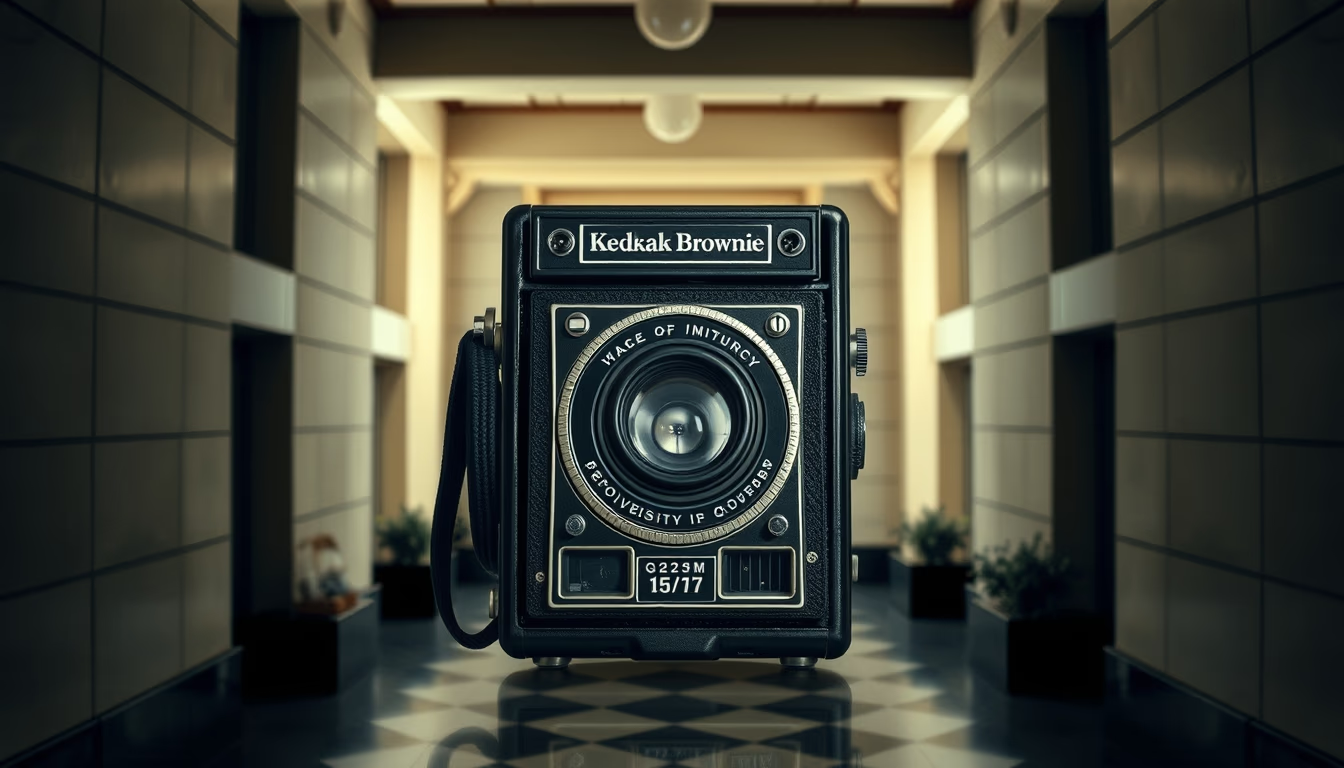
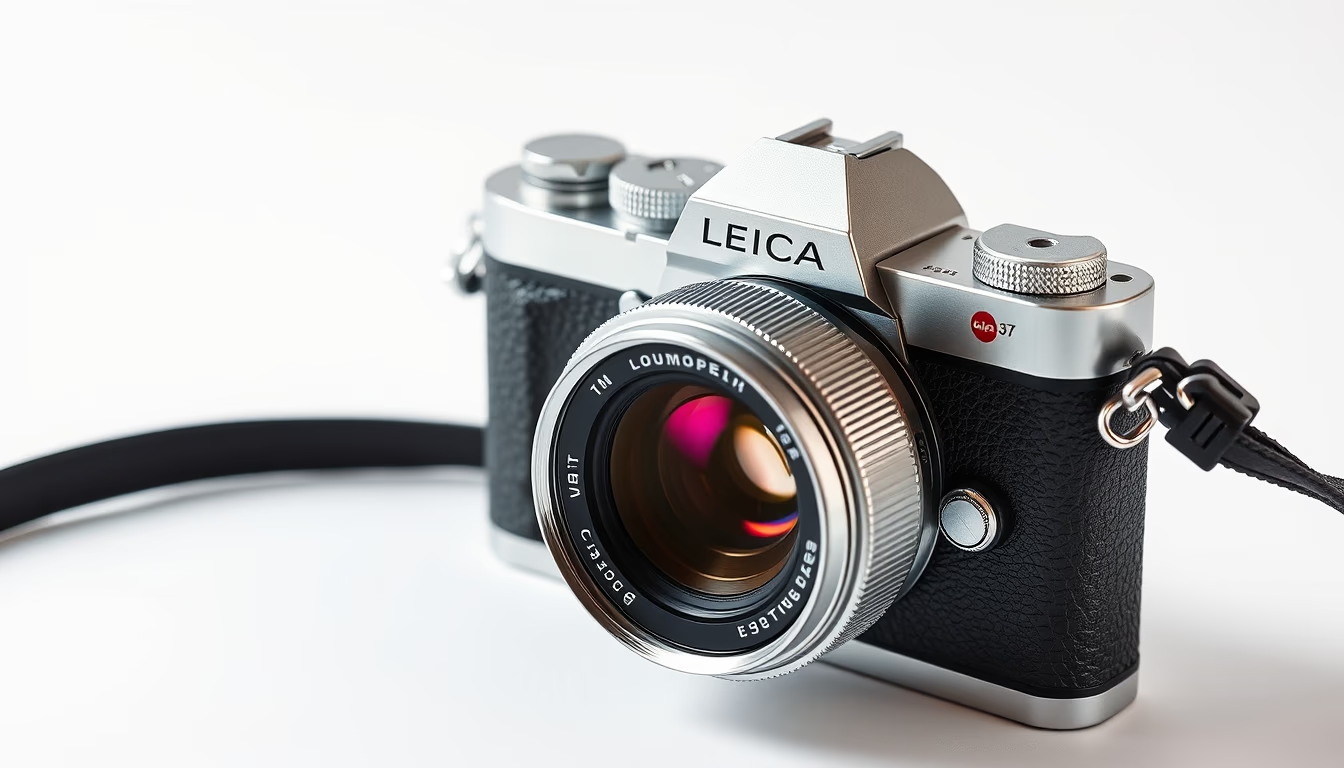
Vintage Rolleiflex TLR, the iconic medium-format German camera that revolutionized portrait and fashion photography from the 1930s to the 1960s.
About this subject
The Rolleiflex is a twin-lens reflex (TLR) camera manufactured by the German company Franke & Heidecke, later known as Rollei. First introduced in 1929, its innovative design featured two lenses: one for viewing and one for capturing, both mounted on a front plate that moved for focusing. It used 120 roll film to produce square 6x6 cm negatives, delivering high resolution and sharpness. High-quality lenses, such as the Carl Zeiss Planar f/2.8 or Schneider Xenotar, became legendary for their optical precision.
Its use spread among war photographers like Robert Capa and fashion masters like Helmut Newton and Irving Penn. The camera was prized for its silent, discreet shutter, ideal for intimate portraits and reportage. In the digital age, the Rolleiflex remains a symbol of craftsmanship and mechanical excellence, often featured in high-fashion editorial shoots as a prop or used for actual analog photography.
The robust construction, with a metal body covered in leather, and the waist-level finder system made focusing precise and comfortable. Classic models like the Rolleiflex 2.8F (produced until the 1990s) are highly collectible. Despite the decline of film photography, the Rolleiflex maintains a dedicated fan base, especially among enthusiasts seeking unique textures and colors from medium format film.
Compared to other TLRs such as the Japanese Mamiya C220 or Yashica Mat, the Rolleiflex stands out for its lightness, precision, and availability of parts. Many contemporary photographers still use it for artistic projects, valuing the tactile experience and the distinct aesthetic output.
Frequently Asked Questions
What is the difference between a Rolleiflex and a modern SLR camera?
A Rolleiflex is a twin-lens reflex (TLR) camera with a waist-level finder and medium format 120 film, while modern SLRs use a single lens and digital sensor. The Rolleiflex produces square 6x6 cm negatives with high sharpness, but lacks autofocus, built-in light metering (in basic models), and quick lens interchangeability.
Why is the Rolleiflex so valued by collectors?
Due to its precise engineering, durability, optical quality, and historical significance. Models like the 2.8F or 3.5E are rare, especially in good condition, and can fetch thousands of dollars. Additionally, the vintage design appeals to analog photography enthusiasts and retro fashion fans.
How can I use a Rolleiflex today?
First, obtain 120 film (available at specialty stores). Load the camera in a dark environment, set the shutter speed and aperture, focus using the ground glass of the finder, and release the shutter. Light metering can be done with an external meter or a smartphone app. The result is a square negative that can be scanned or enlarged in a darkroom.
Direct URL
https://pub-c7d6a6ea828543ac903a74a341ccb2e1.r2.dev/imagens/rolleiflex-tlr-vintage-high-fashion-editorial-fresh1.avifHow to credit
Include a visible link back to UtilizAí. Copy one of the snippets below:
<a href="https://xn--utiliza-eza.com/en/midia/imagens/rolleiflex-tlr-vintage-high-fashion-editorial-fresh1">Rolleiflex tlr vintage</a> by <a href="https://xn--utiliza-eza.com">UtilizAí</a>, licensed under <a href="https://creativecommons.org/licenses/by/4.0/">CC BY 4.0</a>.
[Rolleiflex tlr vintage](https://xn--utiliza-eza.com/en/midia/imagens/rolleiflex-tlr-vintage-high-fashion-editorial-fresh1) by [UtilizAí](https://xn--utiliza-eza.com), CC BY 4.0
License: CC-BY-4.0