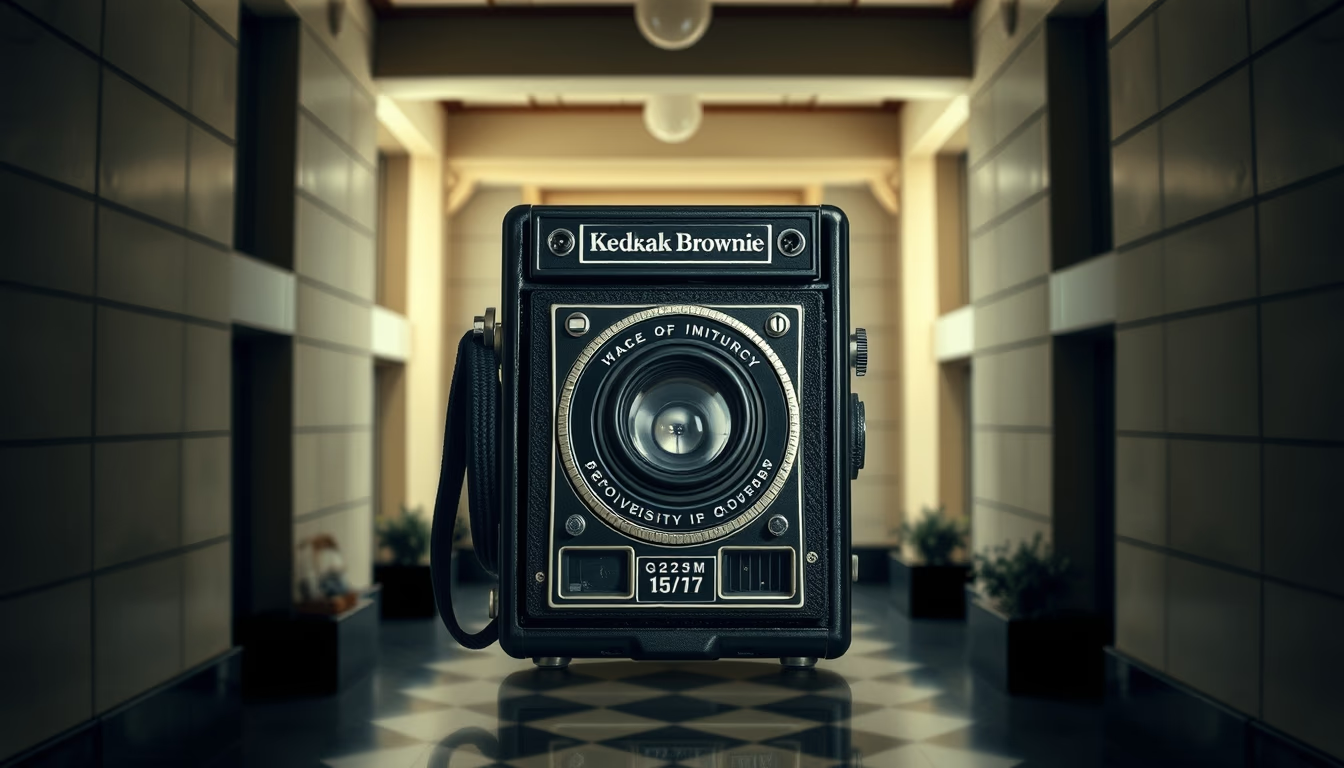
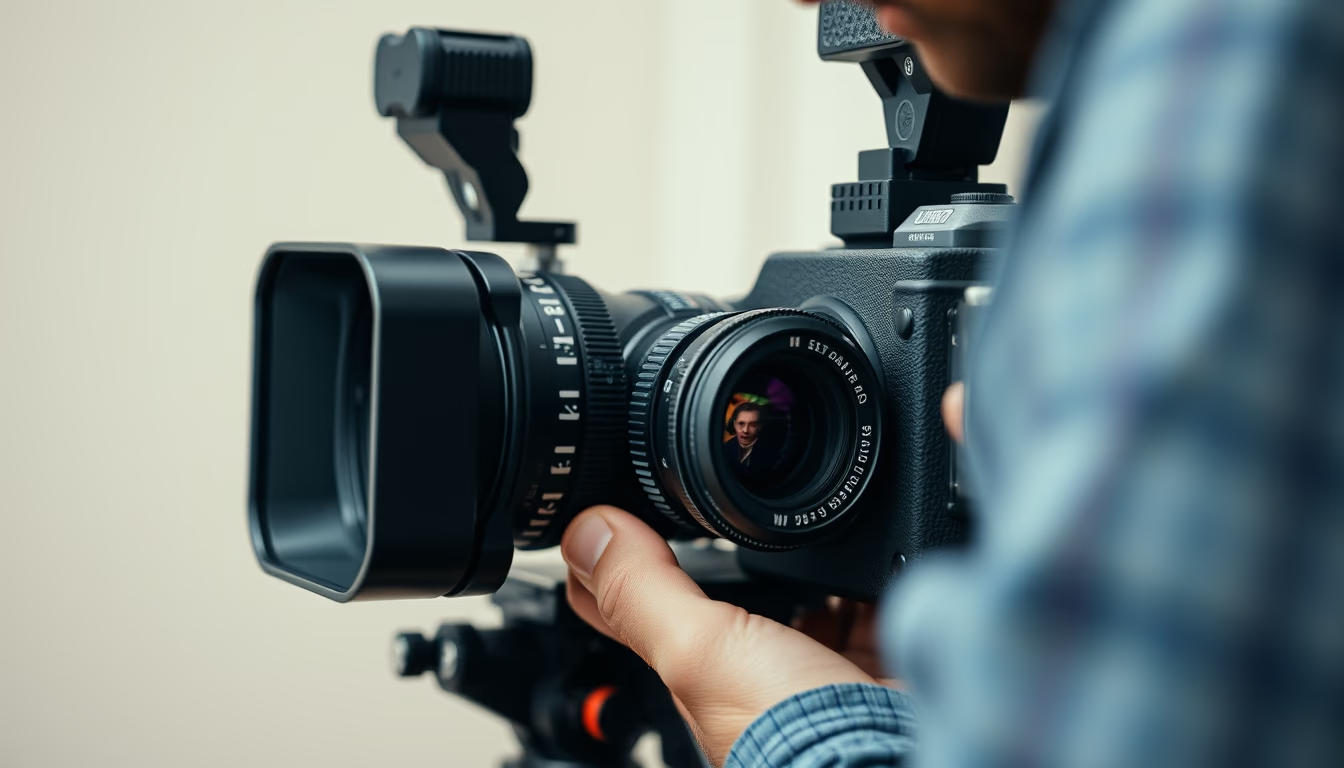
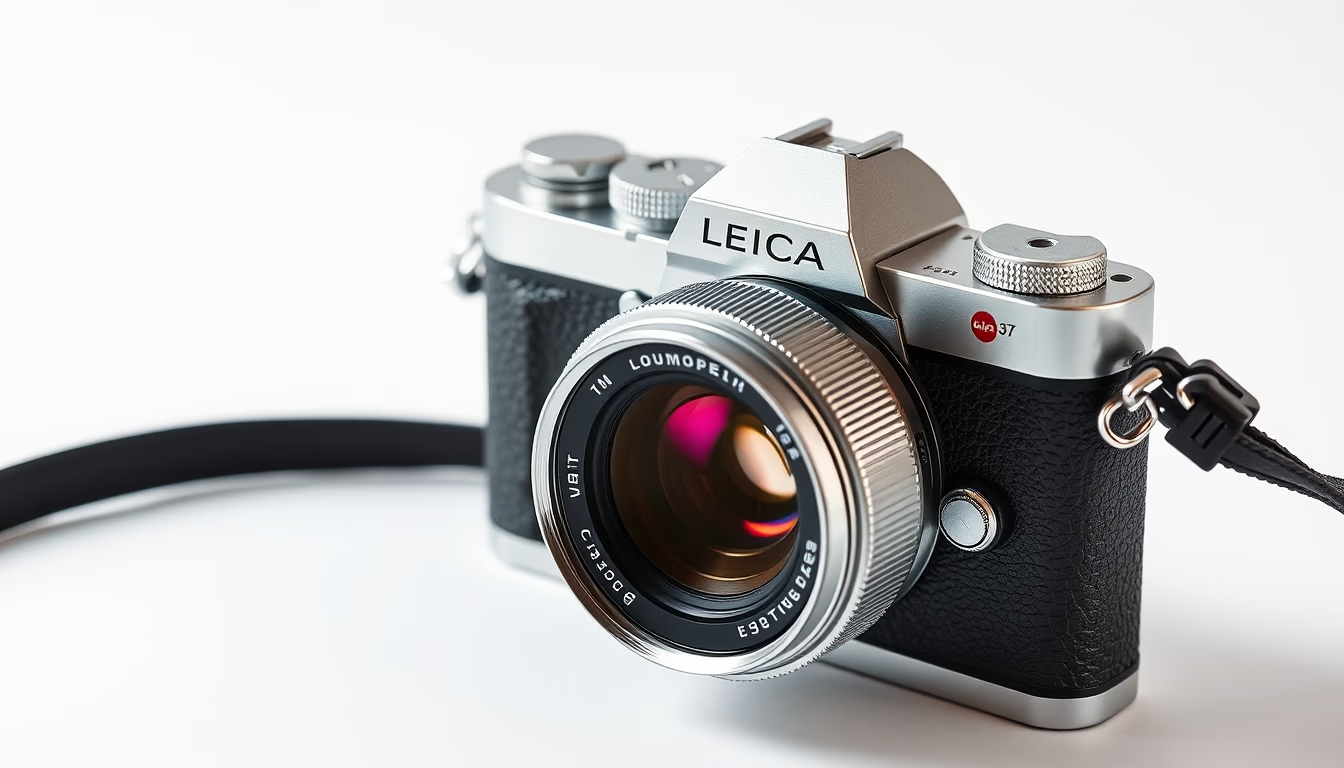
Rolleiflex tlr vintage
1344×768 · AVIF · CC BY 4.0
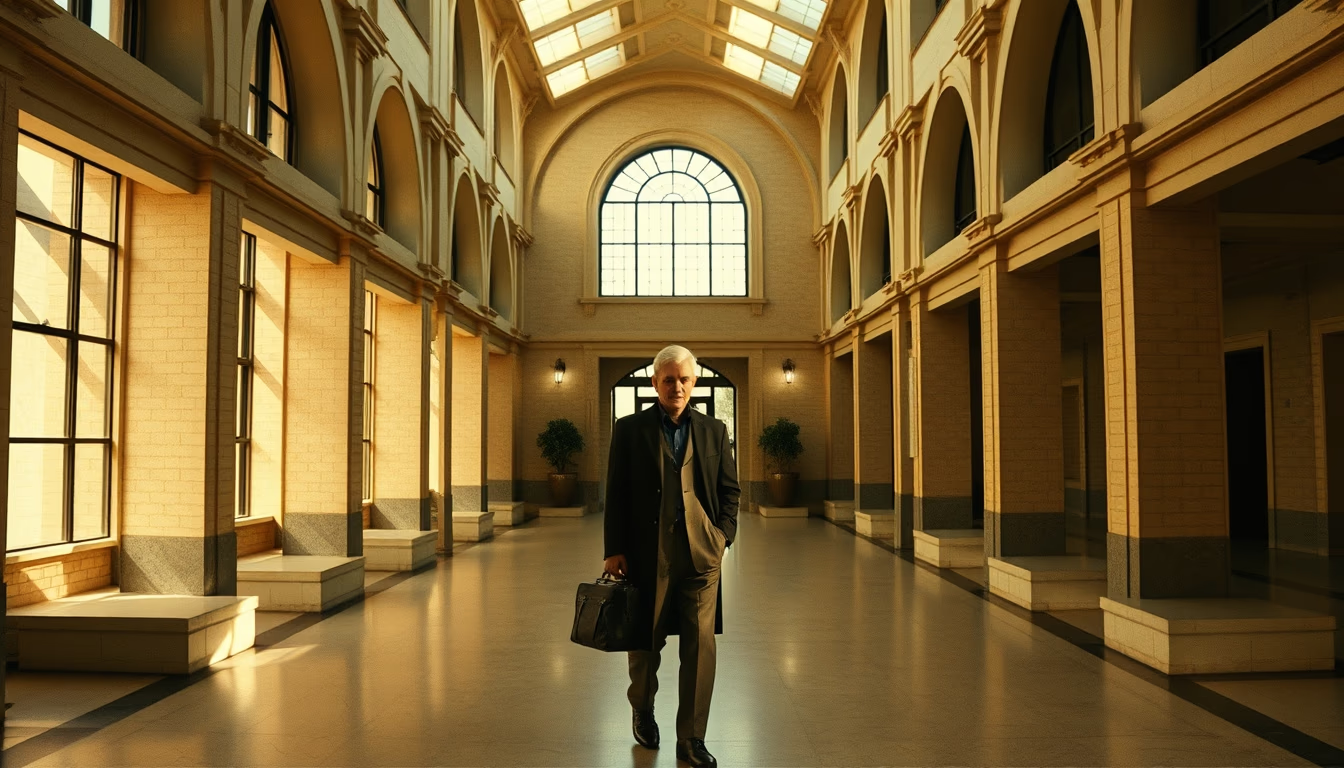
The Rolleiflex TLR is a classic medium-format camera, known for its robust build and high-definition lenses, used by architectural photographers for decades.
About this subject
The Rolleiflex TLR was produced by the German company Franke & Heidecke starting in 1929, becoming an icon of medium-format photography. Its twin-lens reflex design allowed the photographer to compose the image on a reflex screen while the lower lens captured the negative. Models such as the Rolleiflex 2.8F and 3.5F are especially prized for using Zeiss Planar or Schneider Xenotar lenses, renowned for exceptional sharpness and lack of distortion.
In architectural photography, the Rolleiflex offers unique advantages. The square 6x6 format enables symmetrical compositions, and the waist-level finder facilitates low angles without a tall tripod. Mechanical precision and optical quality deliver negatives with great tonal range and extremely high resolution, ideal for large-format prints or high-quality scans.
Even in the digital age, the Rolleiflex continues to be used by contemporary photographers seeking a distinctive look and manual process. Its silent shutter and lack of electronics make it reliable in adverse conditions. Collectors and professionals still compete for well-preserved examples, especially rare models like the Rolleiflex Wide.
The camera also stands out for its leather and chrome metal finish, combining vintage aesthetics with durability. Each Rolleiflex was individually calibrated at the factory, resulting in focusing and exposure precision that rivals modern gear. Its legacy includes influencing generations of photographers, from Henri Cartier-Bresson to Ansel Adams, who used it in their iconic works.
Frequently Asked Questions
Why is the Rolleiflex TLR considered good for architectural photography?
Because of its highly sharp lenses with very low distortion, the square 6x6 format that facilitates symmetrical compositions, and the waist-level finder that allows low angles without a tall tripod, ideal for capturing buildings with straight lines.
Which lenses are most common on the Rolleiflex TLR?
The most common are Zeiss Planar and Schneider Xenotar lenses, both with maximum apertures of f/2.8 or f/3.5, renowned for exceptional sharpness and contrast. Tessar lenses are also found in more affordable models.
Is the Rolleiflex still manufactured today?
No. Original production ceased in the 1990s. However, successor company DHW Fototechnik released limited models like the Rolleiflex 2.8FX and 4.0FT, but continuous production has not occurred since 2015. Vintage examples are still widely used and collected.
Direct URL
https://pub-c7d6a6ea828543ac903a74a341ccb2e1.r2.dev/imagens/rolleiflex-tlr-vintage-architectural-photography-fresh2.avifHow to credit
Include a visible link back to UtilizAí. Copy one of the snippets below:
<a href="https://xn--utiliza-eza.com/en/midia/imagens/rolleiflex-tlr-vintage-architectural-photography-fresh2">Rolleiflex tlr vintage</a> by <a href="https://xn--utiliza-eza.com">UtilizAí</a>, licensed under <a href="https://creativecommons.org/licenses/by/4.0/">CC BY 4.0</a>.
[Rolleiflex tlr vintage](https://xn--utiliza-eza.com/en/midia/imagens/rolleiflex-tlr-vintage-architectural-photography-fresh2) by [UtilizAí](https://xn--utiliza-eza.com), CC BY 4.0
License: CC-BY-4.0