Rocket launch night
1344×768 · AVIF · CC BY 4.0
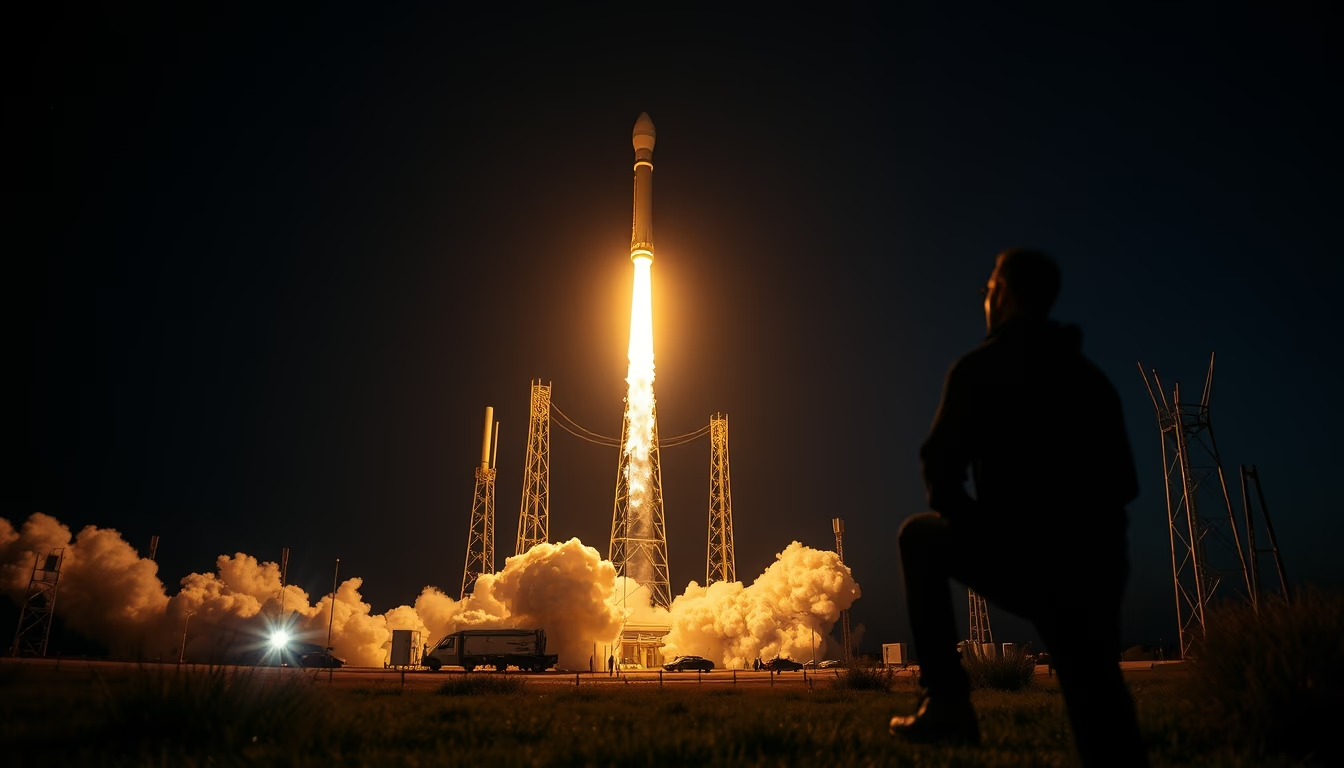
Night rocket launches combine technical precision with visual spectacle, lighting up the sky for seconds.
About this subject
Night rocket launches are events that combine cutting-edge engineering with natural spectacle. The darkness of the night sky contrasts with the intense flame of the thrusters, creating a luminous trail visible for hundreds of kilometers. Historically, many early space launches, such as Sputnik in 1957, took place at night to facilitate optical tracking. Today, agencies like NASA, SpaceX, and Roscosmos choose nighttime windows for technical reasons: less solar interference, lower temperatures that benefit cryogenic systems, and better visibility for high-speed cameras.
The visual phenomenon results from the combustion of propellants like kerosene and liquid oxygen, producing a white-orange flame. In night launches, the ionization of gases around the nozzle creates a blue glow called a "Mach diamond," a shock wave effect visible only in low-light conditions. SpaceX, for example, often launches Falcon 9 rockets at dusk or night, generating iconic images that go viral on social media.
The choice of timing also involves logistics and safety. Night launches reduce the risk of solar exposure for sensitive satellites and allow ground crews to work in cooler temperatures. In Brazil, the Alcântara Launch Center (CLA), near the Equator, conducts night operations to take advantage of Earth's rotation and save fuel. The combination of chronometric precision and natural beauty makes night launches one of the most anticipated events for space enthusiasts and photographers.
Frequently Asked Questions
Why are rockets launched at night?
Night launches offer technical advantages such as less solar interference, lower temperatures for cryogenic systems, and better visibility for optical tracking.
What causes the blue glow in night launches?
The blue glow, called a Mach diamond, is caused by ionization of gases in the rocket nozzle due to shock waves, visible only in low-light conditions.
Are night launches more common in Brazil?
Yes, the Alcântara Launch Center (CLA) conducts night operations to take advantage of equatorial Earth rotation, saving fuel and improving efficiency.
Direct URL
https://pub-c7d6a6ea828543ac903a74a341ccb2e1.r2.dev/imagens/rocket-launch-night-cinematic-wide-shot-v2.avifHow to credit
Include a visible link back to UtilizAí. Copy one of the snippets below:
<a href="https://xn--utiliza-eza.com/en/midia/imagens/rocket-launch-night-cinematic-wide-shot-v2">Rocket launch night</a> by <a href="https://xn--utiliza-eza.com">UtilizAí</a>, licensed under <a href="https://creativecommons.org/licenses/by/4.0/">CC BY 4.0</a>.
[Rocket launch night](https://xn--utiliza-eza.com/en/midia/imagens/rocket-launch-night-cinematic-wide-shot-v2) by [UtilizAí](https://xn--utiliza-eza.com), CC BY 4.0
License: CC-BY-4.0