Rna molecule structure
1344×768 · AVIF · CC BY 4.0
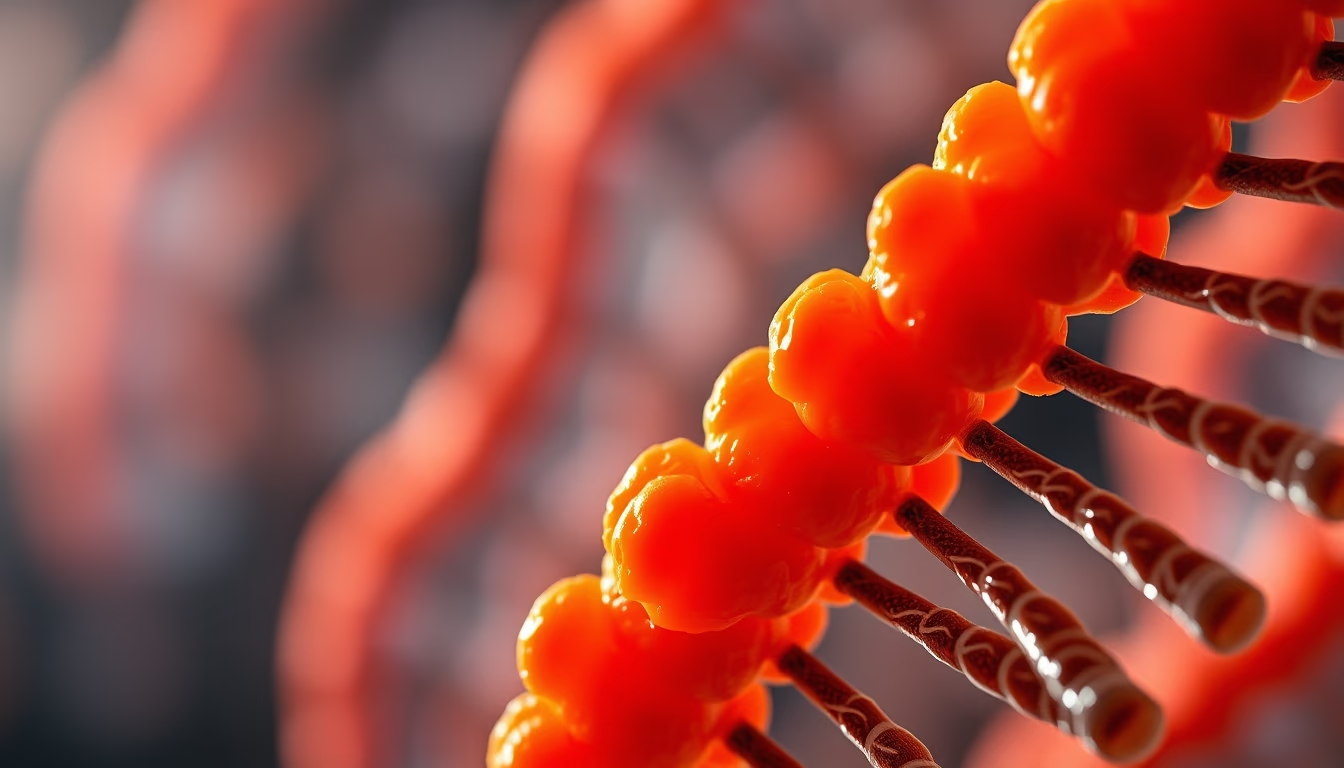
RNA structure: a single-stranded chain of nucleotides with bases adenine, uracil, cytosine, and guanine, crucial for protein synthesis and gene regulation.
About this subject
RNA (ribonucleic acid) is a fundamental molecule in life, serving as an intermediary in gene expression. Unlike DNA, RNA is typically single-stranded, granting it greater conformational flexibility. Its primary structure is a sequence of nucleotides, each composed of a ribose sugar, a phosphate group, and a nitrogenous base: adenine (A), uracil (U), replacing thymine from DNA, cytosine (C), and guanine (G). The lack of a complementary strand allows RNA to form complex secondary structures such as loops and hairpins, essential for its function.
Various RNA types perform specific roles. Messenger RNA (mRNA) carries genetic information from DNA to ribosomes for translation into proteins. Transfer RNA (tRNA) adapts amino acids to mRNA codons during translation. Ribosomal RNA (rRNA) is a structural and catalytic component of ribosomes. Additionally, small regulatory RNAs like microRNAs (miRNAs) and small interfering RNAs (siRNAs) control post-transcriptional gene expression.
RNA's three-dimensional structure is determined by internal base pairing, with double-helical regions interspersed with loops. This folding is crucial for the catalytic activity of ribozymes, RNA molecules with enzymatic capability, and for recognition by proteins. The discovery that RNA can store information and catalyze reactions led to the RNA world hypothesis, proposing that primitive life forms used RNA as a central molecule before the emergence of DNA and proteins.
Notably, in 1965, Robert W. Holley determined the sequence of the first tRNA (alanine tRNA), paving the way for understanding RNA structure. Since then, techniques such as X-ray crystallography and nuclear magnetic resonance have revealed atomic details of many RNA molecules. Today, RNA research is vital for developing mRNA vaccines, gene therapies, and understanding diseases like cancer and viral infections, where viral RNA is targeted by drugs like remdesivir.
Frequently Asked Questions
What is the structural difference between RNA and DNA?
RNA is single-stranded, contains ribose sugar, and uses uracil instead of thymine. DNA is a double helix with deoxyribose and thymine.
What are ribozymes?
Ribozymes are RNA molecules with catalytic activity, able to accelerate chemical reactions such as RNA splicing.
How does RNA fold into complex structures?
Base pairing between complementary regions within the same strand forms loops, hairpins, and helices, stabilizing the three-dimensional structure.
Direct URL
https://pub-c7d6a6ea828543ac903a74a341ccb2e1.r2.dev/imagens/rna-molecule-structure-fine-art-photography-p8.avifHow to credit
Include a visible link back to UtilizAí. Copy one of the snippets below:
<a href="https://xn--utiliza-eza.com/en/midia/imagens/rna-molecule-structure-fine-art-photography-p8">Rna molecule structure</a> by <a href="https://xn--utiliza-eza.com">UtilizAí</a>, licensed under <a href="https://creativecommons.org/licenses/by/4.0/">CC BY 4.0</a>.
[Rna molecule structure](https://xn--utiliza-eza.com/en/midia/imagens/rna-molecule-structure-fine-art-photography-p8) by [UtilizAí](https://xn--utiliza-eza.com), CC BY 4.0
License: CC-BY-4.0