Ribosome detail render
1344×768 · AVIF · CC BY 4.0
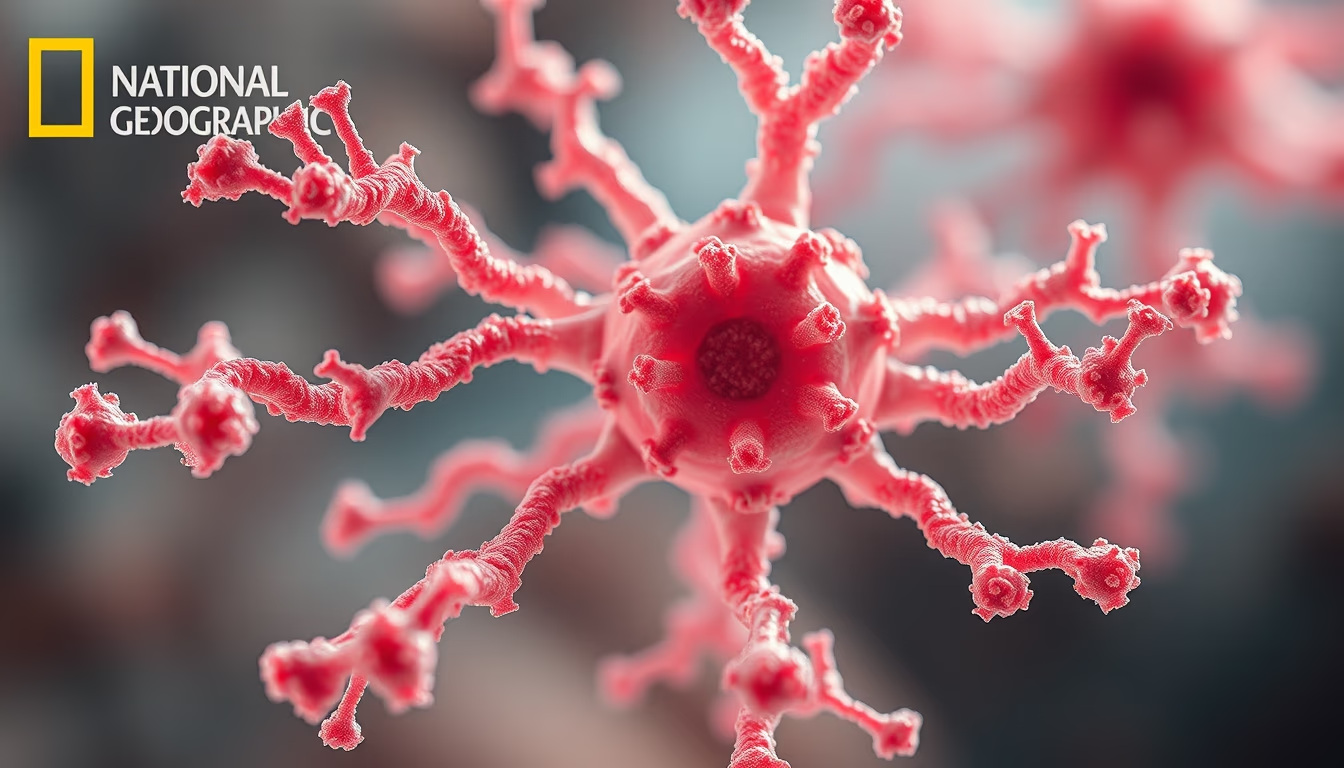
The ribosome is the cellular machinery responsible for protein synthesis, essential for life. Composed of RNA and proteins, it decodes mRNA.
About this subject
The ribosome is a fundamental cellular structure present in all living cells, from bacteria to humans. Its primary function is protein synthesis, a process in which it translates the genetic code from messenger RNA (mRNA) into polypeptide chains. This molecular machinery is composed of two subunits: a large and a small one, which join together during translation. In eukaryotic ribosomes, the large subunit (60S) contains three ribosomal RNA molecules (28S, 5.8S, and 5S) and about 49 proteins, while the small subunit (40S) contains one rRNA (18S) and 33 proteins. In prokaryotes, the subunits are designated 50S and 30S, with smaller sizes.
The discovery of ribosomes dates back to the 1950s, with the work of George Palade, who first visualized them using electron microscopy, earning him the Nobel Prize in Medicine in 1974. Since then, advanced structural studies such as X-ray crystallography and cryo-electron microscopy have revealed atomic details of the ribosome. In 2000, Venkatraman Ramakrishnan, Thomas Steitz, and Ada Yonath won the Nobel Prize in Chemistry for determining the three-dimensional structure of the bacterial ribosome.
Ribosomes can be free in the cytoplasm or attached to the rough endoplasmic reticulum (in eukaryotes). This location influences the fate of the synthesized proteins: cytosolic proteins are made by free ribosomes, while proteins destined for membranes or secretion are produced on the endoplasmic reticulum. In cells with high protein demand, such as pancreatic cells, thousands of ribosomes are active simultaneously. The synthesis rate can reach 20 amino acids per second per ribosome.
Interestingly, ribosomes are also the target of many antibiotics. Drugs like tetracycline, erythromycin, and chloramphenicol act by binding to bacterial ribosomes, blocking protein synthesis and killing the bacteria. This specificity arises from structural differences between prokaryotic and eukaryotic ribosomes, allowing therapeutic selectivity. Understanding the ribosome is therefore crucial not only for fundamental biology but also for the development of new drugs.
Frequently Asked Questions
What is a ribosome?
A ribosome is a cellular structure composed of RNA and proteins responsible for protein synthesis. It reads messenger RNA and assembles amino acids in the correct sequence.
What is the difference between prokaryotic and eukaryotic ribosomes?
Prokaryotic ribosomes are smaller (70S, subunits 50S and 30S) and differ in rRNA and protein composition. Eukaryotic ribosomes are larger (80S, subunits 60S and 40S). This difference is exploited by antibiotics that target bacteria without affecting human cells.
Why is the ribosome important for medicine?
Many antibiotics work by inhibiting bacterial ribosome function. Detailed study of ribosome structure enables the development of new, more specific, and effective drugs against infections.
Direct URL
https://pub-c7d6a6ea828543ac903a74a341ccb2e1.r2.dev/imagens/ribosome-detail-render-national-geographic-style-p8.avifHow to credit
Include a visible link back to UtilizAí. Copy one of the snippets below:
<a href="https://xn--utiliza-eza.com/en/midia/imagens/ribosome-detail-render-national-geographic-style-p8">Ribosome detail render</a> by <a href="https://xn--utiliza-eza.com">UtilizAí</a>, licensed under <a href="https://creativecommons.org/licenses/by/4.0/">CC BY 4.0</a>.
[Ribosome detail render](https://xn--utiliza-eza.com/en/midia/imagens/ribosome-detail-render-national-geographic-style-p8) by [UtilizAí](https://xn--utiliza-eza.com), CC BY 4.0
License: CC-BY-4.0