Ribosome detail render
1344×768 · AVIF · CC BY 4.0
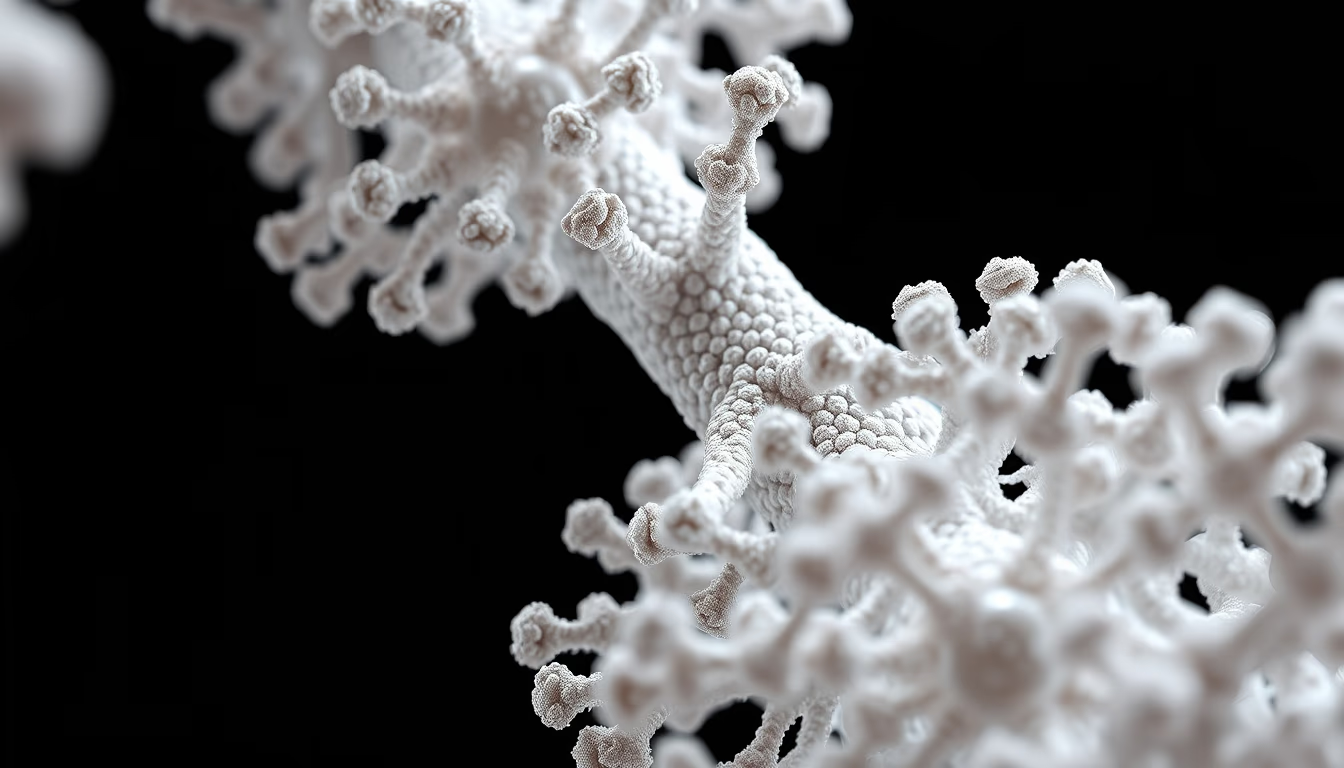
The ribosome is an essential molecular machine for protein synthesis in all living cells, responsible for translating the genetic code into functional polypeptide chains.
About this subject
The ribosome is a macromolecular complex composed of ribosomal RNA (rRNA) and proteins, found in all cells from bacteria to humans. It serves as the central machinery for translation, the process by which genetic information in messenger RNA (mRNA) is converted into amino acid sequences that form proteins. Ribosomes can be free in the cytoplasm or attached to the rough endoplasmic reticulum in eukaryotic cells, synthesizing proteins destined for organelles or secretion.
Structurally, the ribosome consists of two subunits of different sizes: the small subunit (30S in prokaryotes, 40S in eukaryotes) binds to mRNA, while the large subunit (50S in prokaryotes, 60S in eukaryotes) catalyzes the formation of peptide bonds between amino acids. This architecture is evolutionarily conserved, reflecting its critical function. X-ray crystallography studies have revealed atomic details of the ribosome, especially in bacteria, enabling the development of antibiotics that selectively inhibit bacterial protein synthesis without affecting human ribosomes.
The importance of ribosomes extends beyond basic biology. Mutations in ribosomal components can lead to human diseases known as ribosomopathies, such as Diamond-Blackfan anemia and Shwachman-Diamond syndrome. Additionally, the ribosome is targeted by various toxins and drugs, including ricin and tetracycline. Detailed understanding of its structure and function remains an active research field with implications for biotechnology and medicine.
Interestingly, ribosomes are considered ribozymes because rRNA is responsible for the catalytic activity of peptide bond formation, challenging the traditional view that only proteins act as enzymes. This discovery, made by Thomas Cech and Sidney Altman in the 1980s, earned them the Nobel Prize in Chemistry and supported the RNA world hypothesis, suggesting that primitive RNA molecules could have performed catalytic functions before the emergence of proteins.
Frequently Asked Questions
What is the main function of the ribosome?
The ribosome is responsible for protein synthesis, translating the genetic code from messenger RNA into amino acid chains that form functional proteins.
Are ribosomes the same in all living organisms?
No, there are structural differences between prokaryotic (70S) and eukaryotic (80S) ribosomes, as well as variations in organelles like mitochondria and chloroplasts, which have ribosomes similar to bacterial ones.
Why is the ribosome considered a ribozyme?
Because the catalytic activity of peptide bond formation is carried out by ribosomal RNA (rRNA), not by proteins, making the ribosome an RNA enzyme.
Direct URL
https://pub-c7d6a6ea828543ac903a74a341ccb2e1.r2.dev/imagens/ribosome-detail-render-architectural-photography-p10.avifHow to credit
Include a visible link back to UtilizAí. Copy one of the snippets below:
<a href="https://xn--utiliza-eza.com/en/midia/imagens/ribosome-detail-render-architectural-photography-p10">Ribosome detail render</a> by <a href="https://xn--utiliza-eza.com">UtilizAí</a>, licensed under <a href="https://creativecommons.org/licenses/by/4.0/">CC BY 4.0</a>.
[Ribosome detail render](https://xn--utiliza-eza.com/en/midia/imagens/ribosome-detail-render-architectural-photography-p10) by [UtilizAí](https://xn--utiliza-eza.com), CC BY 4.0
License: CC-BY-4.0