Remote worker in home office with coffee and laptop
1344×768 · AVIF · CC BY 4.0

Remote worker in home office with coffee and laptop, an image that symbolizes the routine of remote work in Brazil.
About this subject
Remote work in Brazil has grown exponentially since 2020, driven by the COVID-19 pandemic. A 2023 survey by Instituto Locomotiva found that 92% of remote workers want to maintain a hybrid or fully remote regime, valuing flexibility and time saved on commuting. Home office has consolidated especially in technology, financial services, and education sectors, with companies like Nubank, Ifood, and Vivo adopting fully remote or hybrid models.
The image of a professional with coffee and laptop reflects a common ritual: the strategic break for the beverage, which in Brazil is often filtered coffee or espresso, consumed on average 3 to 4 times a day by workers. The habit is associated with productivity gains, with studies from the University of São Paulo indicating that caffeine improves concentration on repetitive tasks.
The home setting also raises ergonomic and health concerns. Data from the Ministry of Health shows that 38% of remote workers reported back pain in 2022, often due to inadequate furniture. The image captures this scenario: an informal yet functional environment where the professional seeks balance between comfort and efficiency.
Interestingly, the term home office was officially regulated in Brazil by the 2017 Labor Reform but only gained practical traction with the pandemic. Today, an estimated 8.3 million Brazilians work remotely, according to the Continuous PNAD (IBGE, 2023), a number expected to grow with the expansion of 5G internet and collaboration tools like Zoom and Slack.
Frequently Asked Questions
What are the labor rights for home office in Brazil?
Since the 2017 Labor Reform, home office is regulated. Employers must provide equipment and reimburse expenses like internet and electricity, as well as ensure ergonomic conditions. Workers are entitled to vacation, 13th salary, and FGTS, but working hours are flexible unless overtime is agreed.
How does coffee affect productivity in remote work?
Studies indicate that caffeine improves focus and short-term memory, especially for repetitive tasks. However, excessive consumption can cause anxiety and insomnia. Experts recommend up to 400 mg of caffeine per day (about 4 cups of filtered coffee).
What percentage of Brazilians work remotely?
According to the Continuous PNAD from IBGE 2023, 8.3 million Brazilians work remotely, representing about 8.5% of the employed population. The number has grown 40% since 2019.
Direct URL
https://pub-c7d6a6ea828543ac903a74a341ccb2e1.r2.dev/imagens/remote-worker-in-home-office-with-coffee-and-laptop-wide-late-afternoon.avifHow to credit
Include a visible link back to UtilizAí. Copy one of the snippets below:
<a href="https://xn--utiliza-eza.com/en/midia/imagens/remote-worker-in-home-office-with-coffee-and-laptop-wide-late-afternoon">Remote worker in home office with coffee and laptop</a> by <a href="https://xn--utiliza-eza.com">UtilizAí</a>, licensed under <a href="https://creativecommons.org/licenses/by/4.0/">CC BY 4.0</a>.
[Remote worker in home office with coffee and laptop](https://xn--utiliza-eza.com/en/midia/imagens/remote-worker-in-home-office-with-coffee-and-laptop-wide-late-afternoon) by [UtilizAí](https://xn--utiliza-eza.com), CC BY 4.0
License: CC-BY-4.0
Tags
Related images
 Food delivery rider on motorbike in São Paulo traffic
 Food delivery rider on motorbike in São Paulo traffic
 Food delivery rider on motorbike in São Paulo traffic
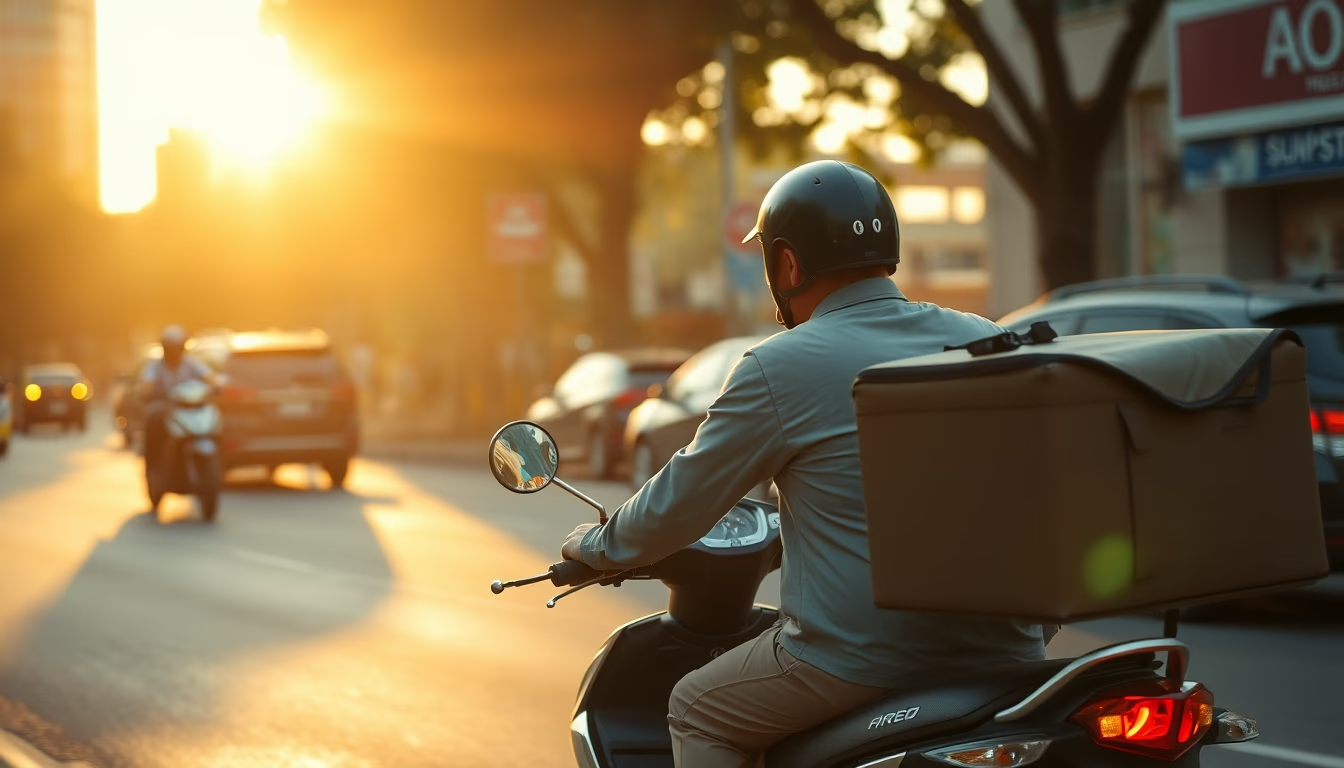 Food delivery rider on motorbike in São Paulo traffic
 Food delivery rider on motorbike in São Paulo traffic
 Food delivery rider on motorbike in São Paulo traffic