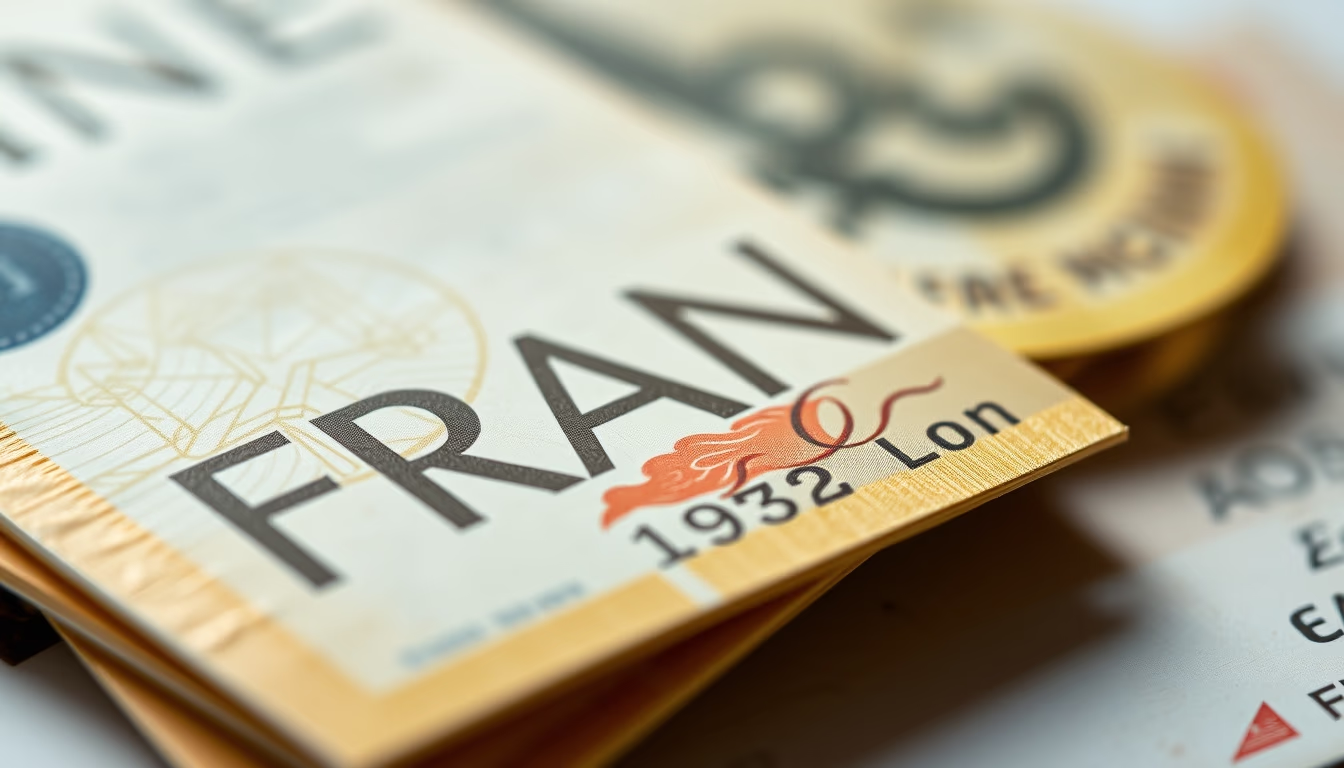
Reichsmark germany 1920
1344×768 · AVIF · CC BY 4.0

German Papiermark banknote from 1920, pre-Reichsmark era, marked by the hyperinflation that plagued the Weimar Republic.
About this subject
In 1920, Germany still used the Papiermark as its official currency, a legacy of the German Empire and World War I. The term "Reichsmark" would only be adopted after 1924, following the monetary reform that introduced the Rentenmark and later the Reichsmark. Therefore, the 1920 banknote is technically a Papiermark, issued by the Reichsbank. This period was marked by rampant hyperinflation, resulting from war debts, reparations imposed by the Treaty of Versailles, and the French occupation of the Ruhr in 1923.
In the following years, the Papiermark's value collapsed: notes of 50,000, 1 million, and even 100 trillion marks were issued. Hyperinflation peaked in November 1923, when one US dollar equaled 4.2 trillion marks. To curb the crisis, the German government introduced the Rentenmark in November 1923, backed by land and industrial assets, followed by the Reichsmark in August 1924, fixed at 1 Reichsmark per 1 trillion Papiermark.
The 1920 note represents a transitional moment: it still featured artistic designs and national symbols, without the astronomical denominations that would come later. Some notes from this era are rare and coveted by collectors, as they mark the beginning of one of the most dramatic monetary collapses in history. Studying these pieces helps understand the economic and social effects of war and inflation in early 20th-century Germany.
Frequently Asked Questions
Why did Germany experience hyperinflation in 1923?
Hyperinflation was caused by war debts, reparations from the Treaty of Versailles, and the occupation of the Ruhr, which paralyzed the economy. The government printed unbacked money to pay bills, fueling an inflationary spiral.
What is the difference between Papiermark and Reichsmark?
The Papiermark was the German currency from 1914 to 1923. After hyperinflation, it was replaced by the Rentenmark in 1923 and then the Reichsmark in 1924, a stable currency backed by gold and land.
Are 1920 banknotes valuable today?
Some 1920 notes can be collectible, especially in good condition or from rare series. However, most were issued in large quantities and have low monetary value, except for their historical interest.
Direct URL
https://pub-c7d6a6ea828543ac903a74a341ccb2e1.r2.dev/imagens/reichsmark-germany-1920-minimalist-composition-fresh1.avifHow to credit
Include a visible link back to UtilizAí. Copy one of the snippets below:
<a href="https://xn--utiliza-eza.com/en/midia/imagens/reichsmark-germany-1920-minimalist-composition-fresh1">Reichsmark germany 1920</a> by <a href="https://xn--utiliza-eza.com">UtilizAí</a>, licensed under <a href="https://creativecommons.org/licenses/by/4.0/">CC BY 4.0</a>.
[Reichsmark germany 1920](https://xn--utiliza-eza.com/en/midia/imagens/reichsmark-germany-1920-minimalist-composition-fresh1) by [UtilizAí](https://xn--utiliza-eza.com), CC BY 4.0
License: CC-BY-4.0