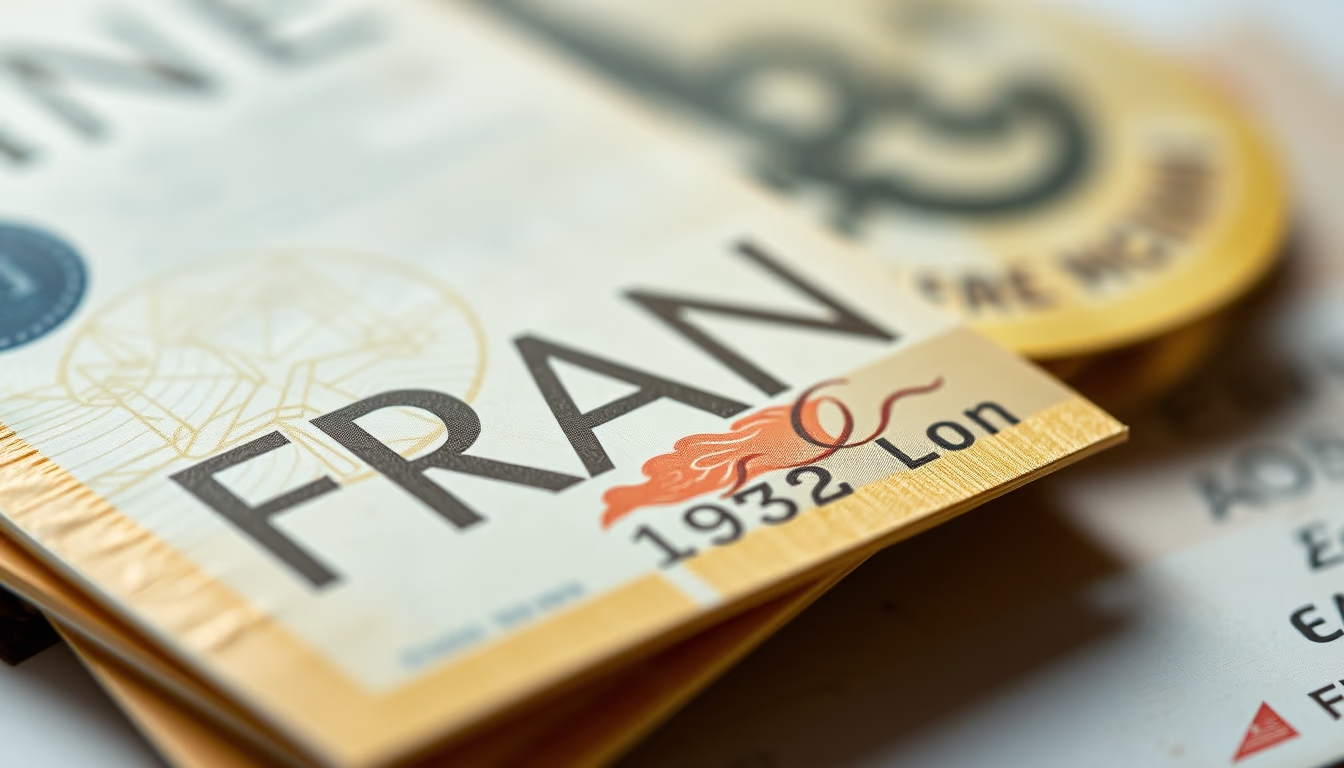
Reichsmark germany 1920
1344×768 · AVIF · CC BY 4.0

German banknote or coin from 1920, inflationary period after World War I, preceding the introduction of the Reichsmark in 1924.
About this subject
The year 1920 marked the beginning of inflationary escalation in Germany, still under the Papiermark regime, which would later suffer hyperinflation. Although the term Reichsmark was only officially adopted in 1924 with the monetary reform, many pieces issued during the transition period are incorrectly called Reichsmark by collectors. In practice, the 1920 banknotes belonged to the Papiermark system, nominally backed by gold but effectively not, as the Treaty of Versailles imposed heavy war reparations on the country.
Banknotes issued in 1920 featured varied designs, often with allegories of industry, agriculture, and mythological figures. Denominations ranged from 10 to 1000 marks, and soon 1000-mark notes became common. Coins, on the other hand, were still minted in metals like aluminum and bronze, as the metal value exceeded face value. The German government used low-quality paper money, which accelerated wear and counterfeiting.
For numismatists, pieces from 1920 are a physical testimony to one of the greatest economic crises of the 20th century. Well-preserved specimens are rare, especially high-denomination notes that did not circulate heavily. The 1920 series includes varieties such as issues from the Reichsbank and the states (Länder), each with its own characteristics. Condition and the presence of manual signatures or stamps can significantly influence market value.
Interestingly, the subsequent hyperinflation caused 1920 notes to be later overprinted with additional zeros to increase value, a common practice until the introduction of the Rentenmark in 1923. This makes German numismatics of that period particularly fascinating, with countless stories behind each piece.
Frequently Asked Questions
What distinguishes the 1920 Papiermark from the Reichsmark introduced in 1924?
The 1920 Papiermark was the currency of the Weimar Republic, lacking real backing and subject to hyperinflation. The Reichsmark, launched in 1924, replaced the Papiermark at a rate of 1 trillion Papiermarks to 1 Reichsmark, based on the Rentenmark.
What was the most common denomination of German banknotes in 1920?
Denominations ranged from 10 to 1000 marks. 1000-mark notes became very common due to rising inflation. Issues of 500 and 5000 marks appeared in subsequent years.
How to identify an authentic German banknote from 1920?
Authentic notes have watermarks, textured paper, and intaglio printing. Signatures of Reichsbank officials and serial numbers are key details. Contemporary counterfeits also exist and are collected.
Direct URL
https://pub-c7d6a6ea828543ac903a74a341ccb2e1.r2.dev/imagens/reichsmark-germany-1920-fine-art-photography-fresh2.avifHow to credit
Include a visible link back to UtilizAí. Copy one of the snippets below:
<a href="https://xn--utiliza-eza.com/en/midia/imagens/reichsmark-germany-1920-fine-art-photography-fresh2">Reichsmark germany 1920</a> by <a href="https://xn--utiliza-eza.com">UtilizAí</a>, licensed under <a href="https://creativecommons.org/licenses/by/4.0/">CC BY 4.0</a>.
[Reichsmark germany 1920](https://xn--utiliza-eza.com/en/midia/imagens/reichsmark-germany-1920-fine-art-photography-fresh2) by [UtilizAí](https://xn--utiliza-eza.com), CC BY 4.0
License: CC-BY-4.0