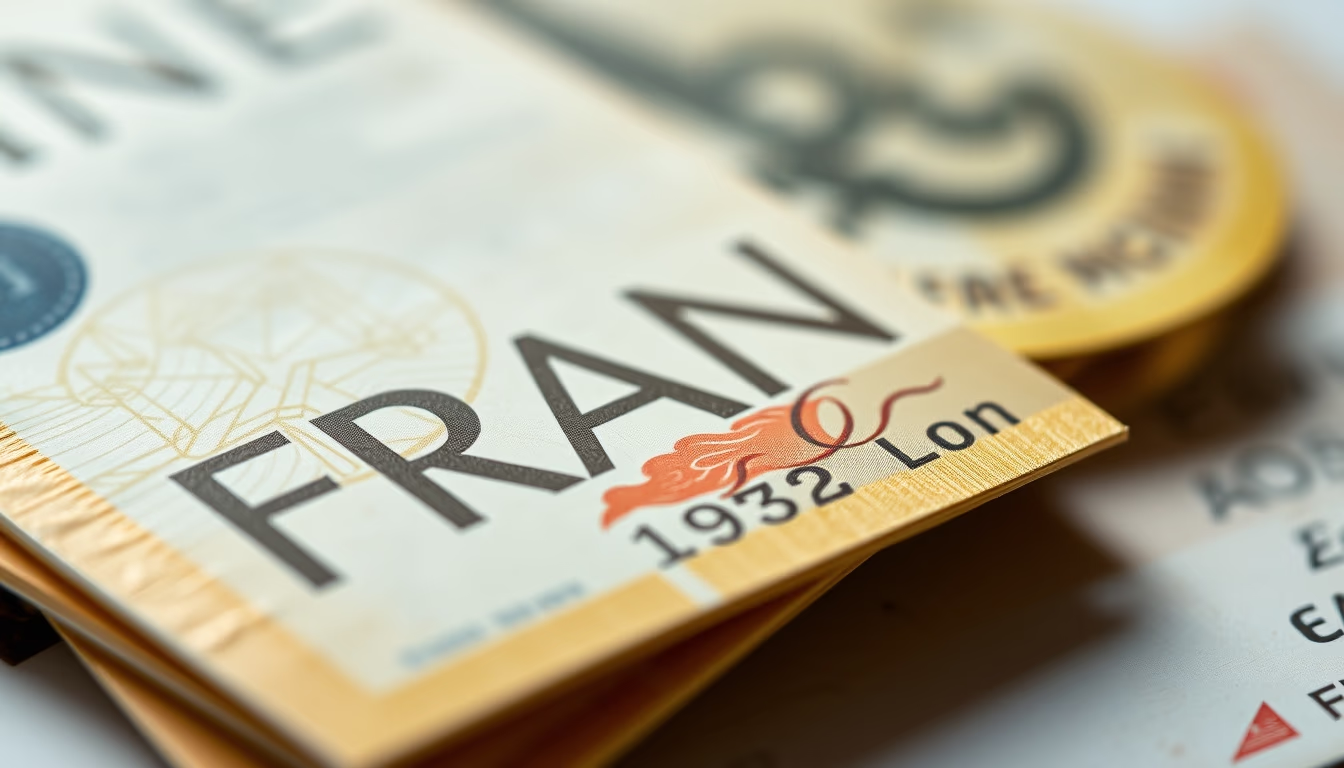
Reichsmark germany 1920
1344×768 · AVIF · CC BY 4.0

The German Reichsmark of 1920 was the official currency of Germany during the Weimar Republic, a period marked by hyperinflation and economic instability.
About this subject
The Reichsmark (ℛℳ) was introduced in 1924 to replace the Papiermark, which had suffered catastrophic devaluation during the hyperinflation of 1923. However, the title mentions 1920, when the Papiermark was still in circulation. This confusion may arise because the name "Reichsmark" was officially adopted later, but the transition began in 1924 under Hjalmar Schacht's monetary reform. The currency was subdivided into 100 Reichspfennig and circulated until 1948 in West Germany and until 1945 in the rest of the country.
The design of Reichsmark banknotes and coins often featured national symbols, such as the German eagle, and images of historical or cultural figures. For example, the 5 Reichsmark note from 1942 depicted a young Friedrich Schiller, while the 100 Reichsmark note from 1935 showed the musician Justus von Liebig. Coins varied in metals depending on the economy: copper, nickel, and aluminum during World War II due to shortages.
The hyperinflation that preceded the Reichsmark rendered the previous currency nearly worthless: in November 1923, one US dollar equaled 4.2 trillion Papiermarks. To stabilize the economy, the government created the Rentenmark in 1923, then the Reichsmark in 1924, pegged to gold. This measure restored confidence in the currency but did not prevent the rise of Nazism, which used the economic crisis as political rhetoric.
Today, Reichsmark banknotes and coins are collectible items, especially specimens from the interwar period. Numismatic value varies by rarity and condition, but most common pieces are affordable. Many notes featured portraits of artists, scientists, and politicians, reflecting an attempt to promote German culture amidst political turmoil.
Frequently Asked Questions
What is the difference between the Papiermark and the Reichsmark?
The Papiermark was the German currency until 1923, when hyperinflation rendered it worthless. The Reichsmark was introduced in 1924 as part of the monetary reform, pegged to gold and more stable.
Does the Reichsmark hold any value today?
No, the Reichsmark ceased to be legal tender in 1948 in West Germany and in 1945 in the rest. Today, it only has numismatic value for collectors.
Why is the German currency of 1920 called Reichsmark if it was created in 1924?
The title may be a historical error or refer to a transition period. In 1920, the official currency was still the Papiermark, but the name Reichsmark was used later.
Direct URL
https://pub-c7d6a6ea828543ac903a74a341ccb2e1.r2.dev/imagens/reichsmark-germany-1920-architectural-photography-fresh7.avifHow to credit
Include a visible link back to UtilizAí. Copy one of the snippets below:
<a href="https://xn--utiliza-eza.com/en/midia/imagens/reichsmark-germany-1920-architectural-photography-fresh7">Reichsmark germany 1920</a> by <a href="https://xn--utiliza-eza.com">UtilizAí</a>, licensed under <a href="https://creativecommons.org/licenses/by/4.0/">CC BY 4.0</a>.
[Reichsmark germany 1920](https://xn--utiliza-eza.com/en/midia/imagens/reichsmark-germany-1920-architectural-photography-fresh7) by [UtilizAí](https://xn--utiliza-eza.com), CC BY 4.0
License: CC-BY-4.0