Reel to reel tape player
1344×768 · AVIF · CC BY 4.0

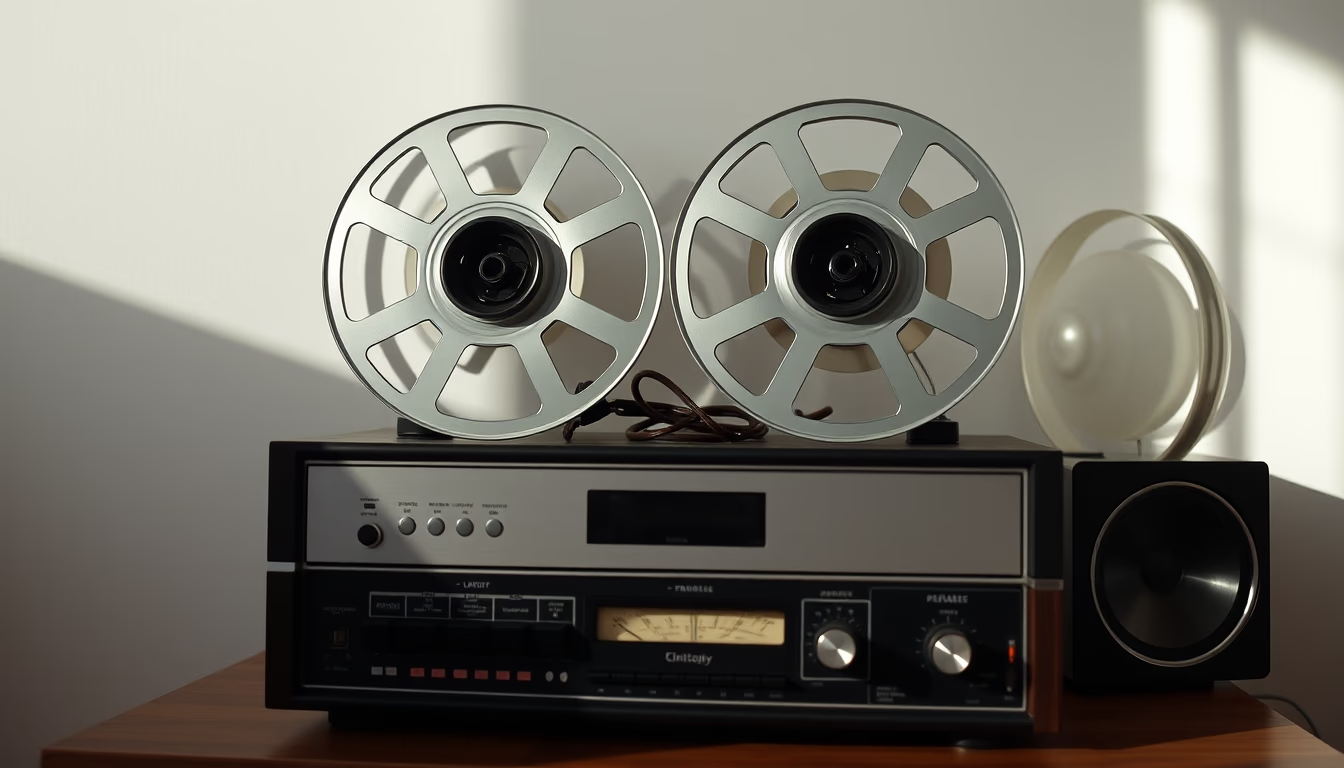
Macro closeup of a reel-to-reel tape recorder, highlighting its analog mechanisms and vintage design.
About this subject
The reel-to-reel tape recorder was the professional standard for sound recording from the 1940s to the 1980s. Using wide tape (typically 1/4 inch on open reels), these devices offered superior audio quality compared to later compact formats. The tape movement between two reels, guided by recording and playback heads, required mechanical precision that is evident in the details of a macroscopic close-up.
In Brazil, these recorders were widely used in radio and TV studios until the advent of multitrack systems. Major Brazilian popular music artists, such as Tom Jobim and Caetano Veloso, had their works mastered on machines like the Studer A80 or Ampex. The warm texture and wide dynamic range are still sought after by audiophiles and modern producers who resort to analog mastering.
A technical curiosity: the standard speed of 38.1 cm/s (15 ips) allowed a frequency response reaching 30 kHz, surpassing that of the CD. In contrast, the reduced speed of 9.5 cm/s (3.75 ips) was common in domestic recorders, sacrificing quality for longer recording time. Maintenance of these machines requires periodic head alignment and roller cleaning, tasks that fascinate collectors.
Culturally, the reel-to-reel symbolizes the golden age of analog audio, when each recording was a physical event. The exposed design, with discrete transistors, copper cables, and friction mechanisms, attracts not only musicians but also engineers and designers interested in the industrial aesthetics of the 20th century.
Frequently Asked Questions
What is the difference between a reel-to-reel recorder and a cassette?
A reel-to-reel uses open reels with wider tape (typically 1/4 inch) and faster speeds (15 ips), delivering higher fidelity. The cassette, introduced in the 1960s, is a compact format with tape enclosed in a cartridge and a speed of 1.875 ips, prioritizing portability over quality.
Why is reel-to-reel sound considered superior to digital?
Analog recording captures continuous amplitude variations without quantization artifacts. Gradual tape saturation provides a pleasant natural compression, and high analog sampling rates (above 30 kHz) preserve harmonics that are inaudible on CDs.
Are these recorders still used professionally today?
Yes, in niche contexts. Mastering studios seeking an 'analog signature' maintain restored machines like the Studer A80. Also, experimental and lo-fi artists value the texture and inherent imperfections of the format.
Direct URL
https://pub-c7d6a6ea828543ac903a74a341ccb2e1.r2.dev/imagens/reel-to-reel-tape-player-macro-closeup-fresh17.avifHow to credit
Include a visible link back to UtilizAí. Copy one of the snippets below:
<a href="https://xn--utiliza-eza.com/en/midia/imagens/reel-to-reel-tape-player-macro-closeup-fresh17">Reel to reel tape player</a> by <a href="https://xn--utiliza-eza.com">UtilizAí</a>, licensed under <a href="https://creativecommons.org/licenses/by/4.0/">CC BY 4.0</a>.
[Reel to reel tape player](https://xn--utiliza-eza.com/en/midia/imagens/reel-to-reel-tape-player-macro-closeup-fresh17) by [UtilizAí](https://xn--utiliza-eza.com), CC BY 4.0
License: CC-BY-4.0