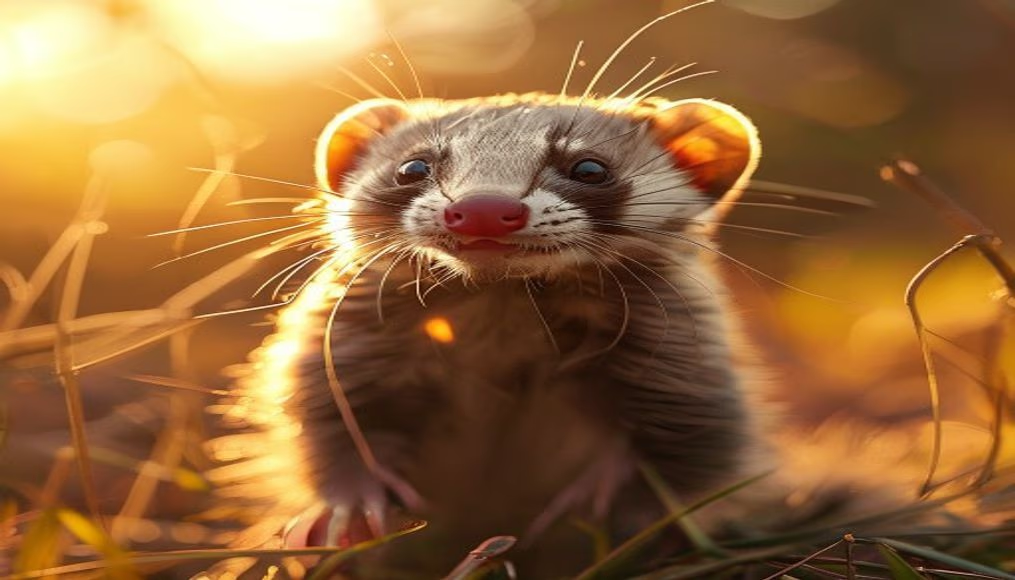
Red panda in tree
1344×768 · AVIF · CC BY 4.0
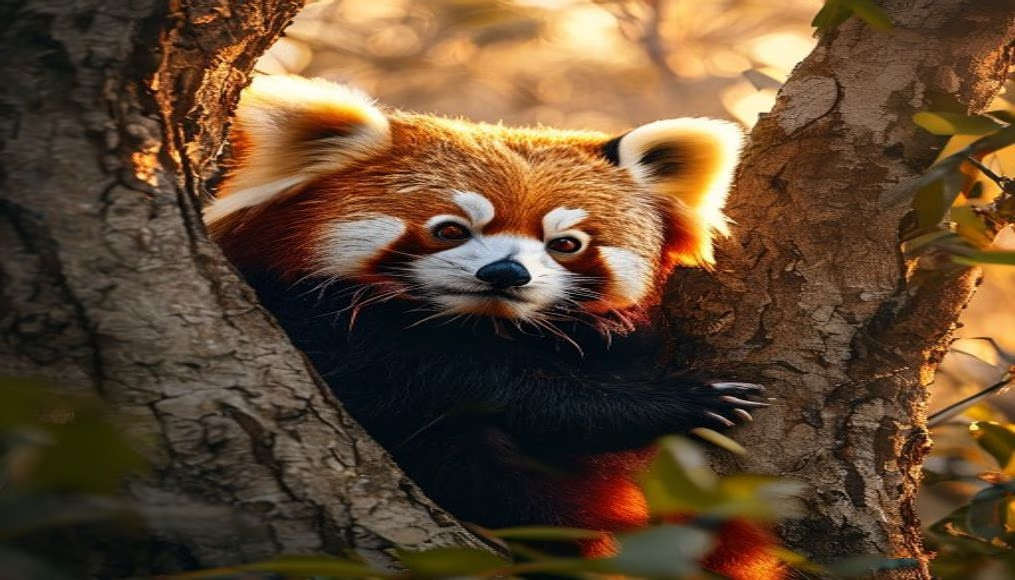
The red panda, native to the Himalayan forests, is an endangered arboreal mammal known for its distinctive reddish fur and playful behavior.
About this subject
The red panda (Ailurus fulgens) is a small mammal inhabiting the temperate forests of the Himalayas, ranging from Nepal to northern Myanmar, including Bhutan, India, and southern China. Unlike the giant panda, to which it is not closely related, the red panda belongs to its own family, Ailuridae, and is more closely related to raccoons and weasels. Its reddish-brown fur and long, ringed tail make it easily recognizable.
These animals are primarily arboreal and spend most of their time in trees, feeding mainly on bamboo, supplemented with fruits, roots, and occasionally eggs or insects. They have a modified wrist bone that acts as a opposable thumb, allowing them to grasp bamboo stems skillfully. Red pandas are solitary and most active during twilight and night, sleeping in tree forks during the day.
The species is listed as Endangered by the IUCN, with an estimated population of fewer than 10,000 mature individuals. Major threats include deforestation for agriculture and logging, illegal hunting for their fur, and habitat fragmentation due to roads and dams. Conservation programs in zoos worldwide have aided captive breeding, and countries like Nepal have established specific protected areas.
Interestingly, the red panda is the state animal of the Indian state of Sikkim and inspired the mascot of the Berlin International Film Festival. Although peaceful, it plays an important role as a seed disperser in temperate forests. Despite its name, it is not directly related to the giant panda, having diverged evolutionarily about 40 million years ago.
Frequently Asked Questions
What is the difference between a red panda and a giant panda?
Red pandas are not closely related to giant pandas. Giant pandas belong to the bear family (Ursidae), while red pandas are the only living members of the family Ailuridae. Red pandas are much smaller, weighing 3 to 6 kg, and are more arboreal.
Where does the red panda live?
Red pandas inhabit temperate bamboo forests in the Himalayas, including Nepal, India, Bhutan, Myanmar, and southern China. They live at elevations between 2,200 and 4,800 meters.
Why is the red panda endangered?
Major threats include habitat loss from deforestation for agriculture and logging, poaching for their fur, and forest fragmentation. The population is estimated at fewer than 10,000 adults, and the species is listed as Endangered by the IUCN.
Direct URL
https://pub-c7d6a6ea828543ac903a74a341ccb2e1.r2.dev/imagens/red-panda-in-tree-travel-photography-v10.avifHow to credit
Include a visible link back to UtilizAí. Copy one of the snippets below:
<a href="https://xn--utiliza-eza.com/en/midia/imagens/red-panda-in-tree-travel-photography-v10">Red panda in tree</a> by <a href="https://xn--utiliza-eza.com">UtilizAí</a>, licensed under <a href="https://creativecommons.org/licenses/by/4.0/">CC BY 4.0</a>.
[Red panda in tree](https://xn--utiliza-eza.com/en/midia/imagens/red-panda-in-tree-travel-photography-v10) by [UtilizAí](https://xn--utiliza-eza.com), CC BY 4.0
License: CC-BY-4.0