Rapier renaissance fencing
1344×768 · AVIF · CC BY 4.0
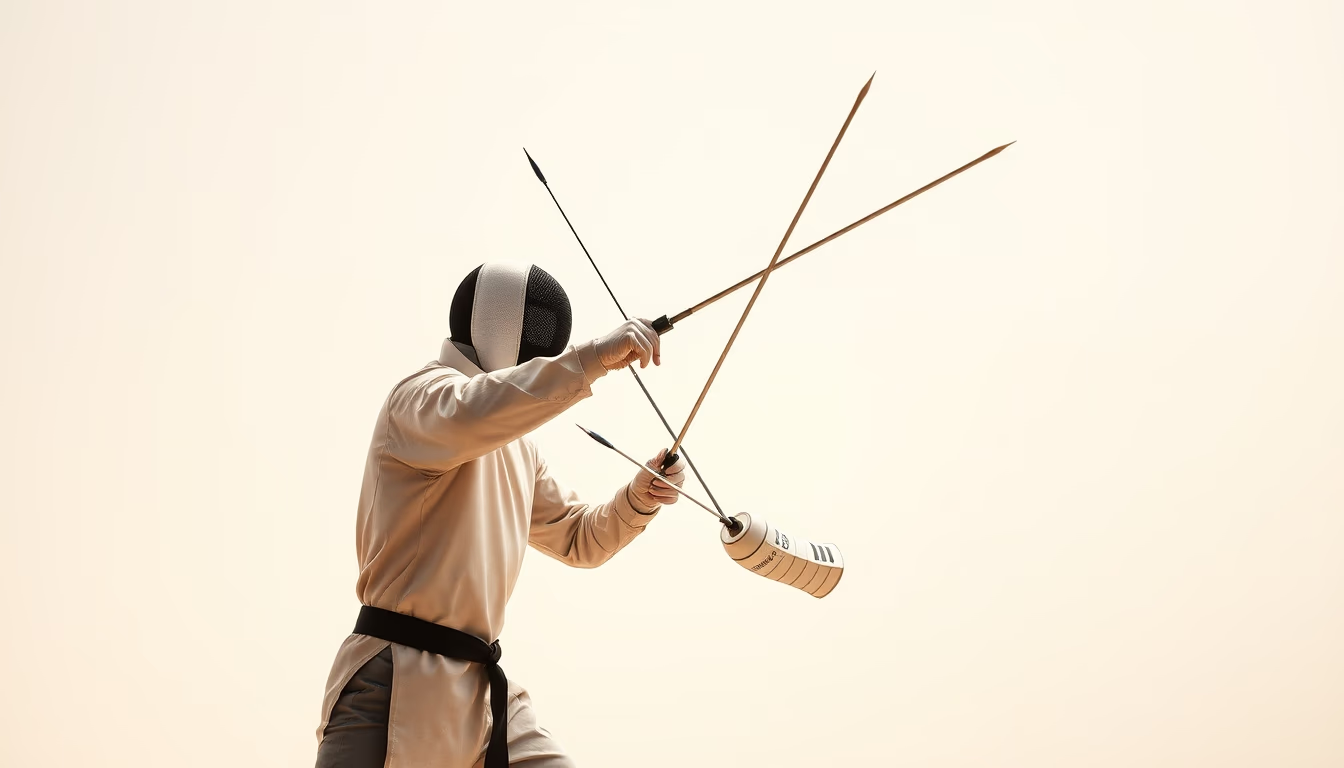
Renaissance rapier fencing combined precise technique, elegance, and lethality, becoming essential for duels and self-defense in 16th and 17th century Europe.
About this subject
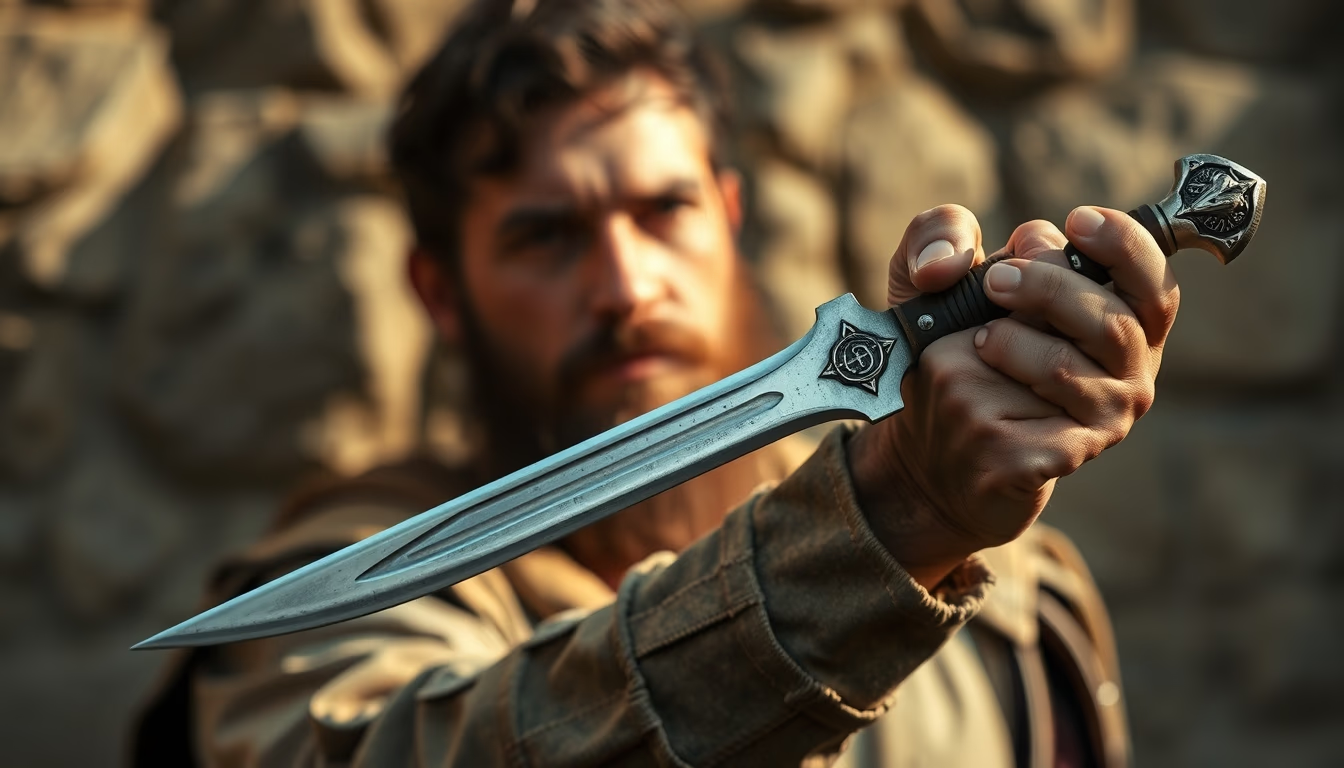
The rapier, a long, slender-bladed sword, dominated Europe during the Renaissance, especially in Italy and Spain. Unlike heavy medieval swords, the rapier was light and agile, designed primarily for thrusting. Its popularity grew alongside the dueling culture, where honor was often defended with the blade.
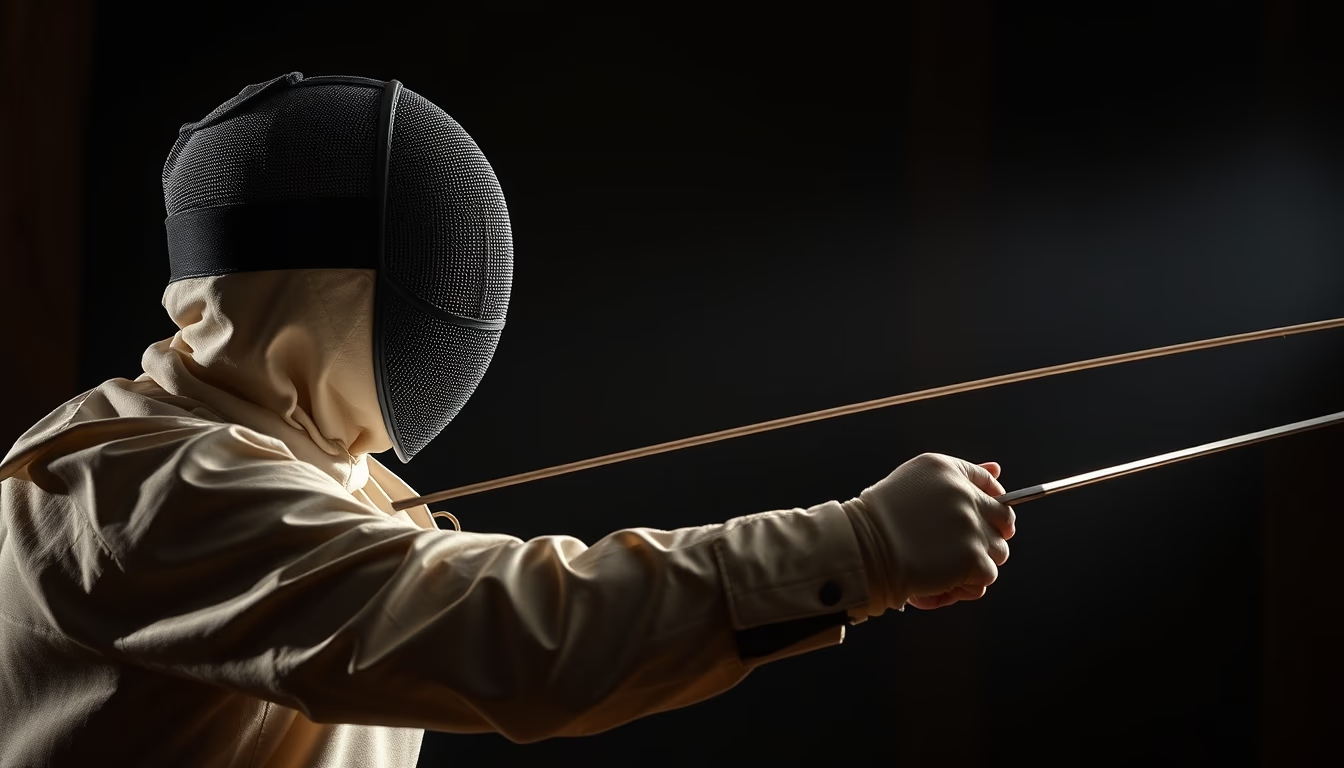
Fencing masters such as Ridolfo Capo Ferro and Salvator Fabris wrote detailed treatises on guards, footwork, and attack. Renaissance fencing emphasized the straight line and opposition, using the free hand to deflect the opponent's point. Duels were governed by codes of conduct, and training included practice with foils and protective masks.
The lunge technique, popularized in this period, allowed rapid reach to the opponent. The low guard, common in Italian treatises, protected the lower line while threatening the torso. The Spanish school, with its Verdadera Destreza, incorporated mathematical circles and more closed stances. These approaches directly influenced modern Olympic fencing, which still uses concepts of distance, timing, and opposition.
Renaissance fencing was not only a martial art but also a marker of status and refinement. Nobles and gentlemen practiced it as part of their education. The rapier eventually gave way to lighter swords in the 18th century, but its legacy lives on in historical reenactments and popular culture.
Frequently Asked Questions
What is the difference between Renaissance fencing and modern fencing?
Renaissance fencing used the rapier, focusing on thrusts and light cuts, while modern fencing uses foil, épée, and sabre with standardized safety gear and electric scoring. Historical techniques emphasized real dueling without the limitations of a piste.
How did a Renaissance duelist prepare?
A duelist trained with fencing masters, studied treatises, practiced with foils, and performed precision and reflex exercises. They also needed to master emotional control and the honor codes of the duel.
What were the main Renaissance fencing schools?
The Italian school (Capo Ferro, Fabris) focused on linear movements and low guards. The Spanish school (Verdadera Destreza) used theoretical circles and closed stances. Both influenced Western fencing.
Direct URL
https://pub-c7d6a6ea828543ac903a74a341ccb2e1.r2.dev/imagens/rapier-renaissance-fencing-minimalist-composition-fresh3.avifHow to credit
Include a visible link back to UtilizAí. Copy one of the snippets below:
<a href="https://xn--utiliza-eza.com/en/midia/imagens/rapier-renaissance-fencing-minimalist-composition-fresh3">Rapier renaissance fencing</a> by <a href="https://xn--utiliza-eza.com">UtilizAí</a>, licensed under <a href="https://creativecommons.org/licenses/by/4.0/">CC BY 4.0</a>.
[Rapier renaissance fencing](https://xn--utiliza-eza.com/en/midia/imagens/rapier-renaissance-fencing-minimalist-composition-fresh3) by [UtilizAí](https://xn--utiliza-eza.com), CC BY 4.0
License: CC-BY-4.0