Rapier renaissance fencing
1344×768 · AVIF · CC BY 4.0
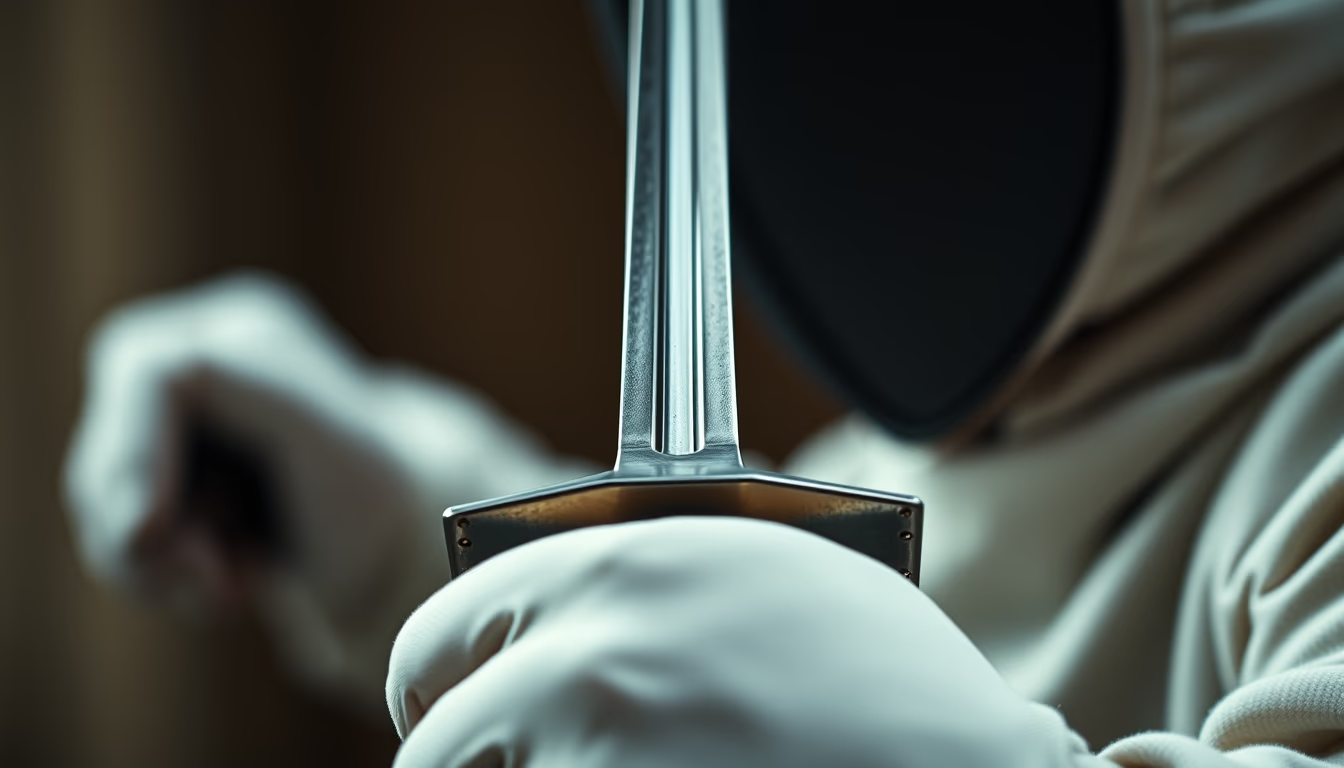
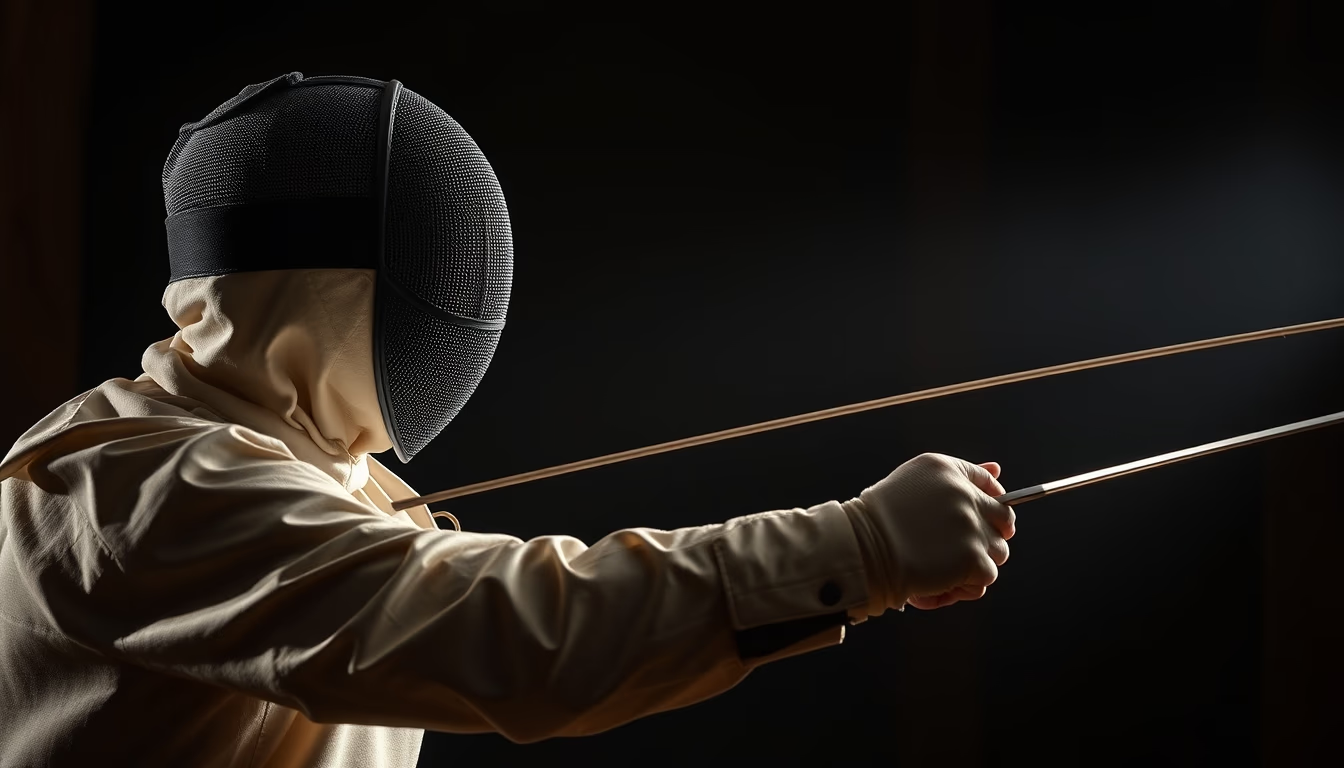
Renaissance fencing with the rapier was a martial art and elite sport that combined refined technique, fashion, and dueling in 16th and 17th century Europe.
About this subject
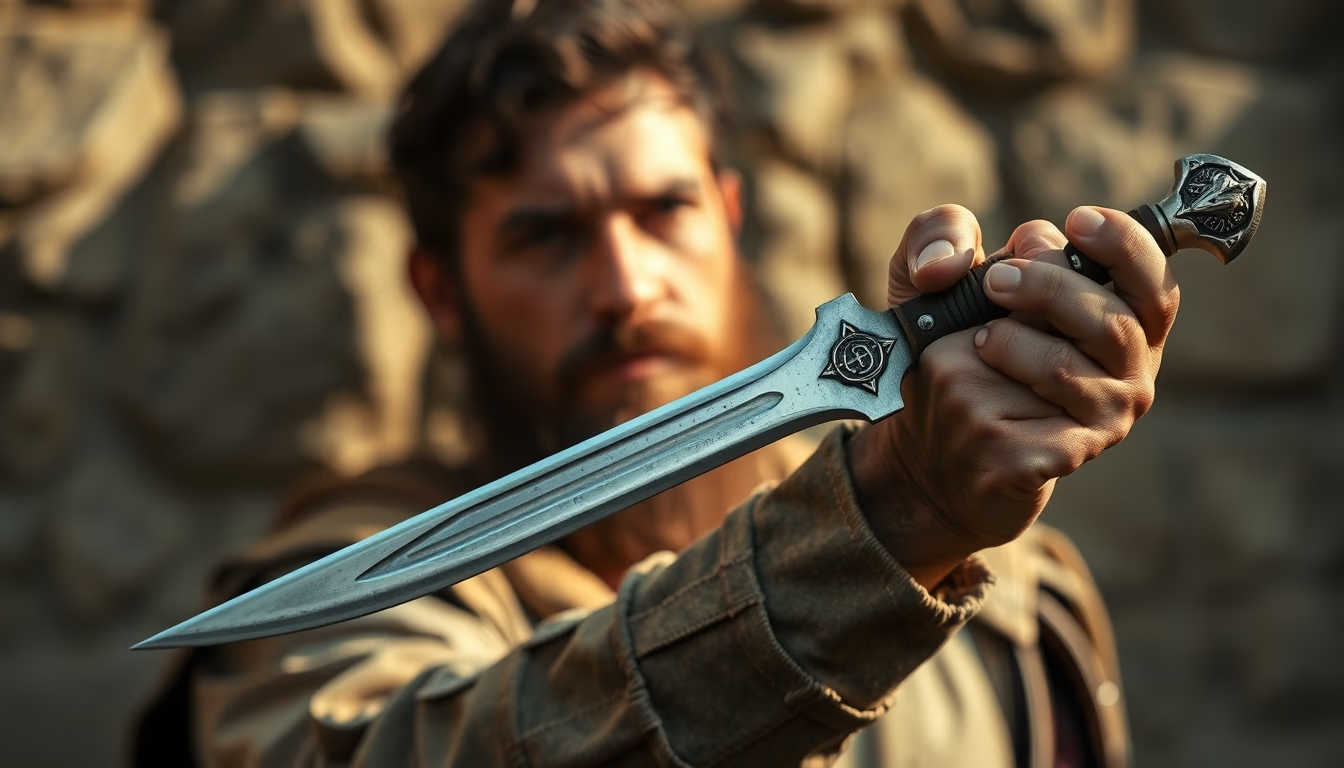
The rapier, a long and slender-bladed sword, became popular in Renaissance Europe as a weapon for self-defense and a status symbol. Unlike heavier medieval swords, the rapier was light and agile, ideal for precise thrusts. Its use flourished between the 16th and 17th centuries, especially in Italy, Spain, and France, where fencing masters developed complex combat systems.
The Italian school of fencing, led by masters such as Achille Marozzo and Ridolfo Capo Ferro, emphasized circular movements and guards like prima, seconda, and terza. The Spanish school, known as destreza, was based on geometry and lines of attack. Duels with the rapier were not just fights but displays of honor and skill, often resolved in fencing halls or public squares.
Technique involved quick advances and retreats, with the free hand often holding a cape or dagger for defense. The posture was elegant, with the body erect and the sword point always threatening the opponent. The rapier also influenced contemporary fashion: its length and design forced users to wear clothing that allowed movement, such as fitted doublets and wide breeches.
Interestingly, the rapier fell out of use by the late 17th century, replaced by shorter, lighter swords like the foil, the precursor to modern sport fencing. Today, Renaissance fencing is recreated by historical reenactment groups, who study original treatises to revive the techniques and pomp of ancient duels.
Frequently Asked Questions
What is the difference between a rapier and a medieval sword?
The rapier is lighter, with a long, thin blade focused on thrusts, while medieval swords were heavier, designed for cuts and blunt impacts.
Where did Renaissance rapier fencing originate?
Rapier fencing flourished in Italy and Spain between the 16th and 17th centuries, with distinct schools that influenced the rest of Europe.
Was the rapier used only for duels?
Though famous for duels, the rapier was also carried as a personal defense weapon and as part of the attire of nobility and the bourgeoisie.
Direct URL
https://pub-c7d6a6ea828543ac903a74a341ccb2e1.r2.dev/imagens/rapier-renaissance-fencing-macro-closeup-fresh2.avifHow to credit
Include a visible link back to UtilizAí. Copy one of the snippets below:
<a href="https://xn--utiliza-eza.com/en/midia/imagens/rapier-renaissance-fencing-macro-closeup-fresh2">Rapier renaissance fencing</a> by <a href="https://xn--utiliza-eza.com">UtilizAí</a>, licensed under <a href="https://creativecommons.org/licenses/by/4.0/">CC BY 4.0</a>.
[Rapier renaissance fencing](https://xn--utiliza-eza.com/en/midia/imagens/rapier-renaissance-fencing-macro-closeup-fresh2) by [UtilizAí](https://xn--utiliza-eza.com), CC BY 4.0
License: CC-BY-4.0