Rapier renaissance fencing
1344×768 · AVIF · CC BY 4.0
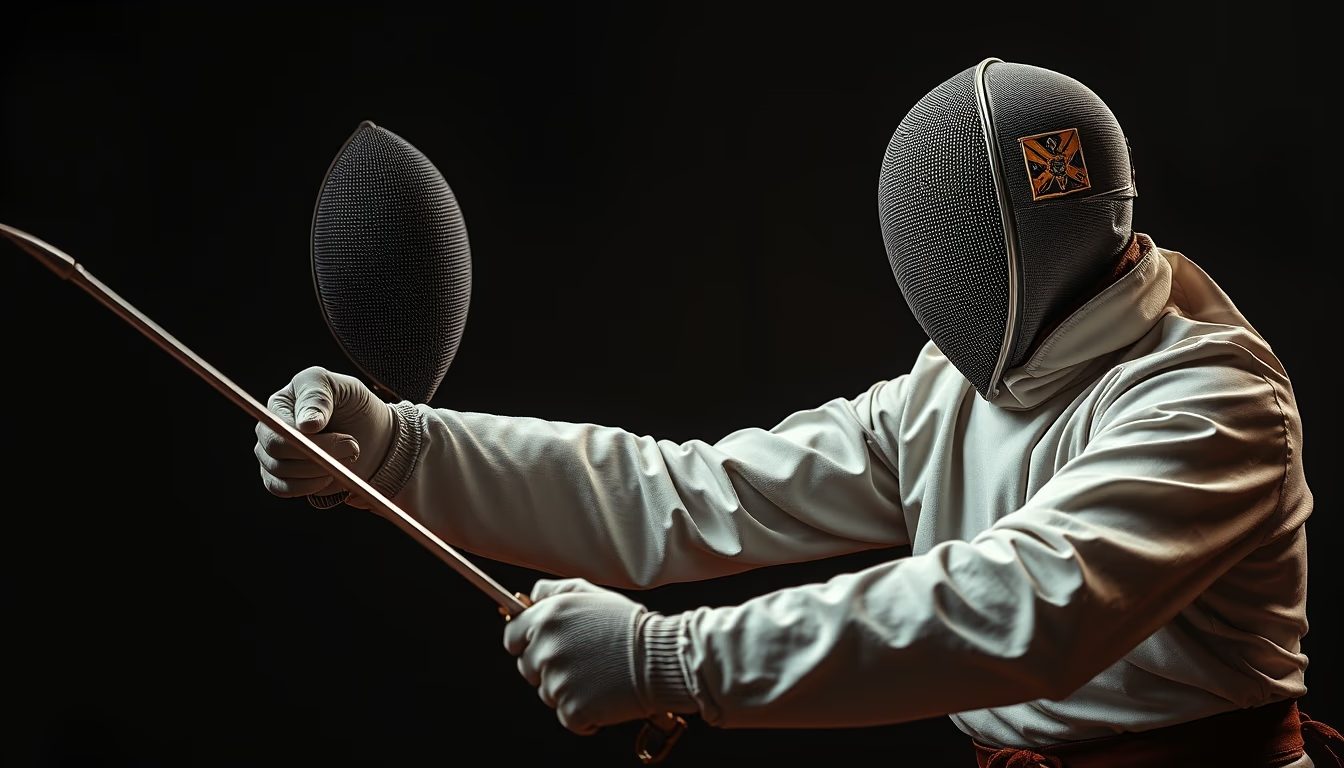
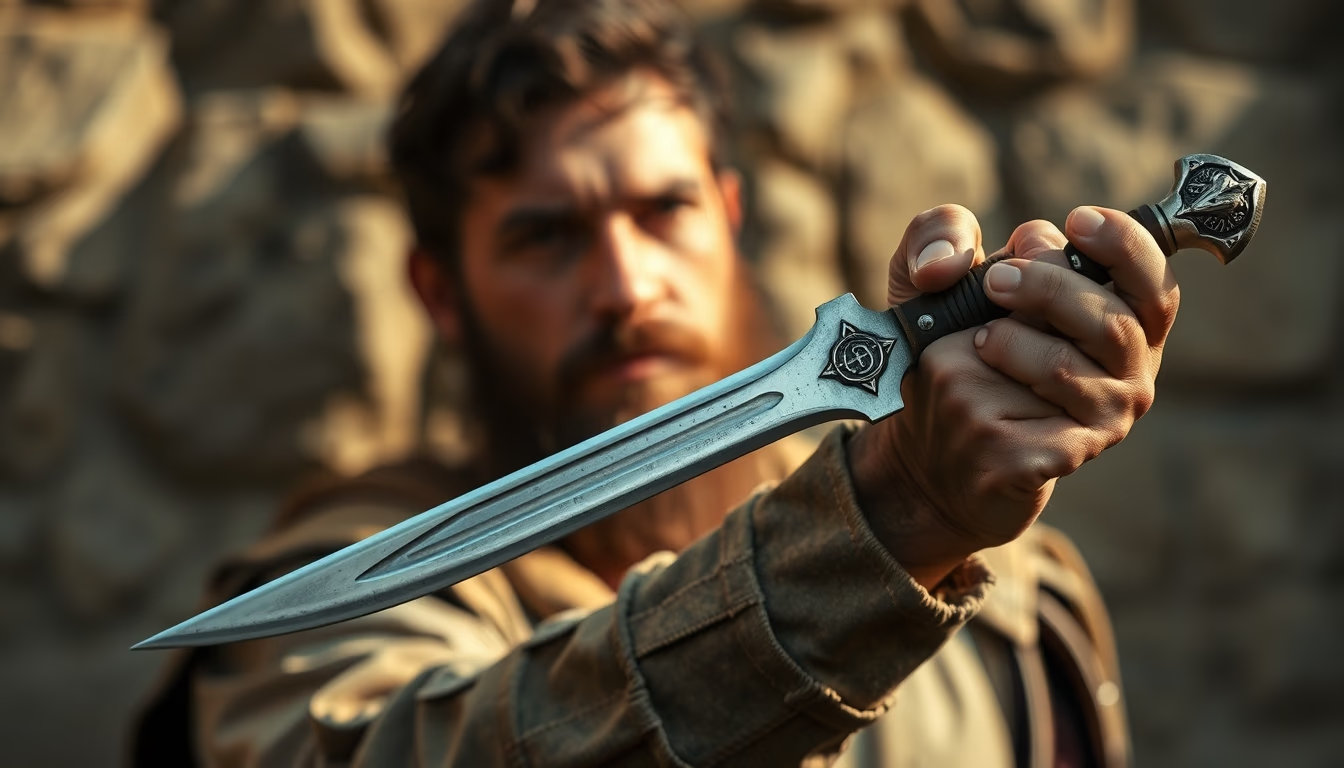
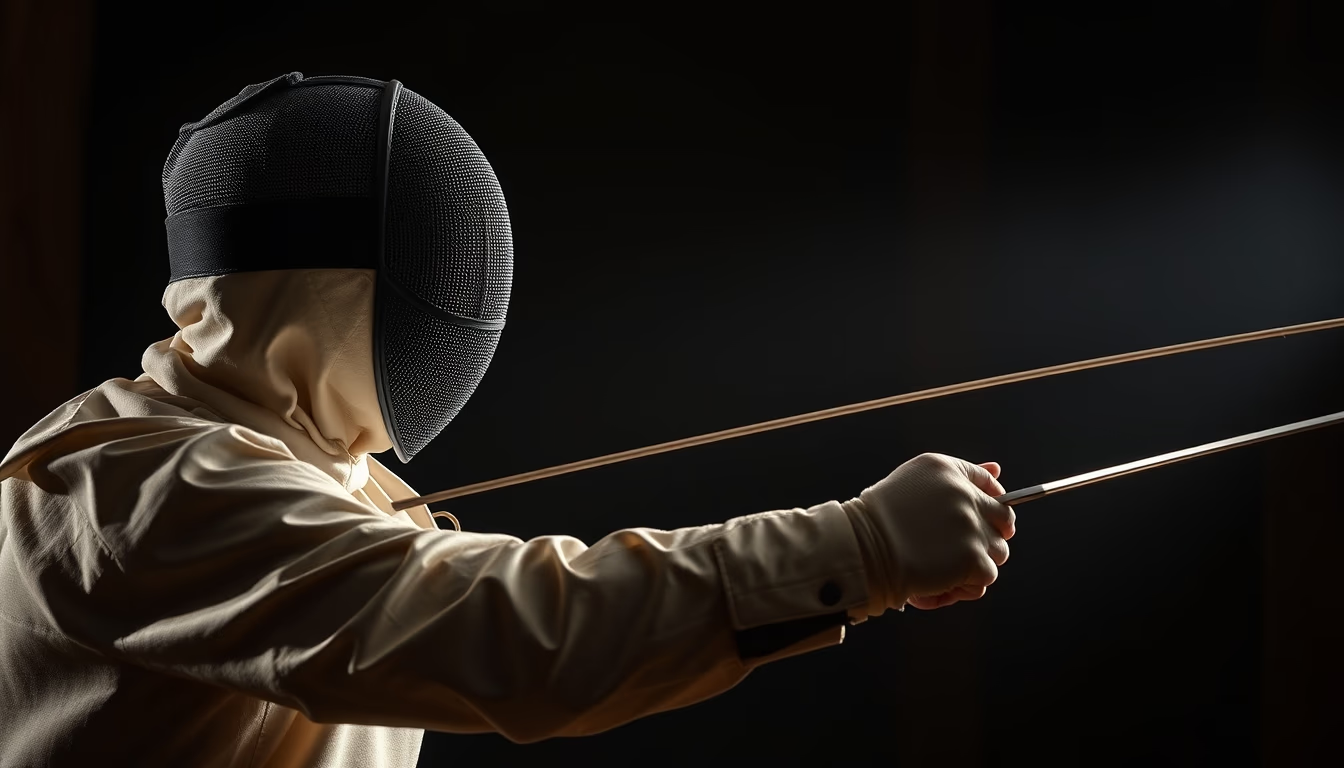
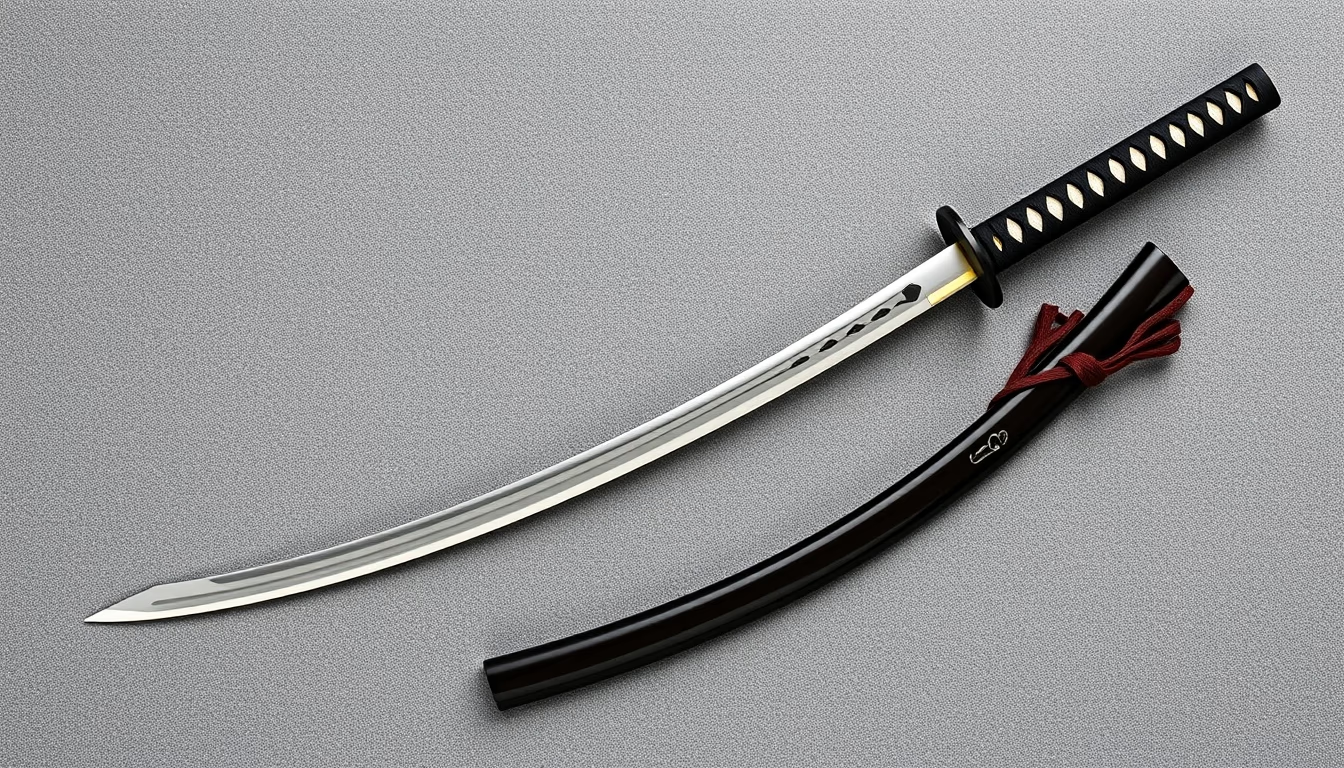
The rapier was the long, slender-bladed sword of choice for duels and civilian fencing during the European Renaissance, combining dexterity and precision.
About this subject
The rapier emerged in the 16th century, initially in Italy and Spain, as an evolution of narrow-bladed swords. Unlike heavy medieval swords, the rapier had a long (about 1 meter) and slender blade, ideal for precise thrusts. Its complex hilt, with rings and arches, protected the hand without sacrificing mobility. This weapon became a symbol of status and refinement among the nobility, used in private duels and civilian fencing, while sturdier swords remained on the battlefield.
Rapier fencing technique was based on quick movements and calculated angles. Masters like Ridolfo Capo Ferro (1610) and Girard Thibault d'Anvers (1630) wrote treatises detailing stances, footwork, and attacks. The Italian school emphasized direct thrusts and counterattacks, while the Spanish school, through 'verdadera destreza', prioritized defensive angles and circular movements. Duels with rapiers often resulted in serious injury or death, as the blades easily penetrated the clothing of the time.
Despite its popularity, the rapier was not the most effective weapon in multiple combats or against armor. Therefore, many knights also carried a dagger (main gauche) in the left hand for defense. The transition to the smallsword in the 18th century marked the decline of the rapier, but its legacy persists in modern fencing sports, where the foil and epee derive from its techniques.
Interestingly, the rapier is often confused with the longsword in cinema, but in reality it was an agile and delicate weapon. Its design evolved according to fashion and functionality, with regional variations in Italy, Spain, and France. The sportive study of the rapier was revived in the 20th century by historical reenactment groups, who recreate the techniques of ancient masters.
Frequently Asked Questions
What is the difference between a rapier and a longsword?
The rapier has a long, thin blade focused on thrusts, while the longsword is heavier, with a wide blade used for cuts and thrusts. The rapier was civilian, the longsword military.
Was the rapier used in wars?
It was not common in pitched battles because it was fragile against armor. It was preferred for civilian duels and urban self-defense. Soldiers used sturdier swords like the sidesword.
Who are the main authors of rapier fencing treatises?
Ridolfo Capo Ferro (Italy, 1610), Girard Thibault (Spain, 1630), and George Silver (England, 1599) are key references. Each advocated distinct combat styles.
Direct URL
https://pub-c7d6a6ea828543ac903a74a341ccb2e1.r2.dev/imagens/rapier-renaissance-fencing-high-fashion-editorial-fresh8.avifHow to credit
Include a visible link back to UtilizAí. Copy one of the snippets below:
<a href="https://xn--utiliza-eza.com/en/midia/imagens/rapier-renaissance-fencing-high-fashion-editorial-fresh8">Rapier renaissance fencing</a> by <a href="https://xn--utiliza-eza.com">UtilizAí</a>, licensed under <a href="https://creativecommons.org/licenses/by/4.0/">CC BY 4.0</a>.
[Rapier renaissance fencing](https://xn--utiliza-eza.com/en/midia/imagens/rapier-renaissance-fencing-high-fashion-editorial-fresh8) by [UtilizAí](https://xn--utiliza-eza.com), CC BY 4.0
License: CC-BY-4.0