Rainwater collection barrel
1344×768 · AVIF · CC BY 4.0
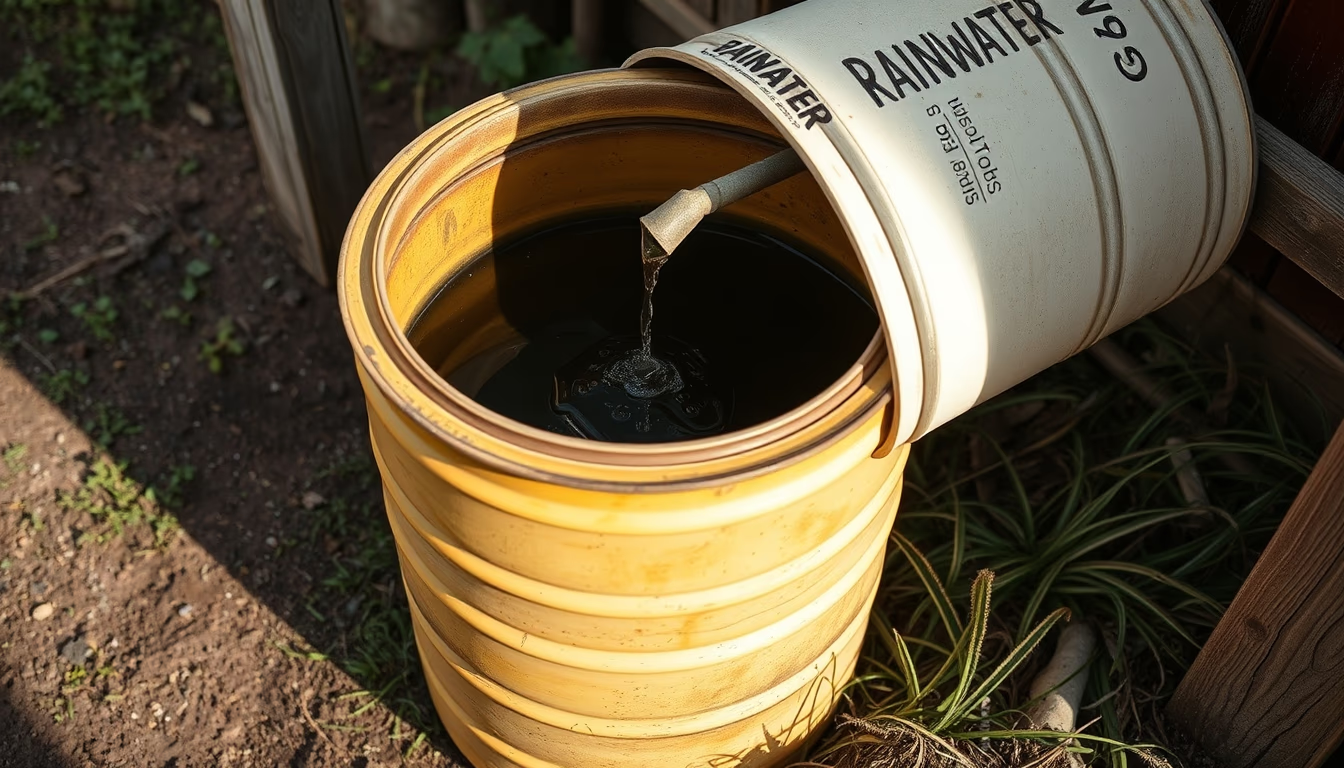
Rainwater collection barrels have been used for centuries to capture and store rainwater, reducing potable water consumption and mitigating urban flooding.
About this subject
Rainwater harvesting is an ancient practice dating back to Roman and Aztec civilizations. In urban environments, collection barrels have become a popular tool for reducing water bills and alleviating stormwater runoff. A typical 55-gallon (200-liter) barrel can capture around 260 gallons per month from a 500-square-foot roof in a region with 8 inches of monthly rainfall. The water is routed via a downspout diverter and a mesh filter to remove debris, then stored for non-potable uses like garden irrigation, car washing, or toilet flushing with proper treatment.
Adoption of rainwater barrels has surged globally due to worsening droughts and water scarcity. In Australia, many states offer rebates for households that install rainwater tanks, while in Germany, rainwater harvesting is mandated in some new buildings. The concept aligns with the principles of green infrastructure, reducing the load on municipal stormwater systems and preventing combined sewer overflows. In the tropics, rainwater collection helps communities adapt to monsoonal patterns, capturing excess rainfall during wet seasons for use in dry spells.
Maintenance is straightforward: barrels should be sealed to prevent mosquito breeding, and cleaned annually to remove sediment. Some designs incorporate a first-flush diverter that discards the initial contaminated runoff. The water quality is generally suitable for irrigation, but for indoor use, filtration and UV treatment may be necessary. In 2025, the market for rainwater harvesting systems is projected to grow by 8% annually, driven by climate resilience policies and rising environmental awareness.
Beyond functionality, rainwater barrels serve as educational tools, demonstrating sustainable water management in schools and community gardens. Artisans have even turned them into decorative elements, painting them with murals that reflect local culture. Despite their simplicity, these barrels represent a tangible step toward water self-sufficiency and a reduced ecological footprint.
Frequently Asked Questions
How much water can I collect with a rain barrel?
It depends on roof area and local rainfall. A 500-square-foot roof in a region with 8 inches of monthly rain can capture about 260 gallons per month. A standard 55-gallon barrel fills quickly during a heavy downpour.
Is rainwater from a barrel safe to drink?
No, rainwater collected from roofs is generally not potable without treatment. It may contain contaminants like bird droppings or debris. It is best used for gardening, car washing, or other non-potable purposes.
Do I need a permit to install a rain barrel?
Permit requirements vary by location. In many US and European cities, small rain barrels for outdoor use do not require a permit. Some areas offer rebates or incentives. Check local regulations if connecting to indoor plumbing.
Direct URL
https://pub-c7d6a6ea828543ac903a74a341ccb2e1.r2.dev/imagens/rainwater-collection-barrel-documentary-photography-p3.avifHow to credit
Include a visible link back to UtilizAí. Copy one of the snippets below:
<a href="https://xn--utiliza-eza.com/en/midia/imagens/rainwater-collection-barrel-documentary-photography-p3">Rainwater collection barrel</a> by <a href="https://xn--utiliza-eza.com">UtilizAí</a>, licensed under <a href="https://creativecommons.org/licenses/by/4.0/">CC BY 4.0</a>.
[Rainwater collection barrel](https://xn--utiliza-eza.com/en/midia/imagens/rainwater-collection-barrel-documentary-photography-p3) by [UtilizAí](https://xn--utiliza-eza.com), CC BY 4.0
License: CC-BY-4.0