Protein structure 3d
1344×768 · AVIF · CC BY 4.0
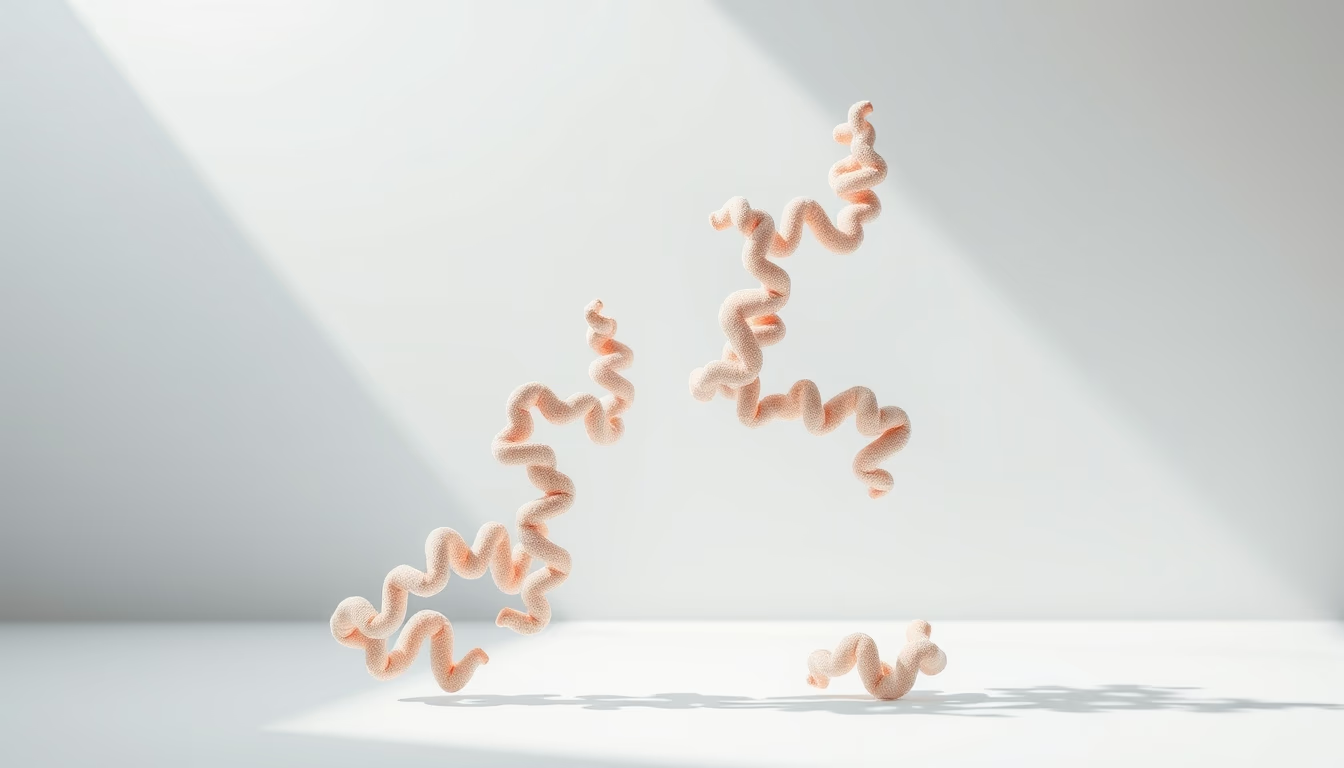
The three-dimensional structure of proteins dictates their biological functions, from enzymatic catalysis to cell signaling, and is crucial for understanding diseases and drug development.
About this subject
Proteins are macromolecules composed of amino acid chains that fold into specific three-dimensional shapes, determining their biological activity. The spatial conformation results from chemical interactions among amino acid residues, including hydrogen bonds, hydrophobic interactions, and disulfide bridges. The first protein structure solved at atomic resolution was myoglobin in 1958 by John Kendrew using X-ray crystallography, a milestone that earned the Nobel Prize in Chemistry.
Protein structural hierarchy is organized into four levels: primary (linear amino acid sequence), secondary (regular patterns such as alpha helices and beta sheets), tertiary (complete three-dimensional folding of the polypeptide chain), and quaternary (assembly of multiple subunits). Mutations in the primary sequence can alter folding and lead to conformational diseases such as Alzheimer's, associated with the accumulation of misfolded proteins.
Experimental methods for determining structures include X-ray crystallography, nuclear magnetic resonance (NMR), and cryo-electron microscopy (cryo-EM), which has revolutionized the field in recent years. Additionally, computational tools like AlphaFold, developed by DeepMind, can predict protein structures with high accuracy, accelerating research in structural biology. These advances are crucial for rational drug design, enabling medications to bind to specific molecular targets.
Interestingly, about 20% of human proteins are considered intrinsically disordered, meaning they lack a fixed structure yet still perform important functions in signaling and regulation. The study of proteins remains a central area of biology, with direct implications for personalized medicine and biotechnology.
Frequently Asked Questions
What are protein structures and why are they important?
Protein structures refer to the three-dimensional arrangement of amino acid chains. This conformation determines the protein's function, such as enzymatic catalysis, transport, or cell signaling, and is essential for understanding biological processes and designing drugs.
How is the 3D structure of a protein determined experimentally?
Main methods include X-ray crystallography, nuclear magnetic resonance (NMR), and cryo-electron microscopy (cryo-EM). X-ray crystallography uses protein crystals to diffract X-rays, NMR analyzes proteins in solution, and cryo-EM captures high-resolution images of frozen molecules.
What is the relationship between protein structure and diseases like Alzheimer's?
Diseases like Alzheimer's involve protein misfolding, leading to toxic aggregates (amyloid plaques). Understanding normal structure and conformational changes aids in developing therapies to prevent or reverse these aggregates.
Direct URL
https://pub-c7d6a6ea828543ac903a74a341ccb2e1.r2.dev/imagens/protein-structure-3d-minimalist-composition-p4.avifHow to credit
Include a visible link back to UtilizAí. Copy one of the snippets below:
<a href="https://xn--utiliza-eza.com/en/midia/imagens/protein-structure-3d-minimalist-composition-p4">Protein structure 3d</a> by <a href="https://xn--utiliza-eza.com">UtilizAí</a>, licensed under <a href="https://creativecommons.org/licenses/by/4.0/">CC BY 4.0</a>.
[Protein structure 3d](https://xn--utiliza-eza.com/en/midia/imagens/protein-structure-3d-minimalist-composition-p4) by [UtilizAí](https://xn--utiliza-eza.com), CC BY 4.0
License: CC-BY-4.0