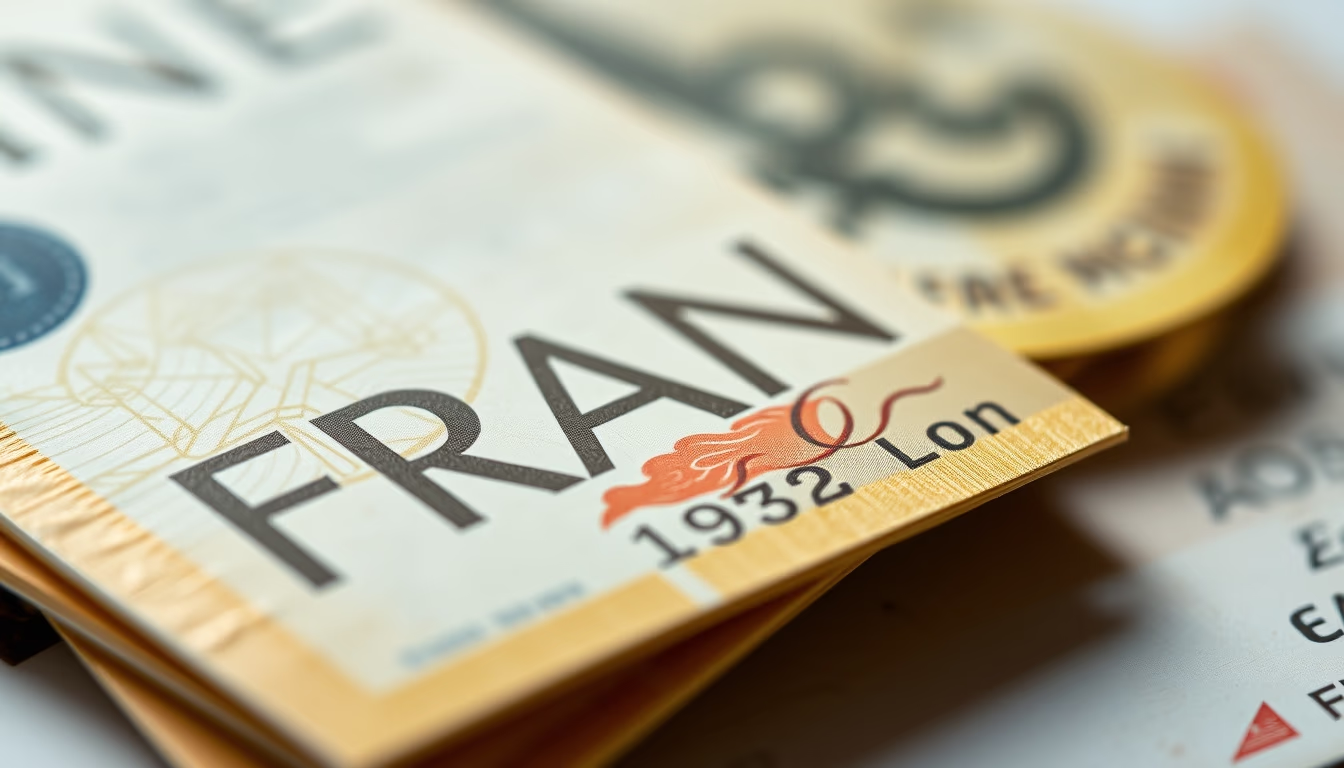
Pre-euro lira italian
1344×768 · AVIF · CC BY 4.0

The Italian lira was Italy's official currency for over 130 years, replaced by the euro in 2002. Discover its history, iconic banknotes, and economic context.
About this subject
The Italian lira (symbol: ₤, code: ITL) was the official currency of Italy from the country's unification in 1861 until February 28, 2002, when it was replaced by the euro at a conversion rate of 1,936.27 lire per euro. Over its long history, the lira underwent various transformations, from the gold standard to paper money issued by the Bank of Italy, founded in 1893. Italian banknotes are renowned for their artistic beauty, featuring figures from culture, science, and history such as Leonardo da Vinci, Alessandro Volta, and Caravaggio. The reverse often displayed artworks, monuments, or scenes of Italian life. The lira faced periods of high inflation, especially during and after World War II, leading to devaluations and the replacement of old notes with versions with fewer zeros. For instance, the 1,000 lire note (mille lire) was one of the most common but lost value over time. The introduction of the euro was a milestone in European integration, and the lira ceased circulation after a transition from January 1, 1999 (accounting introduction) to February 2002 (physical circulation). Collectors still value lira banknotes and coins, especially series before 1950 and those with printing errors. Italy, as a founding member of the European Economic Community, adopted the euro as part of the Maastricht Treaty, and today the euro is a symbol of stability, though many Italians still nostalgically remember the lira, which was part of daily life for generations.
Frequently Asked Questions
Why did Italy replace the lira with the euro?
Italy adopted the euro to join the European Economic and Monetary Union, aiming for exchange rate stability, lower inflation, and easier trade among member states. The single currency also strengthened European identity.
What was the highest value lira banknote in circulation?
The highest denomination was the 500,000 lire note (500 mil lire), worth about 258 euros at conversion. It was rarely used daily, more common in large transactions.
Are Italian lira banknotes still worth anything?
Lira banknotes no longer have legal tender value, but can be exchanged for euros at the Bank of Italy within a period varying by series. Some old notes have numismatic value for collectors.
Direct URL
https://pub-c7d6a6ea828543ac903a74a341ccb2e1.r2.dev/imagens/pre-euro-lira-italian-high-fashion-editorial-fresh5.avifHow to credit
Include a visible link back to UtilizAí. Copy one of the snippets below:
<a href="https://xn--utiliza-eza.com/en/midia/imagens/pre-euro-lira-italian-high-fashion-editorial-fresh5">Pre-euro lira italian</a> by <a href="https://xn--utiliza-eza.com">UtilizAí</a>, licensed under <a href="https://creativecommons.org/licenses/by/4.0/">CC BY 4.0</a>.
[Pre-euro lira italian](https://xn--utiliza-eza.com/en/midia/imagens/pre-euro-lira-italian-high-fashion-editorial-fresh5) by [UtilizAí](https://xn--utiliza-eza.com), CC BY 4.0
License: CC-BY-4.0