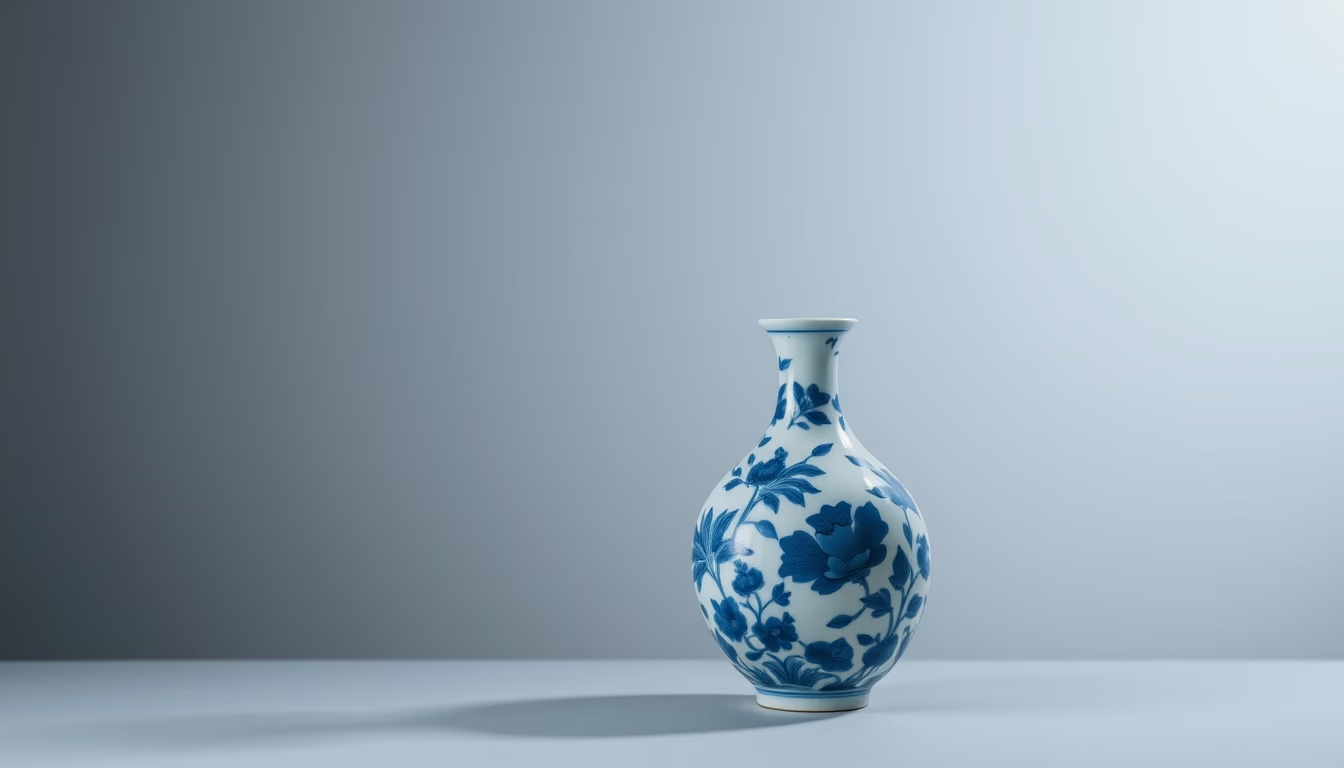
Porcelain blue white vase
1344×768 · AVIF · CC BY 4.0
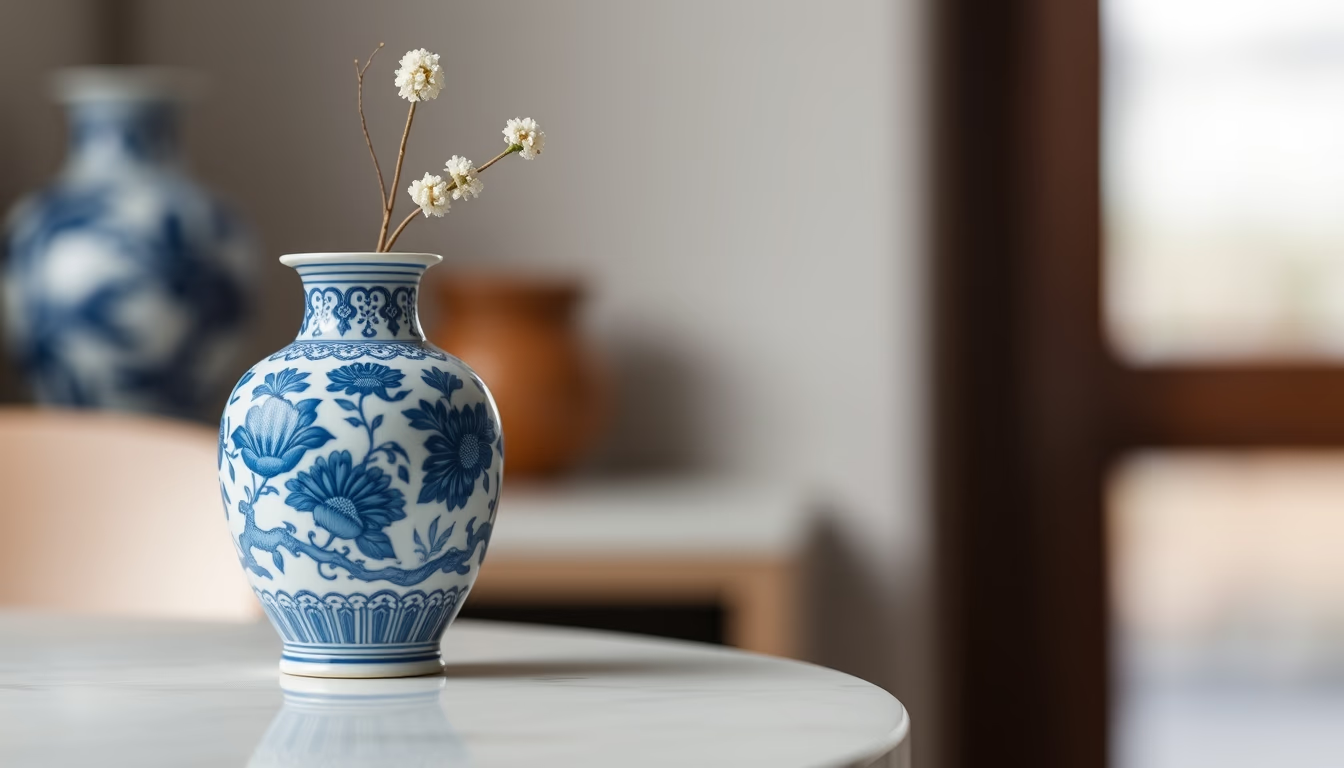
Blue and white porcelain vase, a symbol of maritime trade between China and Europe, produced in Jingdezhen for centuries.
About this subject
The blue and white porcelain vase is one of the most emblematic artifacts in the history of global trade. Its origins date back to the Yuan dynasty (1271, 1368), when Chinese potters mastered the technique of underglaze painting using cobalt oxide imported from Persia. The city of Jingdezhen in Jiangxi province became the main production center, thanks to abundant kaolin and petuntse, essential raw materials for high-quality porcelain. During the Ming dynasty (1368, 1644), production reached its peak, with refined patterns such as the famous dragon and lotus flower motif. The combination of the vitreous white background with deep blue became an internationally recognized aesthetic standard.
The circulation of these vases occurred primarily through maritime routes established by Portuguese and Dutch traders in the 16th and 17th centuries. The Dutch East India Company (VOC) imported millions of pieces into Europe, where Chinese porcelain was considered an inaccessible luxury, a status symbol among the nobility. This exchange influenced the rise of the chinoiserie style, which adapted oriental motifs to European pottery, as seen in Delftware. Demand was so high that production in Jingdezhen employed over 100,000 artisans during peak periods.
Today, blue and white porcelain continues to be produced in Jingdezhen, maintaining traditional techniques passed down through generations. The Chinese government recognizes the craft as intangible cultural heritage, and antique pieces are highly valued at international auctions, sometimes reaching millions of dollars. Moreover, miniature blue and white porcelain vases are collected by enthusiasts, reproducing in reduced scale the same historical patterns, a practice that keeps the traditional craftsmanship alive.
Frequently Asked Questions
How was blue and white porcelain made?
The technique involves applying cobalt oxide to the raw clay piece, which is then covered with a transparent glaze and fired in kilns at high temperatures (above 1,300°C). The cobalt reacts during firing, producing the characteristic blue color beneath the vitreous glaze.
Why was Chinese porcelain so valued in Europe?
For its translucency, durability, and aesthetic beauty, unmatched by European ceramics at the time. The long maritime journey and transport risks made the pieces rare and expensive, symbols of wealth and sophistication.
Where is it produced today?
The city of Jingdezhen in China remains the main production center for blue and white porcelain. Local workshops and factories maintain centuries-old techniques, and the city is considered the world's 'porcelain capital'.
Direct URL
https://pub-c7d6a6ea828543ac903a74a341ccb2e1.r2.dev/imagens/porcelain-blue-white-vase-tilt-shift-miniature-fresh1.avifHow to credit
Include a visible link back to UtilizAí. Copy one of the snippets below:
<a href="https://xn--utiliza-eza.com/en/midia/imagens/porcelain-blue-white-vase-tilt-shift-miniature-fresh1">Porcelain blue white vase</a> by <a href="https://xn--utiliza-eza.com">UtilizAí</a>, licensed under <a href="https://creativecommons.org/licenses/by/4.0/">CC BY 4.0</a>.
[Porcelain blue white vase](https://xn--utiliza-eza.com/en/midia/imagens/porcelain-blue-white-vase-tilt-shift-miniature-fresh1) by [UtilizAí](https://xn--utiliza-eza.com), CC BY 4.0
License: CC-BY-4.0