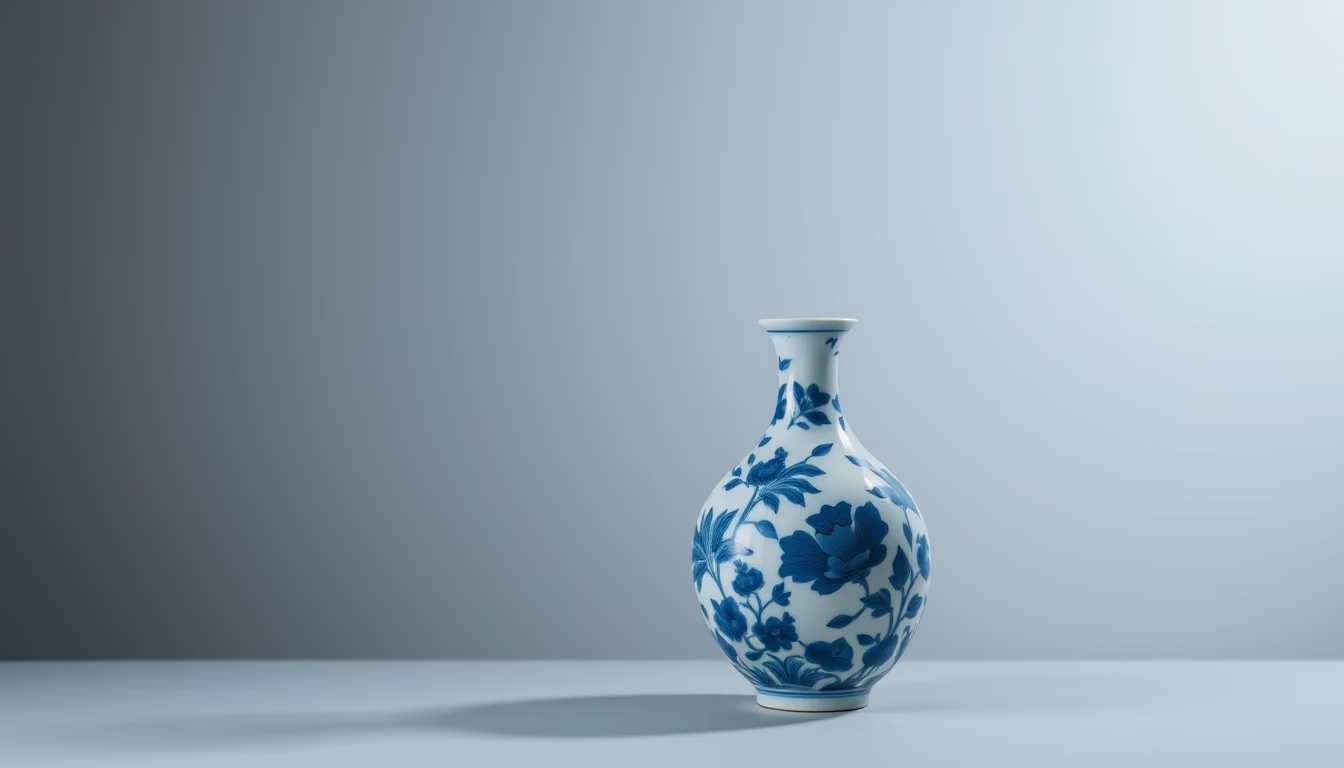
Porcelain blue white vase
1344×768 · AVIF · CC BY 4.0
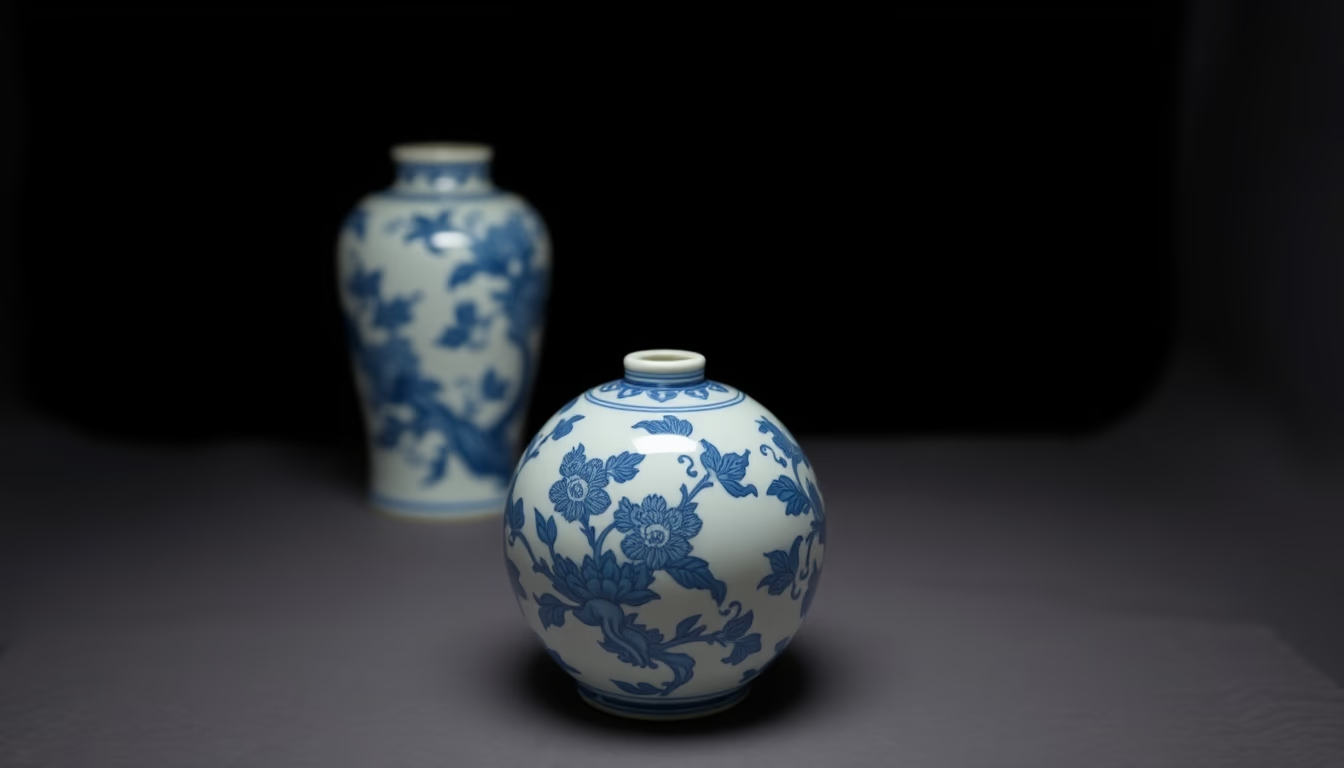
Blue and white porcelain vase, an emblematic piece of global trade blending Chinese techniques with European influences.
About this subject
The blue and white porcelain vase is one of the most recognizable objects in world trade history. Its origin dates back to the Yuan dynasty (1271-1368) in China, when artists in Jingdezhen, the empire's ceramic hub, began painting pieces with cobalt oxide under a transparent glaze, creating the characteristic intense blue on a white background. The technique flourished during the Ming dynasty (1368-1644), with large-scale production serving both domestic demand and growing external markets, particularly Europe and the Middle East.
The most famous decorative pattern is the Willow Pattern, which emerged in the 18th century as an English adaptation of Chinese themes, but the original Chinese piece often features motifs such as dragons, phoenixes, lotus flowers, landscapes, and court life scenes. The blue hue varies depending on the purity of the cobalt and the firing temperature, which ranges between 1200°C and 1300°C. Jingdezhen continues to produce vases in this tradition, with family-run kilns preserving secrets of pigments and techniques passed down through generations.
In the context of global trade, blue and white porcelain vases were transported by sea routes during the Age of Discovery. The Dutch East India Company (VOC) imported millions of pieces to Europe, where they became symbols of status and wealth. The fragility of the material and shipwrecks make ancient examples extremely rare and valuable at auctions. Today, museums such as the Rijksmuseum and the Metropolitan Museum of Art dedicate entire galleries to this art, which also inspired Delftware and Portuguese faience.
Frequently Asked Questions
What is the origin of the blue and white porcelain vase?
It originated in China during the Yuan dynasty, with refined production under the Ming dynasty, especially in Jingdezhen, using cobalt oxide under a glaze.
Why was blue and white porcelain so valued in Europe?
It was considered exotic and of high quality, imported by the Dutch East India Company as a status symbol and wealth indicator among the nobility.
Is the blue and white porcelain vase still produced today?
Yes, in Jingdezhen and other regions, using traditional and contemporary techniques, preserving the Chinese cultural heritage.
Direct URL
https://pub-c7d6a6ea828543ac903a74a341ccb2e1.r2.dev/imagens/porcelain-blue-white-vase-studio-editorial-portrait-fresh5.avifHow to credit
Include a visible link back to UtilizAí. Copy one of the snippets below:
<a href="https://xn--utiliza-eza.com/en/midia/imagens/porcelain-blue-white-vase-studio-editorial-portrait-fresh5">Porcelain blue white vase</a> by <a href="https://xn--utiliza-eza.com">UtilizAí</a>, licensed under <a href="https://creativecommons.org/licenses/by/4.0/">CC BY 4.0</a>.
[Porcelain blue white vase](https://xn--utiliza-eza.com/en/midia/imagens/porcelain-blue-white-vase-studio-editorial-portrait-fresh5) by [UtilizAí](https://xn--utiliza-eza.com), CC BY 4.0
License: CC-BY-4.0