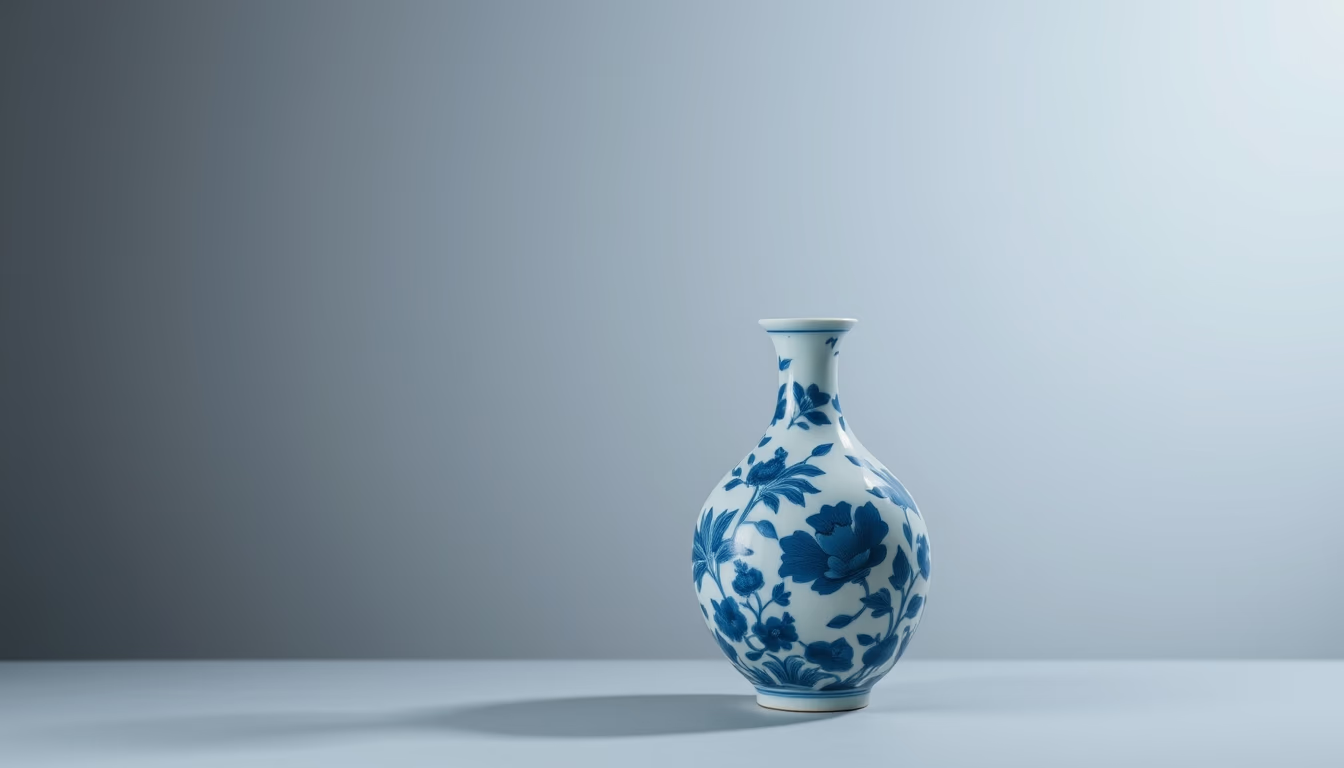
Porcelain blue white vase
1344×768 · AVIF · CC BY 4.0
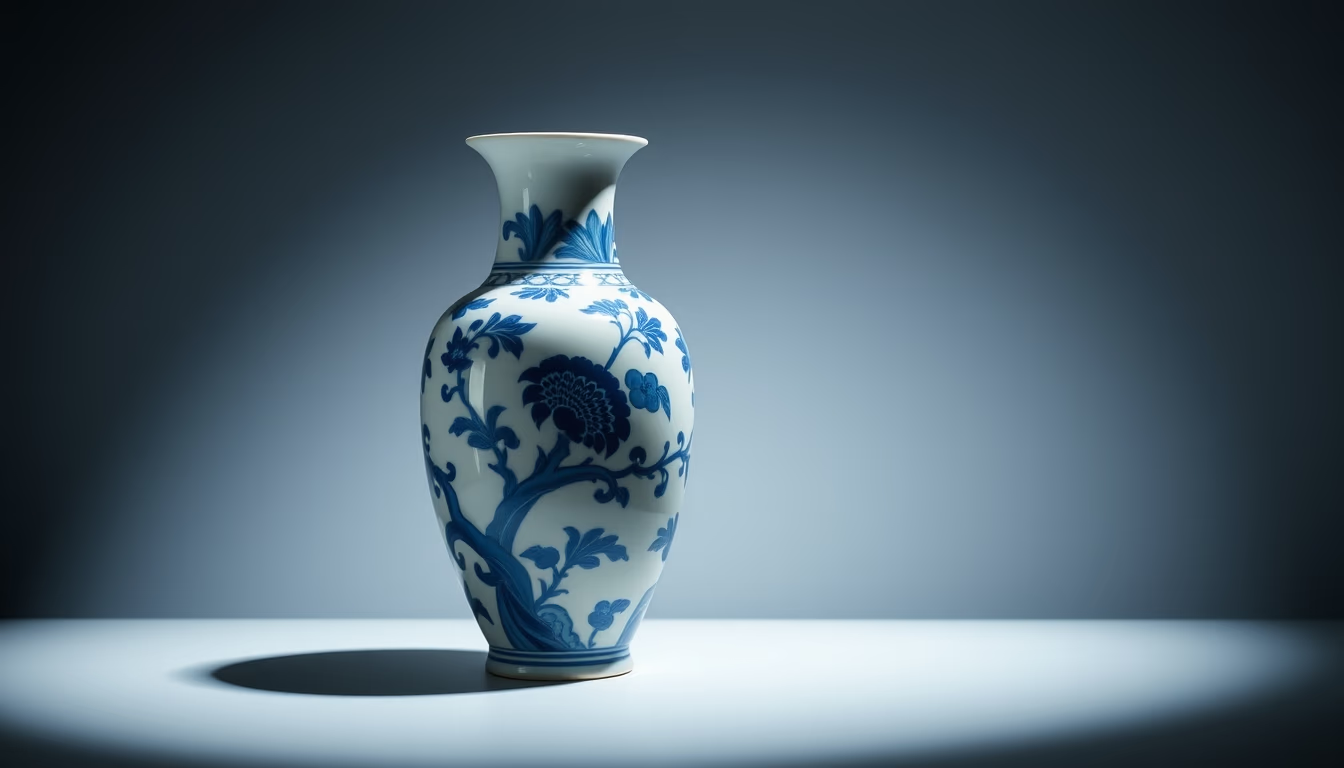
Blue and white porcelain vase, an iconic trade good that connected China and Europe from the 16th to 18th centuries.
About this subject
The blue and white porcelain vase is one of the most iconic products of global trade. Originating from Jingdezhen in Jiangxi province, China, this type of ceramic reached its peak during the Ming (1368-1644) and Qing (1644-1912) dynasties. The technique involves applying cobalt oxide under a transparent glaze, which after firing at high temperatures (around 1300°C) reveals the characteristic deep blue hue. The contrast with the pure white background, obtained from kaolin clay, made these pieces highly valued on the international market.
From the 16th century onward, the Portuguese, Dutch, and English East India Companies shipped vast quantities of blue and white porcelain to Europe. These pieces served not only as household utensils but also as status symbols and sophistication. Designs often incorporated Chinese elements such as dragons, phoenixes, and landscapes, which were adapted to Western tastes. Demand was so high that it inspired imitations in countries like the Netherlands (Delftware) and Japan (Arita ware).
Interestingly, the term "china" came to mean fine porcelain in English because of this origin. Each vase can take weeks to produce, involving shaping, hand-painting, and multiple firings. The precision of Jingdezhen artisans is legendary, with entire dynasties dedicated to perfecting the craft. Today, original pieces from the Ming and Qing periods are highly collectible and fetch millions at auction, such as the David Vase, a Yuan-era blue and white vase sold for over USD 20 million.
The cultural influence of this porcelain is immense. In Europe, it inspired the Chinoiserie movement, which permeated decoration, painting, and architecture in the 18th century. In Brazil, blue and white porcelain arrived with the Portuguese court and can be found in museums and private collections, testifying to early globalization. Its timeless beauty continues to fascinate, blending artisanal tradition with trade history.
Frequently Asked Questions
What is the origin of blue and white porcelain?
Blue and white porcelain originated in Jingdezhen, China, during the Yuan dynasty (14th century), with its peak during the Ming and Qing dynasties.
How did blue and white porcelain reach Europe?
It was transported by the Portuguese, Dutch, and English East India Companies from the 16th century onward, becoming a luxury item.
Why is fine porcelain called 'china' in English?
The term 'china' derives from the country of origin, as the porcelain was originally imported from China and had no European equivalent.
Direct URL
https://pub-c7d6a6ea828543ac903a74a341ccb2e1.r2.dev/imagens/porcelain-blue-white-vase-fine-art-photography-fresh9.avifHow to credit
Include a visible link back to UtilizAí. Copy one of the snippets below:
<a href="https://xn--utiliza-eza.com/en/midia/imagens/porcelain-blue-white-vase-fine-art-photography-fresh9">Porcelain blue white vase</a> by <a href="https://xn--utiliza-eza.com">UtilizAí</a>, licensed under <a href="https://creativecommons.org/licenses/by/4.0/">CC BY 4.0</a>.
[Porcelain blue white vase](https://xn--utiliza-eza.com/en/midia/imagens/porcelain-blue-white-vase-fine-art-photography-fresh9) by [UtilizAí](https://xn--utiliza-eza.com), CC BY 4.0
License: CC-BY-4.0