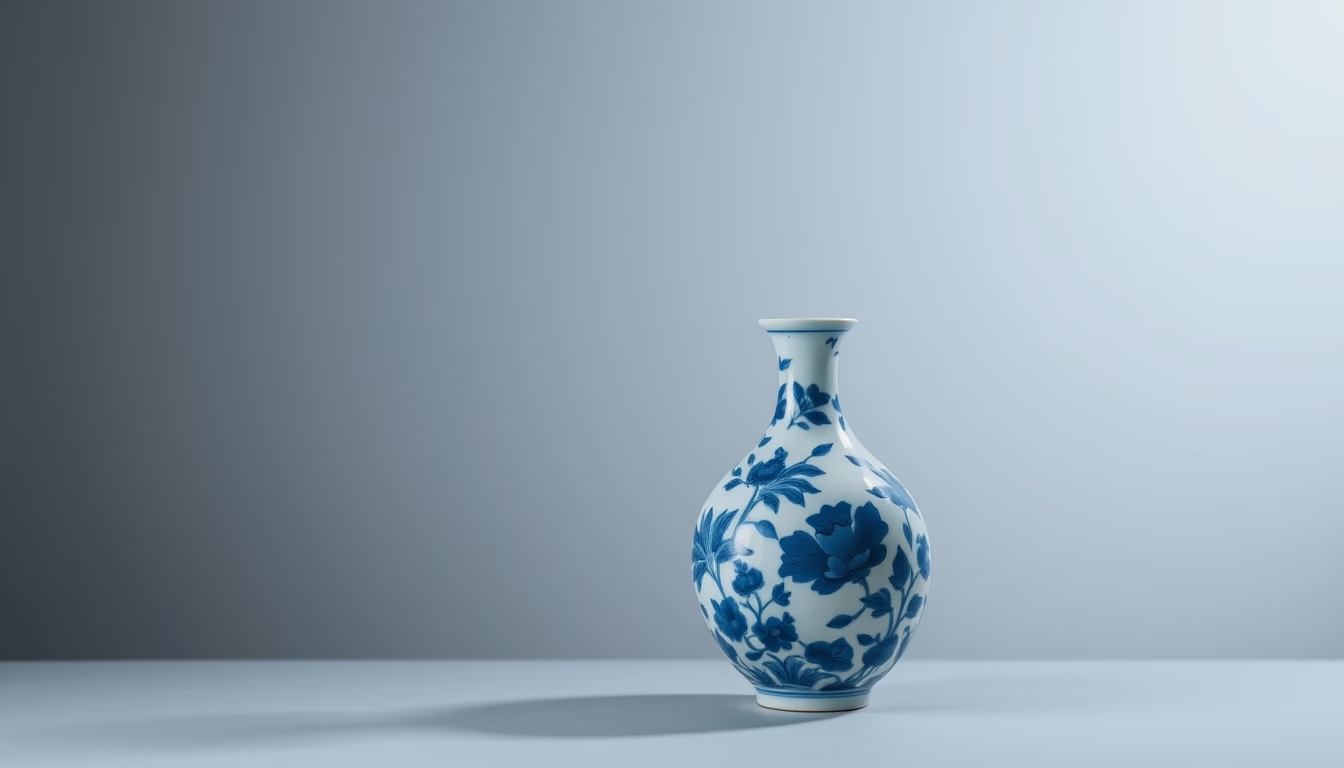
Porcelain blue white vase
1344×768 · AVIF · CC BY 4.0
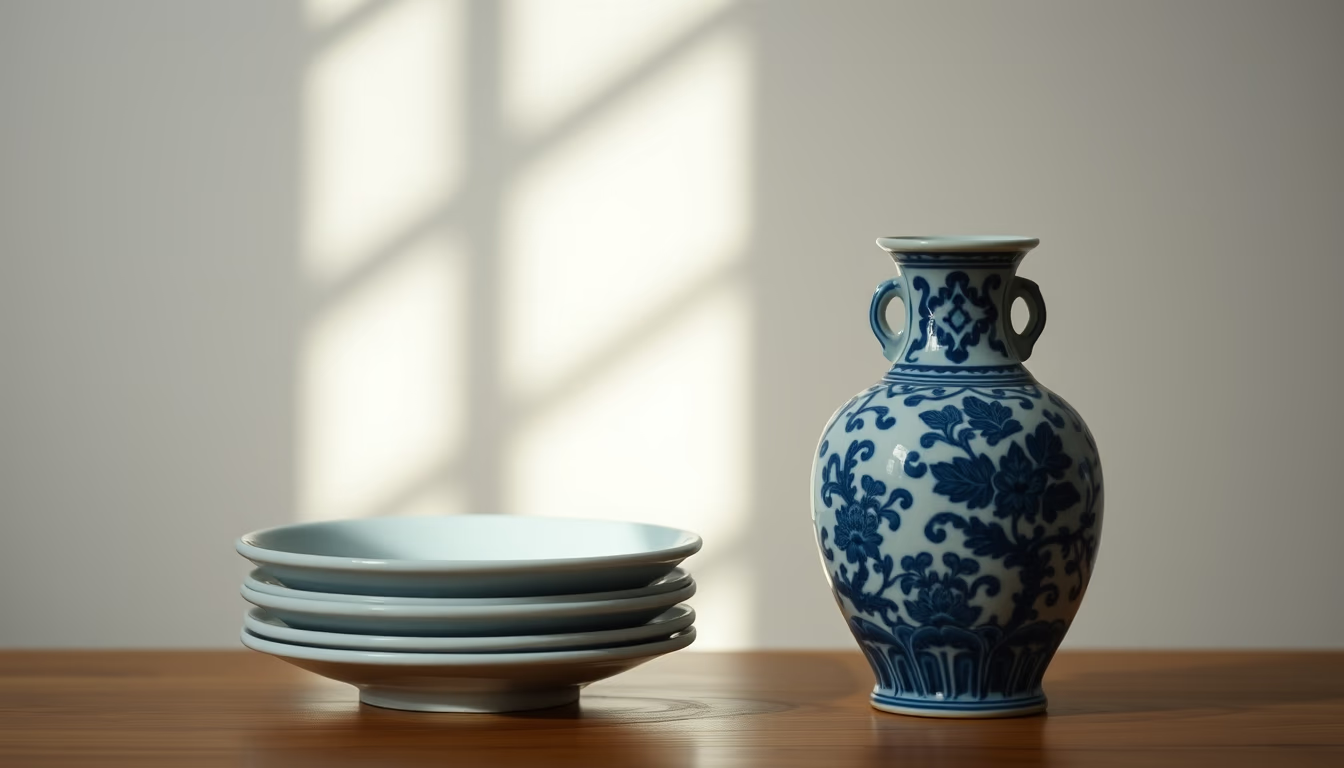
Blue and white porcelain vase, a representative piece of Chinese ceramics that influenced global trade and Western decorative art.
About this subject
The blue and white porcelain vase is one of the most iconic objects in the history of world ceramics. Its production flourished during the Ming dynasty (1368, 1644), especially in the kilns of Jingdezhen in Jiangxi province. The blue pigment was obtained from cobalt oxide imported from Persia, applied under a transparent glaze before high-temperature firing, a technique known as underglaze. The result was a deep blue contrasting with the white background, creating intricate patterns of dragons, landscapes, flowers, and mythological scenes.
Blue and white porcelain became one of the first global commodities. During the 16th and 17th centuries, European demand exploded, and pieces were shipped via maritime routes to Portugal, the Netherlands, and other countries. The Dutch East India Company (VOC) even ordered thousands of vases and plates for the European market, adapting designs to Western tastes, such as the "chinoiserie" pattern. This cultural exchange influenced the production of faience and porcelain in Europe, including the famous Delftware.
Beyond its aesthetic value, the blue and white vase carries symbolism in Chinese culture. Blue represents the color of the sky and eternity, while white symbolizes purity and clarity. Many pieces were used in ceremonies, as offerings, or to celebrate important events. The Qing dynasty (1644, 1912) continued the tradition, expanding decorative repertoires to include European influences, such as scenes of Western figures and romantic landscapes.
Today, blue and white porcelain vases are collector's items, with antique examples reaching millions of dollars at auctions. Their production still continues in Jingdezhen, maintaining centuries-old techniques. The fascination with the piece endures due to its combination of art, history, and trade, serving as a testament to globalization before the modern era.
Frequently Asked Questions
What is the origin of blue and white porcelain?
Blue and white porcelain originated in China during the Yuan dynasty (1271, 1368) but reached its peak during the Ming dynasty, in ceramic centers like Jingdezhen.
Why was blue and white porcelain so valued in the West?
It was prized for its beauty, durability, and exoticism. In Europe, it became a status symbol and influenced local production, such as Delftware and Meissen porcelain.
How can you identify an antique blue and white porcelain vase?
Look for dynasty marks on the base, hand-painted patterns with underglaze blue, and natural irregularities. Antique pieces often have deep blue tones and a clear ring when tapped.
Direct URL
https://pub-c7d6a6ea828543ac903a74a341ccb2e1.r2.dev/imagens/porcelain-blue-white-vase-documentary-photography-fresh3.avifHow to credit
Include a visible link back to UtilizAí. Copy one of the snippets below:
<a href="https://xn--utiliza-eza.com/en/midia/imagens/porcelain-blue-white-vase-documentary-photography-fresh3">Porcelain blue white vase</a> by <a href="https://xn--utiliza-eza.com">UtilizAí</a>, licensed under <a href="https://creativecommons.org/licenses/by/4.0/">CC BY 4.0</a>.
[Porcelain blue white vase](https://xn--utiliza-eza.com/en/midia/imagens/porcelain-blue-white-vase-documentary-photography-fresh3) by [UtilizAí](https://xn--utiliza-eza.com), CC BY 4.0
License: CC-BY-4.0